


Il y eut deux accidents nucléaires de Tokaimura à la centrale nucléaire de Tōkai au Japon :
le 11 mars 1997, une explosion dans une usine de traitement du combustible nucléaire usé de la Dōnen. le 30 septembre 1999, un sérieux accident de criticité dans une usine de fabrication du combustible de JCO (en).
Gallery


Sponsored
Location
1 explorer visited this place

0 m
The Tokaimura nuclear accidents were two nuclear incidents which occurred near the village of Tōkai, Ibaraki Prefecture, Japan. The first accident occurred on 11 March 1997, producing an explosion after an experimental batch of solidified nuclear waste caught fire at the Power Reactor and Nuclear Fuel Development Corporation radioactive waste bituminisation facility. Over twenty people were exposed to radiation.
The second was a criticality accident at a separate fuel reprocessing facility belonging to Japan Nuclear Fuel Conversion Co. on 30 September 1999 due to improper handling of liquid uranium fuel for an experimental reactor. The incident spanned approximately 20 hours and resulted in the deaths of two workers; of 436 people whose doses of radiation exposure were evaluated, none of them exceeded annual regulatory dosage limits.
It was determined that the accidents were due to inadequate regulatory oversight, lack of appropriate safety culture and inadequate worker training and qualification. After these two accidents, a series of lawsuits were filed and new safety measures were put into effect.
By March 2000, Japan's atomic and nuclear commissions began regular investigations of facilities, expansive education regarding proper procedures and safety culture regarding handling nuclear chemicals and waste. JCO's credentials were removed, the first Japanese plant operator to be punished by law for mishandling nuclear radiation. This was followed by the company president's resignation and six officials being charged with professional negligence.
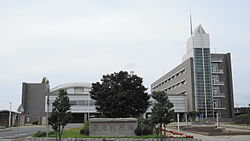
1.3 km
Tōkai is a village located in Ibaraki Prefecture, Japan. As of 1 July 2020, the village had an estimated population of 37,651 in 15,148 households and a population density of 991 persons per km2. The percentage of the population aged over 65 was 25.8%. The total area of the village is 38.0 square kilometres. The Japan Atomic Energy Agency along with other organizations currently operate a number of nuclear technology research facilities in the town. In particular, Tōkai Nuclear Power Plant is located in Tōkai.

1.9 km
Tōkai Station is a passenger railway station located in the village of Tōkai, Ibaraki Prefecture, Japan, operated by the East Japan Railway Company.

2.8 km
Kasamatsu Stadium is a multi-purpose stadium in Naka, Japan. It is currently used mostly for football matches and track and field events. It served as the main home ground of Mito HollyHock through 2011. The stadium holds 22,022 people and was built in 1998.
It is a community stadium, and any person or group can use an unoccupied facility at any time the stadium is open. A vending machine sells tickets for this purpose in the main lobby.

3.7 km
Naka is a district of Ibaraki Prefecture, Japan.
Following the January 21, 2005 formation of the city of Naka, the district is coextensive with the village of Tōkai. As of January 1, 2005 population data, the district has an estimated population of 35,467 and a density of 946.29 persons per km2. The total area is 37.48 km2.
Lorsque l'année n'est pas spécifiée, dans la plupart des cas, l'incident de 1999 est celui auquel on se réfère.