


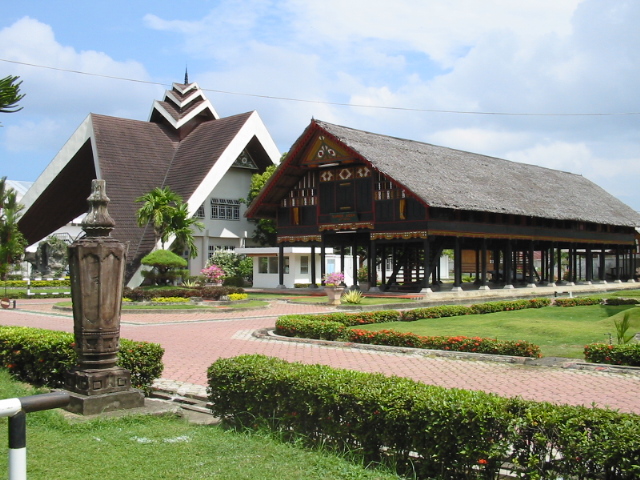
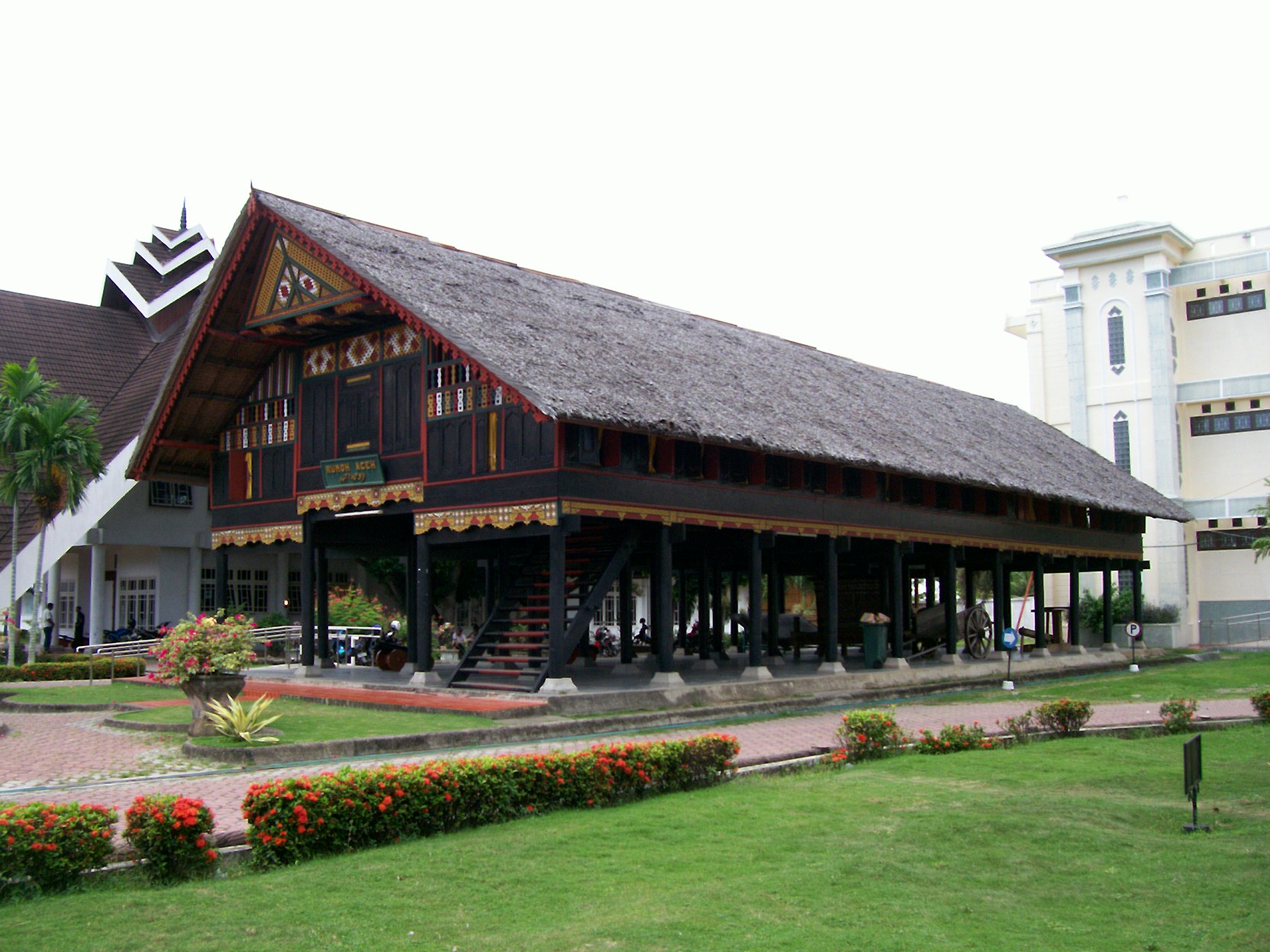
Aceh State Museum, popularly known as Aceh Museum or Banda Aceh Museum is a museum in Banda Aceh, Indonesia. It is one of the oldest museum in Indonesia.
Gallery






Sponsored
Location
1 explorer visited this place
382 m
Banda Aceh is the capital and largest city in the province of Aceh, Indonesia. It is located on the island of Sumatra and has an elevation of 35 metres. The city covers an area of 61.36 square kilometers and had a population of 223,446 people at the 2010 Census, rising to 252,899 at the 2020 Census. The official estimate as of 2025 was 267,962.
Banda Aceh is located on the northwestern tip of Indonesia at the mouth of the Aceh River. Banda Aceh itself is a semi-enclave within Aceh Besar Regency, as Banda Aceh is surrounded by Aceh Besar to the south, east, and west, while it borders with the Andaman Sea to the north-west. Many suburbs of the city have developed in adjacent districts of Acah Besar Regency beyond the city limits.
The city was originally established as Bandar Aceh Darussalam and served as the capital and hub for the Sultanate of Aceh upon its foundation in the late 15th century. Later its name was changed to Bandar Aceh Darussalam, and thereafter became popularly known as Banda Aceh. The first part of the name comes from the Persian bandar meaning "port" or "haven". The city is also dubbed the "port to Mecca," or the "porch of Mecca" in reference to the days when hajj pilgrims travelled by sea from Indonesia and would make a stopover in the city before continuing their journey to Mecca.
Banda Aceh was long at the center of protracted conflicts between the Acehnese and foreign powers, including the Portuguese, the Dutch, the Japanese, and the Indonesian government. The city rose to international prominence in the aftermath of the Indian Ocean earthquake on 26 December 2004, which struck off the western coast of Sumatra. Banda Aceh was the closest major city to the earthquake's epicenter, which lay 249 kilometers off the coast. It suffered great damage in the earthquake and further damage when a tsunami struck shortly afterwards. Around 60,000 people in the city died as a result and many more were injured.
The aftermath of the tsunami has seen a cessation of much of the conflict in the city and province, and domestic and international aid, as a result, has seen a major modernization and reconstruction of the city over the past two decades.

573 m
Gunongan Historical Park is located in the Aceh Province of Sumatra, Indonesia. Possibly built by Iskandar Muda, the grounds of the historical park contain a 17th-century palace, garden, and white circular structure whose purpose is unknown, the Gunongan, after which the park has been named. The origins and function of the Gunongan palace are obscure, though it is theorized to be either built on the remains of an older structure or built during the 17th century, combining Hindu and Islamic aesthetics. Its function possibly had a sacred significance but it later became a leisure ground for the Acehnese royal family.

623 m
The Aceh Tsunami Museum, located in Banda Aceh, in Aceh province, Indonesia, is a museum designed as a symbolic reminder of the 2004 Indian Ocean earthquake and tsunami disaster, as well as an educational centre and an emergency disaster shelter in case the area is ever hit by a tsunami again.
677 m
Baiturrahman Grand Mosque
is a mosque located in Banda Aceh, Aceh, Indonesia. The Baiturrahman Grand Mosque is a symbol of religion, culture, spirit, strength, struggle, and nationalism of the Acehnese people. The mosque is a landmark in Banda Aceh and has survived the 2004 Indian Ocean earthquake and tsunami.
1.1 km
Aceh is the westernmost province of Indonesia. It is located on the northern end of Sumatra island, with Banda Aceh being its capital and largest city. It is bordered by the Indian Ocean to the west, Strait of Malacca to the northeast, as well bordering the province of North Sumatra to the east, its sole land border, and shares maritime borders with Malaysia and Thailand to the east, and Andaman and Nicobar Islands of India to the north. Granted special autonomous status, Aceh is a religiously conservative territory, with the majority of its population being Muslim; it is the only Indonesian province to officially integrate Islamic law. There are ten indigenous ethnic groups in this region, the largest being the Acehnese people, accounting for approximately 70% of the region's population of about 5.55 million people in mid-2024. Its land area spans 56,839.09 km2.
Aceh is a provincial region that constitutes a unified legal community with a special status and is granted special authorities to regulate and manage its own governmental affairs and local interests in accordance with laws and regulations within the system and principles of the Unitary State of the Republic of Indonesia, based on the 1945 Constitution of the Republic of Indonesia, and is led by a governor.
Aceh is where the spread of Islam in Indonesia began and was a key factor of the spread of Islam in Southeast Asia more broadly. Islam reached Aceh around 1250. In the early 17th century, the Aceh Sultanate was the wealthiest, most powerful, and most cultivated state in the Strait of Malacca. Aceh has a history of political independence and resistance to control by outsiders, including the former Dutch East Indies and later the Indonesian governments.
Aceh has substantial natural resources of oil and natural gas. Aceh was the closest point of land to the epicenter of the 2004 Indian Ocean earthquake and tsunami, which devastated much of the western coast of the province. Approximately 170,000 Indonesians were killed or went missing in the disaster. The disaster helped precipitate the peace agreement between the government of Indonesia and the separatist group of Free Aceh Movement.
Book your tour near
Aceh Museum
→