


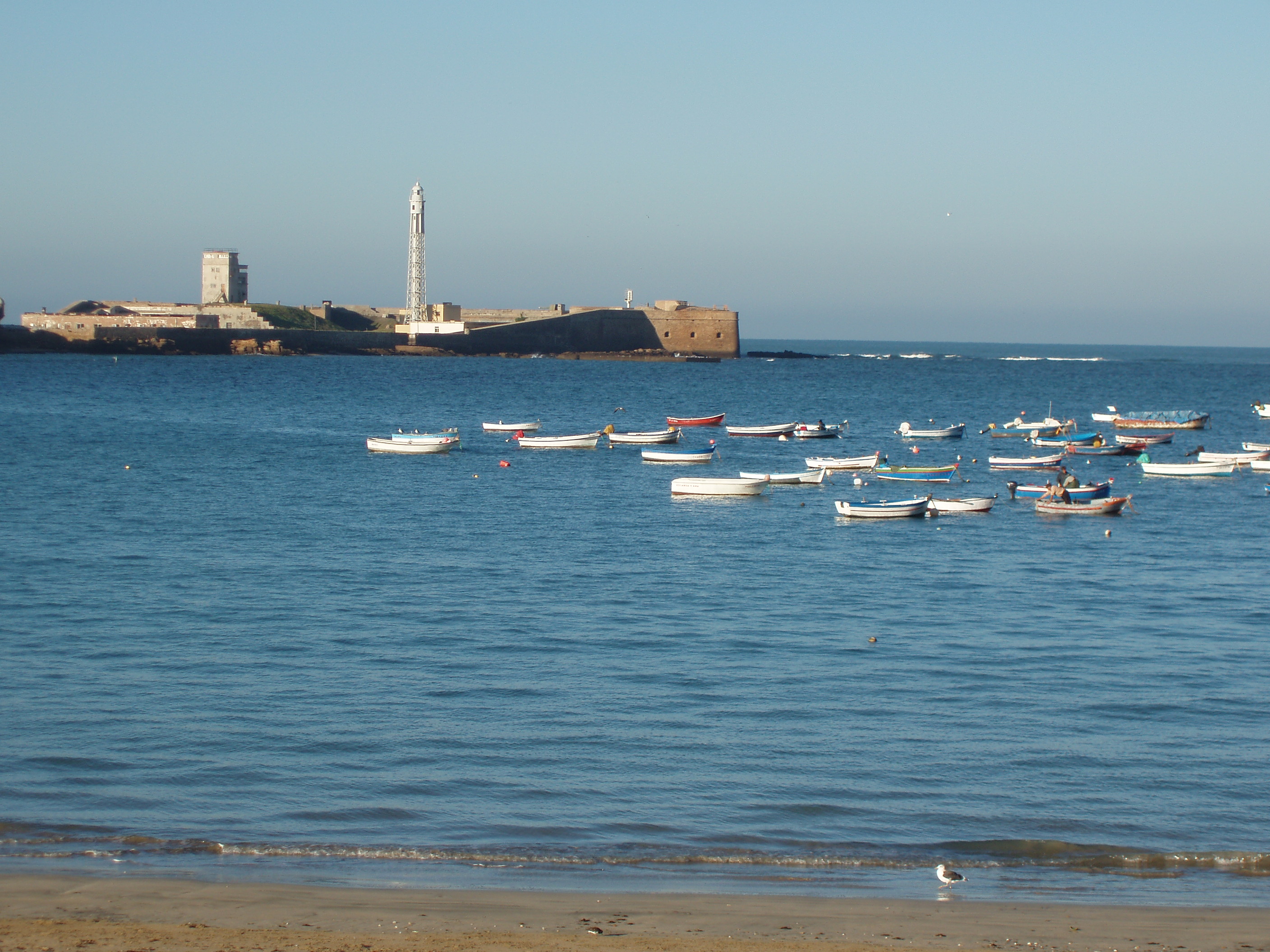
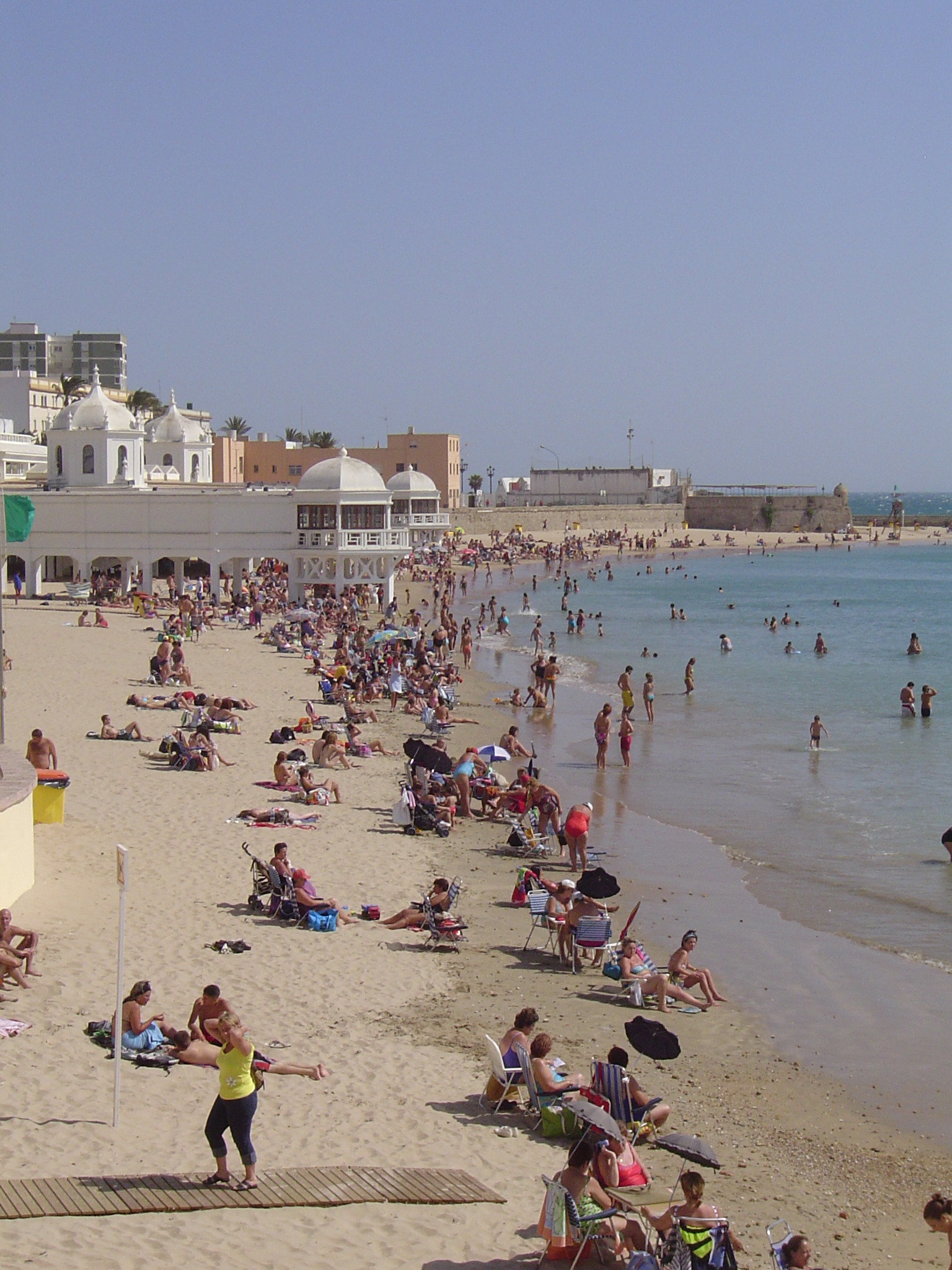
La Caleta is a beach located in the historical center of the city of Cádiz, Spain. It is a natural harbor by which Phoenicians, Carthaginians and Romans penetrated historically. It is the smallest beach in the city, and is isolated from the others.
Gallery

Sponsored
Location
1 explorer visited this place

32 m
The Spa of Our Lady of Palma and the Royal is a spa located in Cádiz, Spain. It was declared Bien de Interés Cultural in 1990.

337 m
The Castle of Santa Catalina is a castle located in Cádiz, Spain. It was declared Bien de Interés Cultural in 1993.

385 m
The French army besieged the large Spanish naval base of Cádiz from 5 February 1810 to 24 August 1812 during the Peninsular War. Following the occupation of Seville, Cádiz became the Spanish seat of power, and was targeted by 70,000 French troops under the command of the Marshals Claude Victor and Nicolas Jean-de-Dieu Soult for one of the most important sieges of the war. Defending the city were 2,000 Spanish troops who, as the siege progressed, received aid from 10,000 Spanish reinforcements as well as British and Portuguese troops.
During the siege, which lasted two and a half years, the Cortes of Cádiz – which served as a parliamentary Regency after Ferdinand VII was deposed – drew up a new constitution to reduce the strength of the monarchy, which was eventually revoked by Fernando VII when he returned.
In October 1810, a mixed Anglo-Spanish relief force embarked on a disastrous landing at Fuengirola. A second relief attempt was made at Tarifa in 1811. However, despite defeating a detached French force of 15,000–20,000 under Marshal Victor at the Battle of Barrosa, the siege was not lifted.
In 1812, the Battle of Salamanca eventually forced the French troops to retreat from Andalusia, for fear of being cut off by the Coalition armies. The French defeat contributed decisively to the liberation of Spain from French occupation, due to the survival of the Spanish government and the use of Cádiz as a jump-off point for the Coalition forces.

485 m
The University of Cádiz, commonly referred to as UCA, is a public university located in the province of Cádiz, Andalusia, Spain, noted for its medicine and marine sciences curricula. It was founded in 1979, and has the Latin motto Non Plus Ultra. Its headquarters are located in Cádiz, where the Rectorate is. During the 2007/2008 academic year, there were 17,280 students, 1,698 lecturers, and 680 administration and services workers associated with the university.

489 m
The Gran Teatro Falla is a theater in the city of Cádiz, Andalusia, Spain. It is located in the Plaza Fragela, facing the Casa de las Viudas and adjacent to the Faculty of Medicine of the University of Cádiz.
Construction of the theater began in 1884, following plans by architect Adolfo Morales de los Ríos. It was based on the foundation of the previous Gran Teatro de Cádiz, a wooden building designed by García del Álamo and built in 1871, but which had burned in 1881. In 1886 the city government took over direction of the project, which proceeded only intermittently due to lack of funds. The theater was completed in 1905. Municipal architect Juan Cabrera de la Torre made significant modifications to Morales's original plans. The theater was known as the "Gran Teatro" until 1926 when it was renamed for composer and native son Manuel de Falla.
Built in the Neo-Mudéjar style, it is made of red brick, and has three grand horseshoe arch entry doorways on its principal façade, with alternating red and white voussoirs. One enters through these doors into a large vestibule, which was redesigned in the 1920s. Stairways ascend to the horseshoe or U-shaped galleries above. The stage is 18 metres wide and 25.5 metres deep. The ceiling shows an allegory of Paradise, the work of Felipe Abarzuza y Rodríguez de Arias.
Every February the Gran Teatro Falla is the site of the artistic competitions of the Carnival of Cádiz. During repairs and restoration from 1987 to 1991, those competitions were held instead at the now-defunct Teatro Andalucía. Through the rest of the year, the theater hosts all manner of shows, such as plays or concerts.