


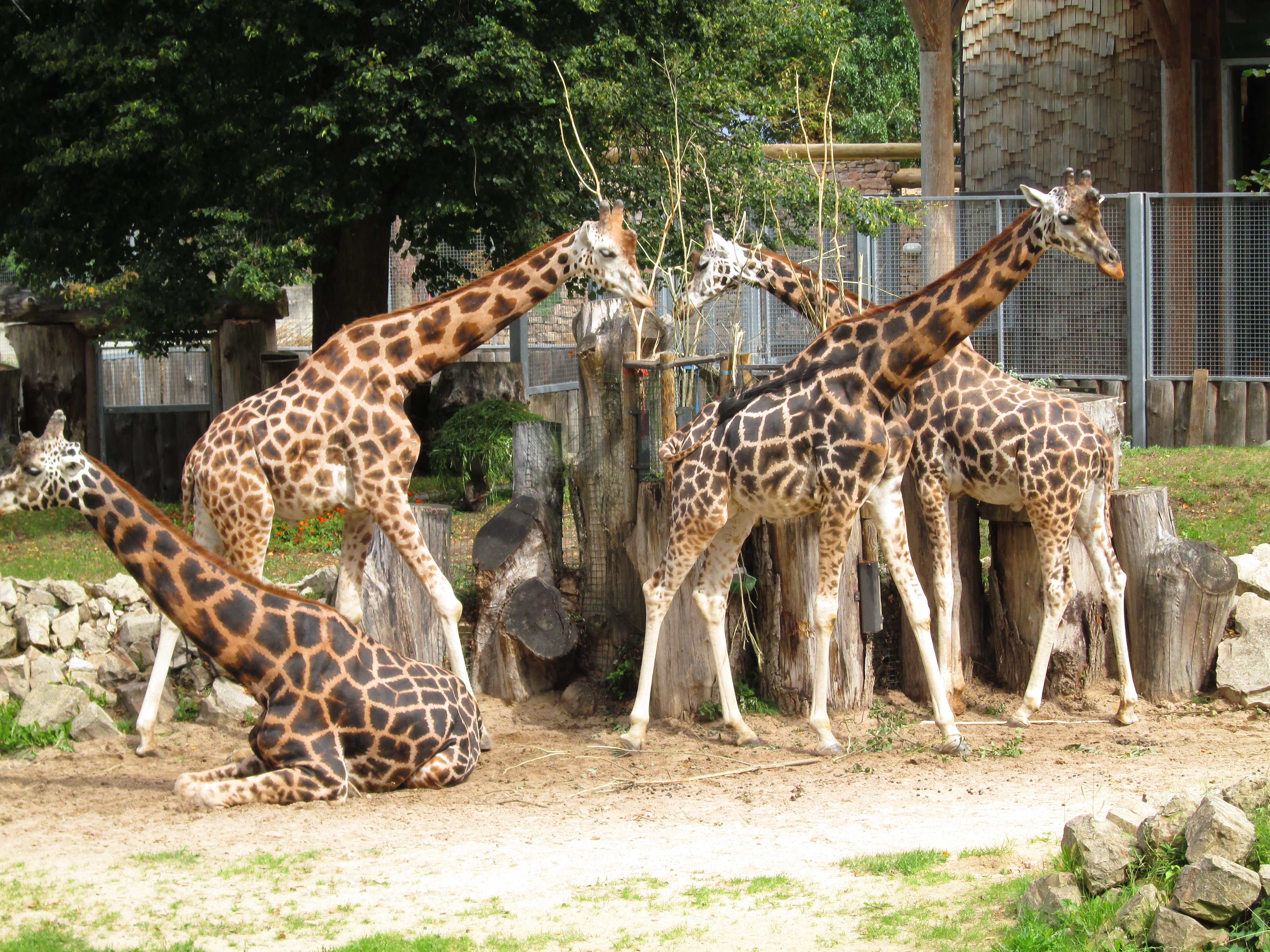
Le parc zoologique de Riga (letton : Rīgas Zooloģiskais dārzs) est un parc zoologique situé dans le quartier de Mežaparks à Riga en Lettonie.
Gallery






Sponsored
Location
1 explorer visited this place

0 m
Riga Zoo is a city-owned zoo in Riga, Latvia. It is located in Mežaparks neighbourhood next to the Mežaparks park, on the western bank of Ķīšezers lake. Riga Zoo houses around 4000 animals of nearly 500 species and is visited by 250–300,000 visitors annually. The zoo has a branch "Cīruļi" in Liepāja district, Kalvene parish, established in 1996, it has an area of 135 hectares.

877 m
Mežaparks is a neighbourhood of Northern District in Riga, the capital of Latvia. It consists of a residential area to the South and a large urban park to the North of the same name – Mežaparks. The neighbourhood is located on the western shore of Lake Ķīšezers. The name is literally translated as "forest park". The neighbourhood and park were built in the early 20th century and the area was originally called Kaiserwald. It was one of the world's first garden cities. It had large number of Art Nouveau and Eclectic villas for upper class inhabitants of Riga. During the Second World War, the Kaiserwald concentration camp was located in this park, and many Jews, Gypsies, Communists, and other opponents of Nazi rule were murdered in these woods.
Today it is still one of the wealthier areas of Riga, the Mežaparks Great Bandstand hosts the Latvian Song and Dance Festival in early July every five years.
Mežaparks is also host to the Riga Zoo and its lakeside locale allows for various water sporting activities. There is also an amusement park in Mežaparks, which makes the neighborhood a popular summer destination for Riga residents.

949 m
Mežaparks is a large urban park in the Mežaparks neighbourhood of Riga, the capital of Latvia. The park is home to the open-air Mežaparks Great Bandstand and has Riga Zoo located next to it as well as access to Ķīšezers lake. The 424 ha territory is covered with coastal dunes, much of it with boreal forests, both protected conserved biotopes. The territory began to be used for recreation in the 18th century and was added to Riga's territory in the 19th century. In 1901, the Mežaparks neighbourhood became Russian Empire's first architectural project to use the garden city movement. The area was expanded and developed during the first half of the 20th century, primarily serving as an elite sports complex. After World War II in 1949, the Soviet Government carried out a major expansion of the park and inaugurated it as a public park with many recreational areas and buildings. Up until the end of the 20th century, the park continued to serve as a public park. Although little of the Soviet architecture survives, the park has seen a resurgence after restoration of Latvia's independence and is currently a popular recreational location. The park and the neighbourhood are a national heritage site and architectural cultural monuments.

1.0 km
Mežaparks Lutheran Church is a Lutheran church in Riga, the capital of Latvia. It is a parish church of the Evangelical Lutheran Church of Latvia. The church is situated at the address 1 Roberta Feldmaņa Street. Worship is offered in both Latvian and Russian languages.

1.1 km
The Mežaparks Great Bandstand, also called the Song Festival Bandstand, Open-Air Stage, is a large open-air bandstand in Mežaparks park in the Mežaparks neighbourhood of Riga, the capital of Latvia. The bandstand has added cultural value to Riga since 1955, when the Latvian Song and Dance Festival was moved to this venue.
The bandstand was erected according to a project by architect and civil engineer Vladimir Schnitnikov. It lies in the northern part of Mežaparks, an area that mostly consists of pine forest. Within the cleared area of the forest, the bandstand lies in the northwestern corner, and the rest of the area has long wingshaped benches with seating for 30,000 spectators. There were up to 200,000 spectators attending the 1988 Latvian Song and Dance Festival.
The stage is an integral part of the Song and Dance Festival which is a unique feature of Latvian culture and a part of national identity. The key function of an open air stage is to keep the tradition of the Song Festival, which is included in the UNESCO cultural heritage list.