

 English
 Français
Zoo de Glasgow
Le Zoo de Glasgow (en anglais : « Glasgow Zoo »), autrefois nommé Calderpark Zoo, est un ancien parc zoologique sis à Glasgow. Il ouvre le 9 juillet 1947 et devient le premier parc zoologique de Grande-Bretagne à être créé après la Seconde Guerre mondiale.
Nearby Places View Menu
0 m
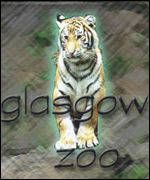
Glasgow Zoo
Glasgow Zoo, or Calderpark Zoo, was a 99-acre (40 ha) zoological park in Baillieston, Glasgow, Scotland.
The zoo was established in 1947 by the Zoological Society of Glasgow and West of Scotland, which was itself established in 1936. The zoo was located on the lands of the former Calderpark Estate, and during its peak attracted about 140,000 visitors a year. At the zoo's peak it contained over 600 animals and had 24 full-time and many part-time or seasonal staff.
It closed in August 2003 after running up a debt of around £3.5 million and failing to renew its zookeeper licence, having been unable to meet new standards on animal welfare. In the last few years that it was open, Glasgow Zoo deteriorated mainly due to the lack of funding from the local council and due to many allegations of animal cruelty.
255 m
Calderpark Halt railway station
Calderpark Halt railway station or Calderpark for Glasgow Zoo (NS679625) served Calderpark Zoo opened in 1947 on the old estate of Calderpark and the Baillieston area of Glasgow, Scotland on the Glasgow, Bothwell, Hamilton and Coatbridge Railway between Shettleston and Hamilton. Glasgow Zoo closed in 2003.

267 m
Broomhouse, Glasgow
Broomhouse is a residential area in Glasgow, Scotland. It is about six miles (ten kilometres) east of the city centre. Historically a small mining village and later the site of the Glasgow Zoo, in the early 21st century it grew substantially as an affluent commuter suburb.
Although close to Baillieston and within the Glasgow boundaries, the neighbourhood has a G71 postcode which has often led to it being associated with Uddingston, the main town for that district which is about 1+1⁄2 miles (2.5 kilometres) southeast in the South Lanarkshire local authority area.

708 m
Baillieston railway station
Baillieston railway station is located in Caledonia Road on the southern boundary of the Baillieston area of Glasgow, Scotland, with the Broomhouse area on the other side of the tracks. It is on the Whifflet Line (a branch of the more extensive Argyle Line), 8 miles (13 km) east of Glasgow Central. Train services are provided by ScotRail.
The line was built in the period 1864–1866 by the Caledonian Railway and was called the Rutherglen to Coatbridge branch.
The new station opened by British Rail on 4 October 1993 under the financial management of the Strathclyde PTE.

804 m
Rotten Calder
The Rotten Calder is a river to the east of East Kilbride, South Lanarkshire, Scotland and along with the Rotten Burn it forms the southern and western boundaries of Blantyre.
It begins as the Calder Water at its source at Ardochrig, and is joined by the Cleughearn, Lea and Drumloch Burns around Langlands Moss which drain from the Eldrig Hills. This river has also been titled the 'West' or 'South Calder Water', although the latter title is shared by another river in Motherwell. Upon being joined by the Rotten Burn to the south-east of East Kilbride, the river becomes the Rotten Calder Water. 'Water' is a term used in Scotland to denote a small river.
The Rotten Calder runs through a gorge titled Calderglen, where it flows through East Kilbride Parish. This area of the gorge is under the jurisdiction of Calderglen Country Park, run by South Lanarkshire Council. Over 160 nature trails border the river on both banks, in addition to the forest which occupies the slopes, and ferns, mosses and liverworts on the rocky precipices. European otter, roe deer and European green woodpecker can be seen in the southern reaches of the park. Common buzzards can be seen hunting over open areas by the river and the grey heron, grey wagtail and white-throated dipper are common sights too. The river flows by the site of the former Calderwood Castle (demolished 1947–1951).
The gorge of the Rotten Calder Water was celebrated in books and poems for its grandeur and lush ivy-tied crags. Many traces of 18th- and 19th-century landscape additions can be traced in the park, as well as old mines, quarries, and religious sites. After passing under the General's Bridge at Stoneymeadow, the Water flows by Crossbasket Castle (House) in an easterly direction, and on through the former estates of Greenhall and Milheugh where the valley is seen to give way to wide flood plains.
After Milheugh the river again regains its steep gorge and flows through scenery before flowing into the River Clyde near Daldowie. There are many waterfalls on the river, these are Millwell Linn, Flatt Linn (Crutherland Linn), Torrance Linn (Fairy Linn or Walk Fort Linn), Black Linn, Trough Linn, Calderwood Linn (Castle Falls), Crossbasket Linn, Horseshoe Falls, Old Horseshoe Linn, Small Falls, and Milheugh Falls.
East Kilbride Angling Club have the fishing rights and stock the river with brown trout occasionally but not every year. Permits are available from calderglen visitor centre and the post office at the town centre
The river flows via the north side of Blantyre and forms the eastern boundary of the Newton district of Cambuslang before joining the River Clyde opposite Daldowie.
The valley of the Rotten Calder includes hermitages, islets, caves, crannies, ancient markings, fountains, fairy wells, numerous waterfalls, over 200 nature trails, summerhouses, ruined castles, and steep cliffs.
In addition to Calderglen Park and Calderwood House, the river is referenced in other man-made features near its course, including the Calderwood residential area of East Kilbride, Calderglen High School in the same town, Calderglen House and the former Caldervale village near Blantyre, and Calderside Academy in the same town.