

 English
 Français
Crossford, Fife
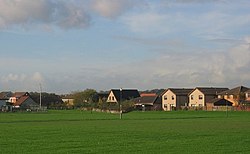
Crossford is a small village located in West Fife, Scotland. Its population was 2,358 in 2011. It is 1 mile (1.6 kilometers) west of the city Dunfermline, east of Cairneyhill, astride the A994. The village has mixed housing with large housing estates on the southwest and northwest ends. Most residents work either locally or commute to Edinburgh or Glasgow. Crossford lies north of the Firth of Forth and 17 mi (27 km) from Edinburgh.
Nearby Places View Menu
2.1 km
Cairneyhill
Cairneyhill is a village in West Fife, Scotland. It is 3 miles west of Dunfermline, on the A994, and has a population of around
2,510 (2020)
The village's architecture is a mix of old weavers' cottages and modern suburban housing estates. The village is located north and west of the A985, a major trunk road that provides fast travel by car or bus to the Kincardine Bridge, the M90 Motorway and the Queensferry Crossing/Forth Road Bridge. Cairneyhill lies to the north of Crombie.
The Firth of Forth is located 1.5 miles south of Cairneyhill, which is 1 mile (1.6 km) west of Crossford.

2.2 km
Crombie, Fife
Crombie is a village in the civil parish of Torryburn, in southwest Fife, Scotland. The village is on the A985 road 3 miles (5 km) west of Dunfermline and is to the south of Cairneyhill, and north-west of Charlestown. On the southern side of the village is Defence Munitions Crombie, a military munitions depot and pier on the upper Firth of Forth.

2.3 km
Pittencrieff Park
Pittencrieff Park (known locally as "The Glen") is a public park in Dunfermline, Fife, Scotland. It was purchased in 1902 by Andrew Carnegie, and given to the people of Dunfermline in a ceremony the following year. Its lands include the historically significant and topologically rugged glen which interrupts the centre of Dunfermline and, accordingly, part of the intention of the purchase was to carry out civic development of the area in a way which also respected its heritage. The project notably attracted the attention of the urban planner and educationalist, Patrick Geddes.
The glen is an area of topographical and historical significance to Dunfermline as the original site of Malcolm's Tower, the probable remains of which can be identified today on a strongly defendable outcrop of rock. To the eastern side of the park is Dunfermline Palace with Dunfermline Abbey and to the west it overlooks the village of Crossford.

2.3 km
Malcolm's Tower
Malcolm's Tower, also known as Malcolm Canmore's Tower, is a historic site in the Scottish city of Dunfermline, Fife. It consists of the foundations of a rubble built, rectangular tower enclosed by an oval shaped modern wall and is protected as a scheduled monument. It is located in Pittencrieff Park.
The tower stood on a highly defensible peninsular outcrop of rock above a deep ravine and is the site from which the city derives its name. It was effectively the seat of royal power in Scotland after Malcolm III of Scotland shifted the centre of government from Forteviot to Dunfermline in the mid 11th century. The site was also close to a religious centre which had begun as a Culdee establishment in the 9th century. The first mention of the tower in the historical record is from 1070 when Malcolm III married his queen, Princess Margaret. As queen, Margaret introduced innovations which changed the course and identity of the Church in Scotland. Not far to the east of the tower's location are the remains of Dunfermline Abbey and later royal palace.
All that survives of the tower today are foundational fragments of wall, but an image of the building was adopted at an early date as the burgh arms for Dunfermline. Old wax seals suggest it to have been a building of two storeys with an attic. It might have contained around twenty small apartments. Before the western access road to Dunfermline was built, Malcolm's Tower would have been an almost impregnable fortress, perhaps rather like a broch, and this almost certainly explains Dunfermline's motto Esto rupes inaccessa (Be an inaccessible rock).
The opening lines of the traditional "Ballad of Sir Patrick Spens" are thought to refer to the tower:
The King sits in Dunfermling Toun
Drynking the bluid-red wyne …