

 English
 Français
Bannockburn railway station
Bannockburn railway station served the town of Bannockburn, Stirlingshire, Scotland from 1848 to 1950 on the Scottish Central Railway.
Nearby Places View Menu

657 m
Bannockburn
Bannockburn (Scottish Gaelic: Allt a' Bhonnaich) is an area immediately south of the centre of Stirling in Scotland. It is part of the City of Stirling. It is named after the Bannock Burn, a stream running through the town before flowing into the River Forth.
1.8 km
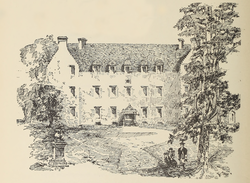
Bannockburn House
Bannockburn House is a late 17th century country house located in Bannockburn in Stirling, Scotland. Bannockburn House is located within the Battle of Sauchieburn Historic Battlefield and is north of Bannockburn Historic Battlefield. Bannockburn House is of cultural significance due to its association with medieval battles, Jacobite history, and ties to the tartan weaving industry. Bannockburn House is considered a property of historical significance in the town of Bannockburn and is a Category A listed building.

1.9 km
Broomridge
Broomridge is a district in the south of the city of Stirling, Scotland, located north of Bannockburn and east of St. Ninians. It is home to Bannockburn High School and is also served by Braehead Primary School in the neighbouring district of Braehead.
The area, formerly a village outside of the city, has expanded due to the ongoing construction of new private housing between the 1960s and 1990s and is now within the city limits. The vast majority of Broomridge is taken up by housing, and the area is typical of newly built housing in the outskirts of towns and cities in Scotland. A small woodland patch close to Bannockburn High School called the Balquiderrock Woods (known locally as the Bluebell Woods due to its growth of such flowers in the spring season) remains as it is protected under legislation considering it a wildlife reserve.

2.0 km
Fallin, Stirling
Fallin () is a former pit village in Central Stirling, in the county of Stirlingshire. It was on the site of the Polmaise Colliery 3&4 (Polmaise Colliery 1&2 were situated in Milhall), and both of the names Polmaise and Fallin were commonly used. Fallin is regarded the last traditional pit village in Scotland. The area lies on the A905 road 3 miles east of Stirling on a bend in the River Forth. The 2001 United Kingdom census recorded the population as 2,710.
Fallin has been the site of several new housing developments and community initiatives.