


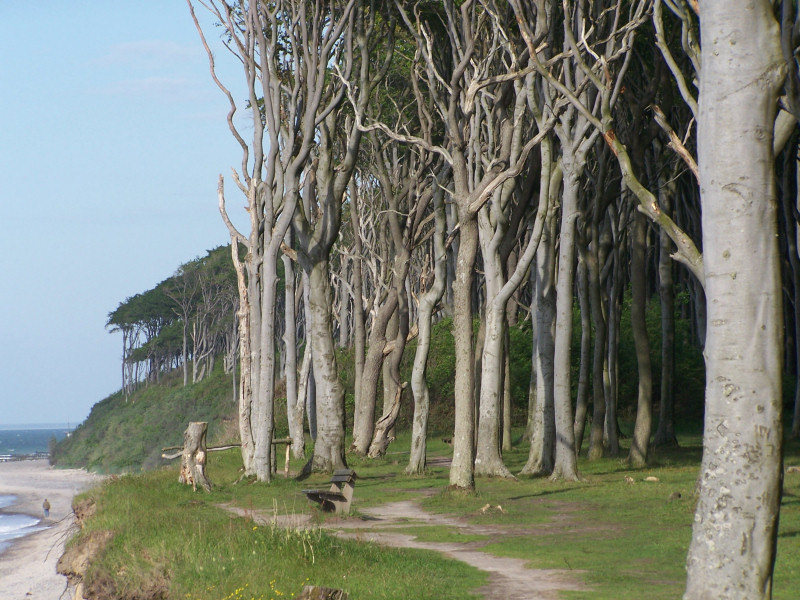
Nienhagen (German pronunciation: [niːnˈhaːɡn̩]) is a municipality in the Rostock district, in Mecklenburg-Vorpommern, Germany.
Gallery

Sponsored
Location
1 explorer visited this place

4.9 km
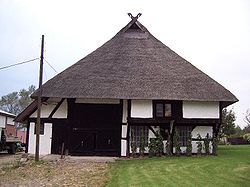
Elmenhorst/Lichtenhagen is a municipality in the Rostock district, in Mecklenburg-Vorpommern, Germany.
5.7 km
Admannshagen-Bargeshagen is a municipality in the Rostock district, in Mecklenburg-Vorpommern, Germany.

6.5 km
Stege and Waidbach are two small rivers in Mecklenburg-Vorpommern, Germany, forming a pseudobifurcation. This means, they are linked by a waterbody that is drained in both directions. The common top section is fed by sources in small valleys at the eastern slope of Kühlung hills. The northern part, Stege, flows into the Mühlenfließ in Bad Doberan. The southern part, Waidbach, flows into the Beke near Ziesendorf.

6.6 km
Violent xenophobic riots took place in the Lichtenhagen district of Rostock, Germany, from 22–24 August 1992. These were the worst mob attacks against migrants in postwar Germany. Attackers threw stones and petrol bombs at an apartment block where asylum seekers lived. At the height of the riots, several hundred militant right-wing extremists were involved, and about 3,000 neighbourhood onlookers stood by, applauding them.
The initial response of authorities and politicians was strongly criticised. For some days prior to the riots, veiled warnings of impending trouble had been posted in some newspapers. Police and politicians seemed reluctant to respond and, when they did, their responses were considered inadequate. Outside the building where refugees were housed, several hundred asylum seekers had been camping for days with little or no access to basic facilities. This was contributing to escalating tensions in the neighbourhood.
Between 22 and 26 August 1992, authorities made 370 provisional arrests and 408 preliminary investigations related to the riots. Among those arrested were 110 people from the former West Germany; 217 from the state of Mecklenburg-Vorpommern, including 147 from Rostock; and another 37 from the former East Germany. During the riot, 204 police officers were injured. No one was killed.

7.1 km
German submarine U-1308 was the last Type VIIC/41 submarine to be laid down, launched and commissioned by Nazi Germany's Kriegsmarine during World War II. The Oberkommando der Marine or OKM,, had decided near the end of World War II to put all of its resources into building newer types of Unterseeboot, such as the types XXI and XXIII. U-1308 was part of a batch of eight U-boats ordered on 1 August 1942 to be built at Flensburger Schiffbau-Gesellschaft, Flensburg. She was laid down on 16 February 1944 and launched on 22 November. The eight boats were commissioned over a 12-month period between February 1944 and 17 January 1945 .
As U-1308 was the last Type VII, the Kriegsmarine fitted her out to be one of the most advanced. U-1308 was one of nine Type VIIs fitted with an experimental synthetic rubber skin of anechoic tiles known as Alberich, which had been designed to counter the Allies' asdic/sonar devices. U-1308 was also one of two Type VIIC/41s equipped with a new design of passive sonar hydrophones, thus increasing detection ranges by approximately 70% over the older designs.
A few days before Germany surrendered on 8 May 1945, U-1308 was taken approximately 5 km north-west of Warnemünde and scuttled on 1 May at approximately 54°13′00″N 12°02′00″E as part of Operation Regenbogen, to avoid her surrender. During the final days of Nazi Germany there was a plethora of U-boats which suffered the same fate. In the last week of the war, 28 other boats joined her.
She would not remain on the sea floor for long however, as she was salvaged in February 1953 for potential use in East Germany's fledgling U-boat program. However, the U-1308 would ultimately be scrapped in mid 1953 following the abandonment of the East Germany's plans for a U-boat fleet.
Book your tour near
Nienhagen, Mecklenburg-Vorpommern
Book Now
4.4
in partnership with
GetYourGuide.com