


San Ciriaco de Camiliano was an ancient church of the city of Rome, formerly located on the present site of the Piazza del Collegio Romano near the Via del Corso (the ancient Via Lata of the Romans). It was demolished in 1491 during construction on the church of Santa Maria in Via Lata.
Location

19 m
Santa Maria in Via Lata is a church on the Via del Corso, in Rome, Italy. It stands diagonal from the church of San Marcello al Corso. It is the stational church for Tuesday in the fifth week of lent.

29 m
Il Facchino is one of the talking statues of Rome. Like the other five "talking statues", pasquinades - irreverent satires poking fun at public figures - were posted beside Il Facchino.
Il Facchino was originally sited on the via del Corso, on the main facade of the Palazzo De Carolis Simonetti, near the piazza Venezia. In 1874, it was moved to its current position, to the side of the same building, now the Banco di Roma, on the Via Lata.
Unlike the other talking statues, which are all dated to Ancient Rome, Il Facchino is relatively modern. The statue was created in around 1580, to a design by Jacopo del Conte for the Corporazione degli Aquaroli . It depicts a man wearing a cap and a sleeved shirt, carrying a barrel - an "acquarolo", who would take water from the Tiber to sell on the streets of Rome during the period before, at the orders of the Popes, the Roman aqueducts were repaired and the public fountains played again. Water spouts from the bunghole creating a fountain. The man's face is badly damaged, the result of paving stones thrown at it over the years, in the popular misapprehension that it portrayed Martin Luther.

43 m
The Galleria Doria Pamphilj is a large private art collection housed in the Palazzo Doria Pamphilj in Rome, Italy, between Via del Corso and Via della Gatta. The principal entrance is on the Via del Corso. The palace façade on Via del Corso is adjacent to a church, Santa Maria in Via Lata. Like the palace, it is still privately owned by the princely Roman family Doria Pamphili. Tours of the state rooms often culminate in concerts of Baroque and Renaissance music, paying tribute to the setting and the masterpieces it contains.
With some earlier and later exceptions, the bulk of the collection consists of works from the 16th and 17th centuries, a high proportion of them of exceptional quality.

46 m
The Arcus Novus was an ancient arch in Rome, located on the Via Lata, at the site of the church of Santa Maria in Via Lata.
67 m
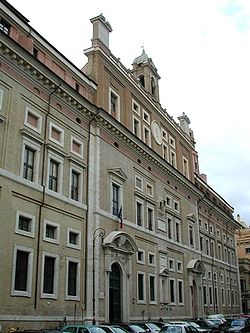
The Ennio Quirino Visconti Liceo Ginnasio is the oldest and most prestigious liceo classico in Rome, also known as Roman College due to its previous historical role.
Book your tour near
San Ciriaco de Camiliano
Book Now
4.0
in partnership with
GetYourGuide.com