


Overton is a hamlet in the civil parish of Arlingham, in the Stroud district, in the county of Gloucestershire, England. The name, first recorded in 1584, is of Old English origin and means "upper farmstead". Barrow Hill (62m), above the hamlet, is the highest point on the Arlingham peninsula and offers good views across the Severn to the Forest of Dean.
Location
1 explorer visited this place

810 m
Wick Court is a country house in the parish of Arlingham, Gloucestershire, England, 0.5 mile east of the hamlet of Overton. It was constructed between the late 14th and the mid-17th centuries. Now a base for the charity Farms for City Children, it operates as a traditional livestock farm providing experience of country life for children from urban areas. Wick Court is a Grade II* listed building.
1.1 km
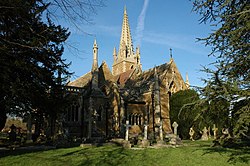
Fretherne is a small village and former civil parish, now in the parish of Fretherne with Saul, in the Stroud district, in Gloucestershire, England, situated between the larger villages of Frampton-on-Severn and Arlingham. In 1881 the parish had a population of 239. In the Domesday Book of 1086 it is recorded as held by Turstin FitzRolf. The village name probably originates from Old English 'Frithorne,' meaning 'Freo's thorn.'
A public footpath 50 metres west of the church leads to Hock Cliff at the River Severn, which is popular with fossil hunters.
On 24 March 1884 the parish was abolished to form "Fretherne with Saul".
1.1 km
Fretherne Court was a residential sporting mansion and deer park estate of some 676 acres, situated in the Severn Vale between the Gloucester and Sharpness Canal and the River Severn, in Fretherne, Gloucestershire. It was owned by the Darell family who were Baronets of Richmond Hill.
1.3 km
The Westbury Shales is a geologic formation in England. It preserves fossils of Holcoptera schlotheimi, Saurichthys acuminatus, Coleopteron sp. and Liassophlebia sp. dating back to the Rhaetian period.
1.4 km
Priding is a hamlet in the civil parish of Arlingham, in the Stroud district, in the county of Gloucestershire, England.
Wick Court is a Grade II* listed building. It is an "almost unaltered example of an Elizabethan house said to have been used by the Lords Berkeley when catching salmon, and even visited by Queen Elizabeth."