


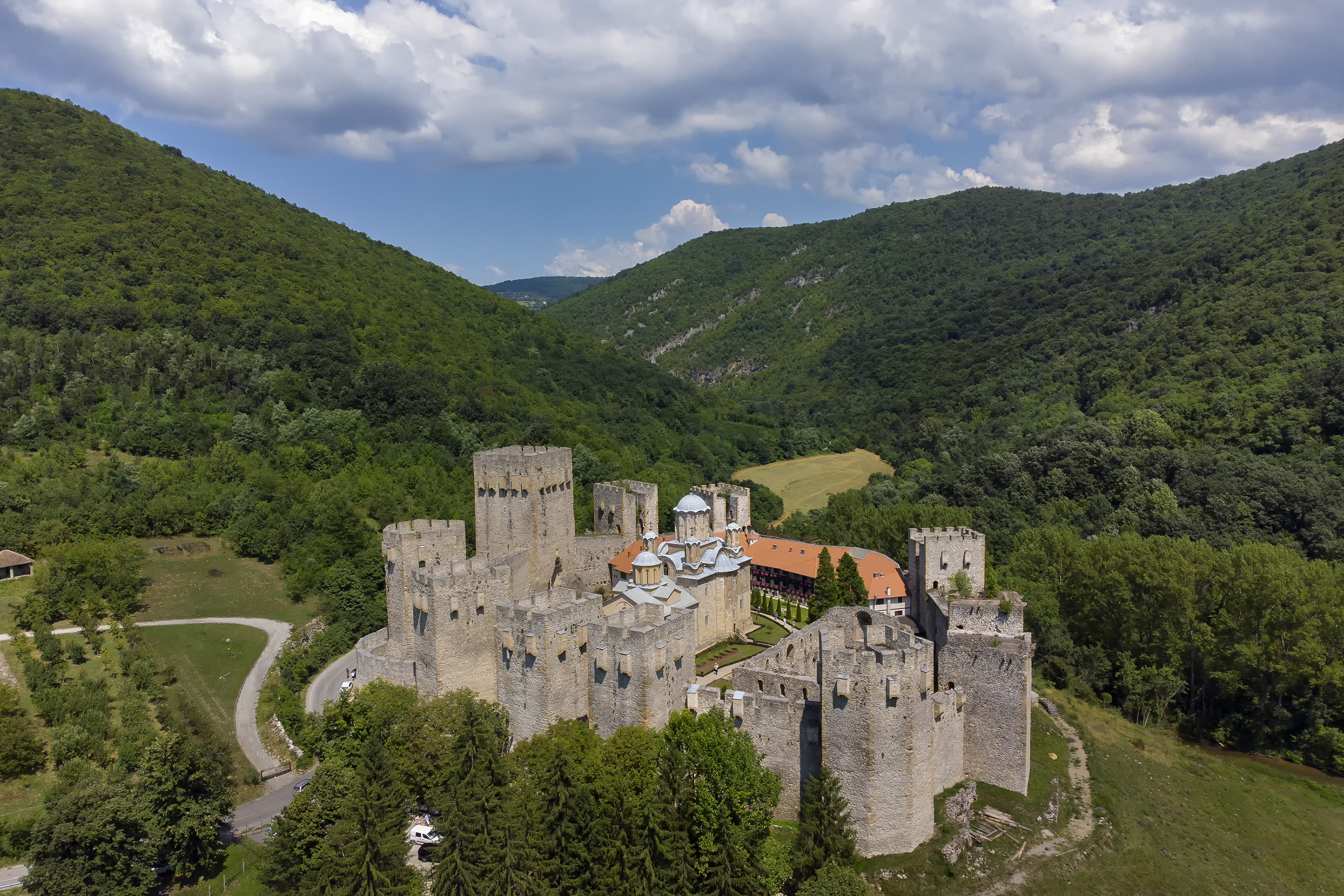
The Monastery of St. Basil of Ostrog (Serbian Cyrillic: Манастир Свети Василије Острошки) is a Serbian Orthodox monastery located in the city Bijeljina, Republika Srpska, Bosnia and Herzegovina.
Gallery


Sponsored
Location
1 explorer visited this place

205 m
The Bijeljina massacre involved the killing of civilians by Serb paramilitary groups in Bijeljina on 1–2 April 1992 in the run-up to the Bosnian War. The majority of those killed were Bosnian Muslims. Members of other ethnicities were also killed, as well as Serbs deemed disloyal by the local authorities. The killings were committed by a local paramilitary group known as Mirko's Chetniks and by the Serb Volunteer Guard, a Serbia-based paramilitary group led by Željko "Arkan" Ražnatović. The SDG were under the command of the Yugoslav People's Army, which was controlled by Serbian President Slobodan Milošević.
In September 1991, Bosnian Serbs had proclaimed a Serbian Autonomous Oblast with Bijeljina as its capital. In March 1992, the Bosnian referendum on independence was passed with overwhelming support from Bosnian Muslims and Bosnian Croats. However, Bosnian Serbs either boycotted it or were prevented from voting by Bosnian Serb authorities. A poorly organised, local Bosnian Muslim Patriotic League paramilitary group had been established in response to the Bosnian Serb proclamation. On 31 March, the Patriotic League in Bijeljina was provoked into fighting by local Serbs and the SDG. On 1–2 April, the SDG and the JNA took over Bijeljina with little resistance; murders, rapes, house searches, and pillaging followed. These actions were described as genocidal by the historian Professor Eric D. Weitz of the City College of New York. Professor Michael Sells of the University of Chicago concluded that they were carried out to erase the cultural history of the Bosnian Muslim people of Bijeljina.
Around 3 April, Serb forces removed the bodies of those massacred in anticipation of the arrival of a Bosnian government delegation tasked with investigating what had transpired. The International Criminal Tribunal for the former Yugoslavia and the Serbian War Crimes Prosecutor's Office were able to verify between 48 and 78 deaths. Post-war investigations have documented the deaths of a little over 250 civilians of all ethnicities in the Bijeljina municipality during the war. After the massacre, a campaign of mass ethnic cleansing of non-Serbs was carried out, all mosques were demolished, and nine detention camps were established. Many deaths in Bijeljina were not officially listed as civilian war victims and their death certificates claim they "died of natural causes."
As of December 2014, local courts had not prosecuted anyone for the killings, and no members of the SDG had been prosecuted for any crimes the unit carried out in Bijeljina or elsewhere in Croatia or Bosnia and Herzegovina. Milošević was indicted by the ICTY and charged with carrying out a genocidal campaign that included Bijeljina and other locations, but died during the trial. Republika Srpska leaders Biljana Plavšić and Momčilo Krajišnik were convicted for the deportations and forcible transfers in the ethnic cleansing that followed the massacre. Radovan Karadžić, the former President of Republika Srpska, was convicted for the massacre and other crimes against humanity committed in Bijeljina. Jovica Stanišić and Franko Simatović, Serbian intelligence officers, were also convicted. At the end of the war, fewer than 2,700 Bosnian Muslims still lived in the municipality from a pre-war population of 30,000. The Serbs of Bijeljina celebrate 1 April as "City Defense Day", and a street in the city has been named after the SDG.
205 m
Bijeljina municipality, Republika Srpska, Bosnia and Herzegovina, is divided into following subdivisions:
Amajlije • Balatun • Banjica • Batar • Batković • Bijeljina • Bjeloševac • Brijesnica • Brodac Donji • Brodac Gornji • Bukovica Donja • Bukovica Gornja • Crnjelovo Donje • Crnjelovo Gornje • Čađavica Donja • Čađavica Gornja • Čađavica Srednja • Čardačine • Čengić • Ćipirovine • Dazdarevo • Dragaljevac Donji • Dragaljevac Gornji • Dragaljevac Srednji • Dvorovi • Glavičice • Glavičorak • Glogovac • Gojsovac • Golo Brdo • Hase • Janja • Johovac • Kacevac • Kojčinovac • Kovanluk • Kriva Bara • Ljeljenča • Ljeskovac • Magnojević Donji • Magnojević Gornji • Magnojević Srednji • Međaši • Modran • Novo Naselje • Novo Selo • Obrijež • Ostojićevo • Patkovača • Piperci • Popovi • Dijelovi • Pučile • Ruhotina • Suho Polje • Triješnica • Trnjaci • Velika Obarska • Velino Selo • Vršani • Zagoni
205 m
Radio Slobomir She was Bosnian local commercial radio station, broadcasting from Bijeljina, Bosnia and Herzegovina. This radio station broadcasts a variety of programs such as popular pop and folk music with local news.
The program is mainly produced in Serbian at five FM frequencies and it is available in the city of Bijeljina as well as in nearby municipalities in Semberija Bosansko Podrinje area.
The owner of the local radio station is the company RADIO TELEVIZIJA SLOBOMIR D.o.o. Slobomir which also operates RTV Slobomir.
Estimated number of listeners of Radio Slobomir is around 268.917.
205 m
Pan Radio is a Bosnian local commercial radio station, broadcasting from Bijeljina, Bosnia and Herzegovina. This radio station broadcasts a variety of programs such music and local news.
The owner of the local radio station is the company Panorama - pres d.o.o. Bijeljina.
Pan Radio was established on 1 August 1997. Program is mainly produced in Serbian language at one FM frequency and it is available in the city of Bijeljina as well as in nearby municipalities in Semberija area.
Estimated number of listeners of Pan Radio is around 66.597.

205 m
SAO North-East Bosnia was a Serb Autonomous Region, a Serb break-away province, in the Yugoslav republic of Bosnia and Herzegovina. It was established in September 1991, proclaimed by the Serb Democratic Party on 19 September 1991, along with other SAOs, and included five districts in northeastern SR BiH. It existed between September 1991 and 9 January 1992, when it became part of Republic of the Serb people of Bosnia and Herzegovina. It was renamed SAO Semberija in November 1991, and SAO Semberija and Majevica in December 1991. It included three municipalities, with a population of 150,000, out of whom 56–59% were ethnic Serbs. The capital was Bijeljina.
Book your tour near
Monastery of St. Basil of Ostrog, Bijeljina
→