


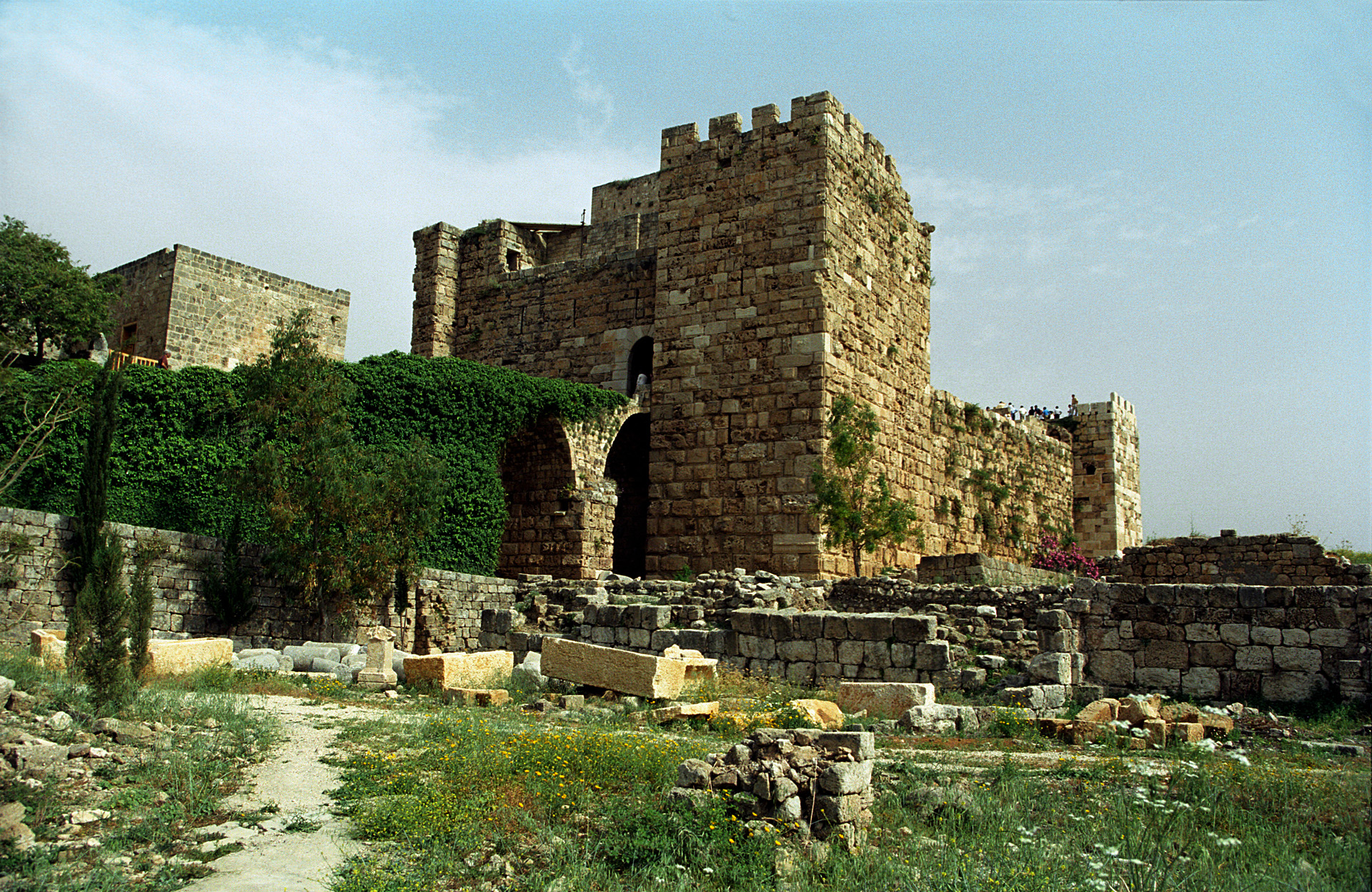
La seigneurie du Gibelet est un des fiefs du comté de Tripoli.
Location
1 explorer visited this place
1 m
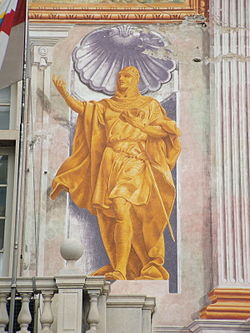
The Embriaco family were a prominent Genoese family, who played an important role in the history of the Crusader states. It also gave consuls, admirals and ambassadors to the Republic of Genoa.
The family ruled the city of Byblos, styling themselves "Lord of Giblet" or "Gibelletto", the name which the city was called at the time. Their rule lasted for almost 200 years, from 1100 to the late 13th century.

1 m
Byblos Castle is a Crusader castle in Byblos, Lebanon. In Crusader times it was known as the Castle of Gibelet , also spelled Giblet, which belonged to the Genoese Republic Embriaco family, Lords of the city. It is adjacent to the Phoenician archaeological site containing the ruins of the Temple of Baalat Gebal and the Temple of the Obelisks.

106 m
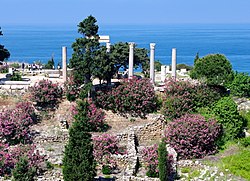
The Temple of Baalat Gebal was an important Bronze Age temple in the World Heritage Site of Byblos. The temple was dedicated to Ba'alat Gebal, the goddess of the city of Byblos. Built around 2800 BC, it was the largest and most important sanctuary in ancient Byblos, and is considered to be "one of the first monumental structures of the Syro-Palestinian region". Two centuries after the construction of the Temple of Baalat Gebal, the Temple of the Obelisks was built approximately 100m to the east.
The length and continuity of its history as an active temple is "remarkable" and "supports its centrality in the life of the city".
An important group of Byblos figurines were found in the temple; these figurines have become the "poster child" of the Lebanese Tourism Ministry.
119 m
The royal necropolis of Byblos is a group of nine Bronze Age underground shaft and chamber tombs housing the sarcophagi of several kings of the city. Byblos is a coastal city in Lebanon, and one of the oldest continuously populated cities in the world. The city established major trade links with Egypt during the Bronze Age, resulting in a heavy Egyptian influence on local culture and funerary practices. The location of ancient Byblos was lost to history, but was rediscovered in the late 19th century by the French biblical scholar and Orientalist Ernest Renan. The remains of the ancient city sat on top of a hill in the immediate vicinity of the modern city of Jbeil. Exploratory trenches and minor digs were undertaken by the French mandate authorities, during which reliefs inscribed with Egyptian hieroglyphs were excavated. The discovery stirred the interest of western scholars, leading to systematic surveys of the site.
On 16 February 1922, heavy rains triggered a landslide in the seaside cliff of Jbeil, exposing an underground tomb containing a massive stone sarcophagus. The grave was explored by the French epigrapher and archeologist Charles Virolleaud. Intensive digs were carried out around the site of the tomb by the French Egyptologist Pierre Montet, who unearthed eight additional shaft and chamber tombs. Each of the tombs consisted of a vertical shaft connected to a horizontal burial chamber at its bottom. Montet categorized the graves into two groups. The tombs of the first group date back to the Middle Bronze Age, specifically the 19th century BC; some were unspoiled, and contained a multitude of often valuable items, including royal gifts from Middle Kingdom pharaohs Amenemhat III and Amenemhat IV, locally made Egyptian-style jewelry, and various serving vessels. The graves of the second group were all robbed in antiquity, making precise dating problematic, but the artifacts indicate that some of the tombs were used into the Late Bronze Age.
In addition to grave goods, seven stone sarcophagi were discovered—the burial chambers that did not contain stone sarcophagi appear to have housed wooden ones which disintegrated over time. The stone sarcophagi were undecorated, save the Ahiram sarcophagus. This sarcophagus is famed for its Phoenician inscription, one of five epigraphs known as the Byblian royal inscriptions; it is considered to be the earliest known example of the fully developed Phoenician alphabet. Montet compared the function of the Byblos tombs to that of Egyptian mastabas, where the soul of the deceased was believed to fly from the burial chamber, through the funerary shaft, to the ground-level chapel where priests would officiate.
123 m
The Byblos Fossil Museum is a museum in Byblos, Lebanon. This museum contains fossil collections of sharks, eels, shrimps, squids, rays, coelacanthes and flying fish. It was opened in 1991 and is in the old souk of Byblos. Most of its collection comes from the nearby villages of Haqel-Byblos, Hjula, and Ennammoura. Some of the bony fish fossil genera that can be seen at the museum are: Apateopholis, Belonostomus, the cephalopod genera, Coccodus, and Ctenothrissa.
Book your tour near
Seigneurie du Gibelet
Book Now
4.5
in partnership with
GetYourGuide.com