Location Image

Wath-in-Nidderdale

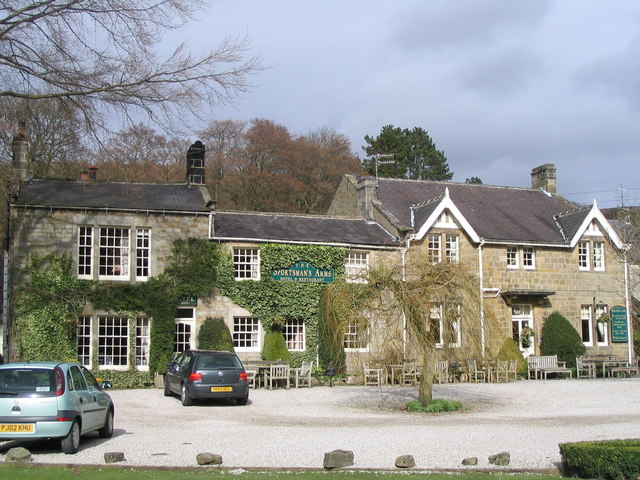
Wath, sometimes known as Wath-in-Nidderdale to distinguish it from other places named Wath, is a village in the county of North Yorkshire, England. It is near Gouthwaite Reservoir and about 3 miles (4.8 km) north of Pateley Bridge. The toponym is derived from the Old Norse vað, meaning "ford". In the Middle Ages Wath was divided between the lands of Fountains Abbey, north of a small stream known as Dauber Gill, and the lands of the Archbishop of York on the south side. The northern part, including the Sportsman's Arms inn, is now in the civil parish of Fountains Earth, historically a township in the parish of Kirkby Malzeard. The southern and higher part is now in the civil parish of High and Low Bishopside, historically a township in the parish of Ripon. From 1974 to 2023 it was part of the Borough of Harrogate, it is now administered by the unitary North Yorkshire Council. Sigsworth Grange was a grange of Fountains Abbey. The present building on the site of the grange dates from the early 18th century. The small Wath Methodist Chapel in the upper part of the village, has an unusual 5-sided shape. It was built in 1859, and was designated a Grade II listed building in 2018. The ford over the River Nidd, which gave the place its name, was replaced by a bridge by the 16th century. The present bridge, a narrow road bridge, dates from the early 19th century and is a Grade II listed building. In the early 20th century Wath had a railway station on the Nidd Valley Light Railway.

Nearby Places View Menu
Location Image
99 m

Wath Methodist Chapel

Wath Methodist Chapel is a Methodist church in Wath, a hamlet in Nidderdale in North Yorkshire, in England. Methodism gained many adherents in Nidderdale in the latter half of the 18th century, and societies were formed in several places in the dale. In 1812 Jonathan Lupton formed a society in Wath. The chapel was constructed between 1859 and 1860, probably to a design by the local architects, Messrs Thorpe. In plan, it is an irregular pentagon, designed to fill the available site, at the end of a terrace of cottages. Its floorplan is only 27 square metres, but it is able to seat more than 100 worshippers. The chapel was renovated in 1907, and again from 1948 to 1949, but is largely unchanged. It was grade II listed in 2018. The chapel is in limestone, with a Welsh slate roof, and a stone ridge and hips. The doorway has a round-arched head with a keystone, above which is a datestone and an octagonal clock face with Roman numerals. The windows are also round-arched. Inside, there is a single room with wooden pews and a raked balcony, facing a pulpit. The walls and ceiling are timber boarded.
154 m

Wath-in-Nidderdale railway station

Wath-in-Nidderdale railway station, was one of two intermediate stations on the Nidd Valley Light Railway, in Wath-in-Nidderdale, Yorkshire, England. The station was opened in September 1907, and closed to passengers in January 1930, however the line remained open until 1936 to transport freight to and from the reservoirs in the Upper Nidd Valley.
Location Image
955 m

Heathfield, North Yorkshire

Heathfield is a hamlet in the civil parish of Stonebeck Down in upper Nidderdale, in North Yorkshire, England. It lies on a broad terrace on the west side of the dale, overlooking a steep slope down to the River Nidd. Heathfield was first recorded in Domesday Book as Higrefeld. The name is derived from Old English, and means "open land frequented by jays". By the 17th century the name had become Hearfield, and in the 18th century was recorded as Heathfield. In the Middle Ages the land was owned by Byland Abbey, which mined lead and established a grange there. Heathfield Moor rises west of the hamlet, and is managed for grouse shooting.
Location Image
1.3 km

Foster Beck Mill

Foster Beck Mill is a former watermill on the edge of Pateley Bridge, a town in North Yorkshire, in England. The mill was built in 1864, to process hemp into twine. It was later used for manufacturing linen, which ceased in the 1966. The building was then converted in the Watermill Inn. In 2003, the pub closed, the building being converted into two houses and five holiday lets, while neighbouring Fosterbeck Cottage was converted into a replacement pub. The two-storey building has been Grade II listed since 1974. It is built of gritstone, and has a slate roof. It is 12 bays wide, with the ninth bay containing a carriage arch. Its most notable feature is the 30 horsepower high-breast shot waterwheel, which is 35 feet high and 5 feet wide. It was installed in 1904, but later in the century, the mill was converted to run on diesel.