


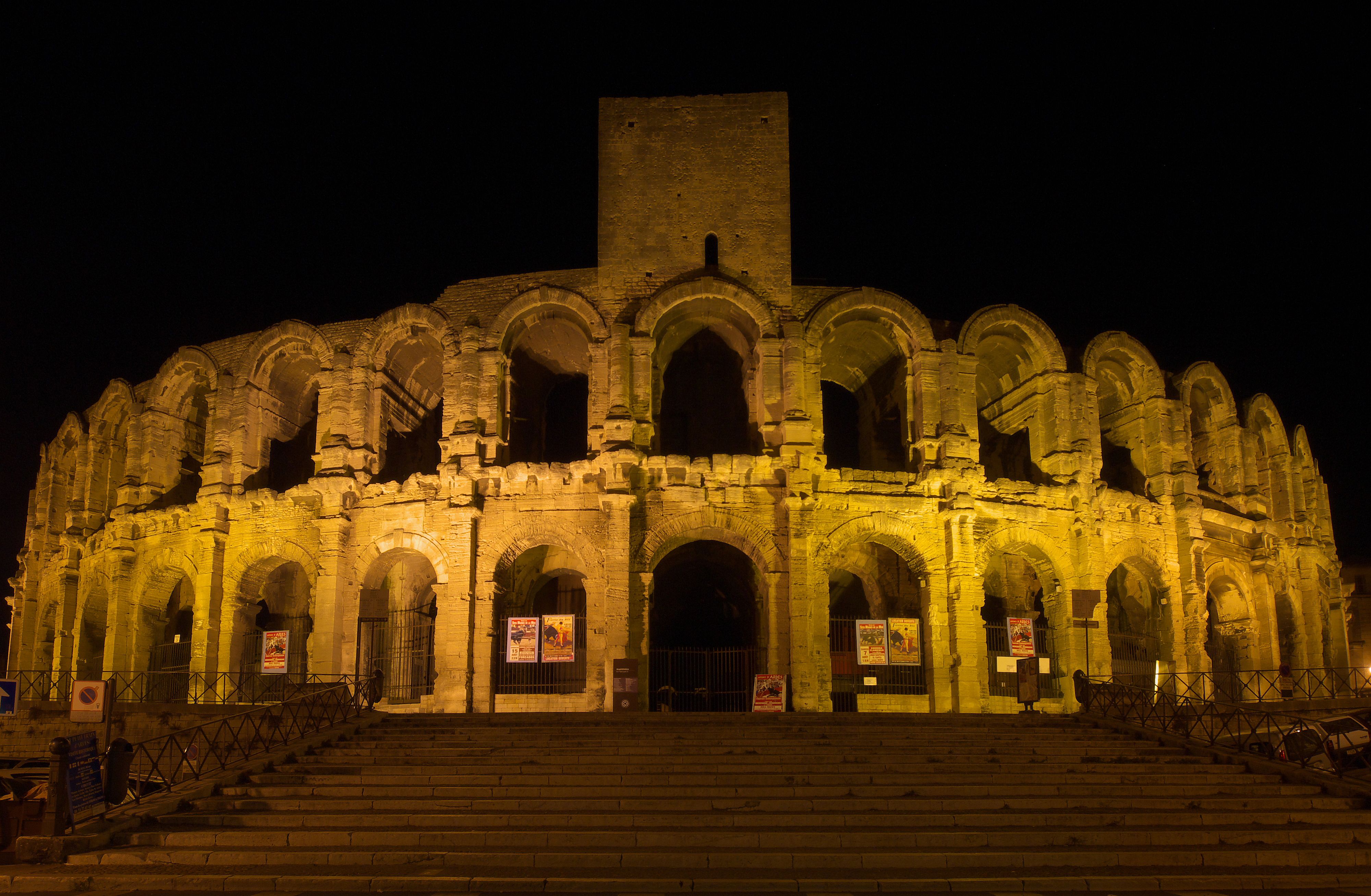
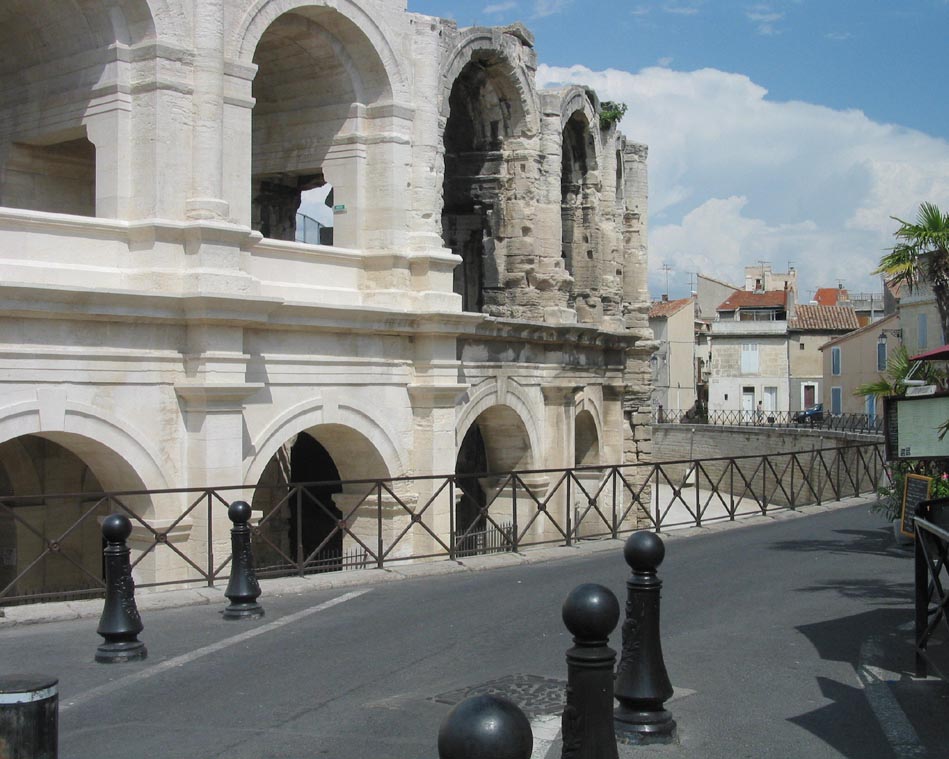
Les arènes d'Arles sont un amphithéâtre romain construit vers 80-90 apr. J.-C. sur les ordres de l’empereur Domitien, dans le cadre des extensions flaviennes de la ville. L’amphithéâtre d'Arles est le monument le plus important de l’ancienne colonie romaine qu'il nous est permis d’admirer, quelque deux millénaires après son édification. Son architecture est entièrement conçue en rapport avec sa vocation de lieu à grands spectacles, accueillant un public nombreux.
Gallery









Sponsored
Location
1 explorer visited this place

11 m
The Arles Amphitheatre is a Roman amphitheatre in Arles, southern France. Two-tiered, it is likely the most prominent tourist attraction in the city which thrived in ancient Rome. The towers jutting out from the top are medieval add-ons.
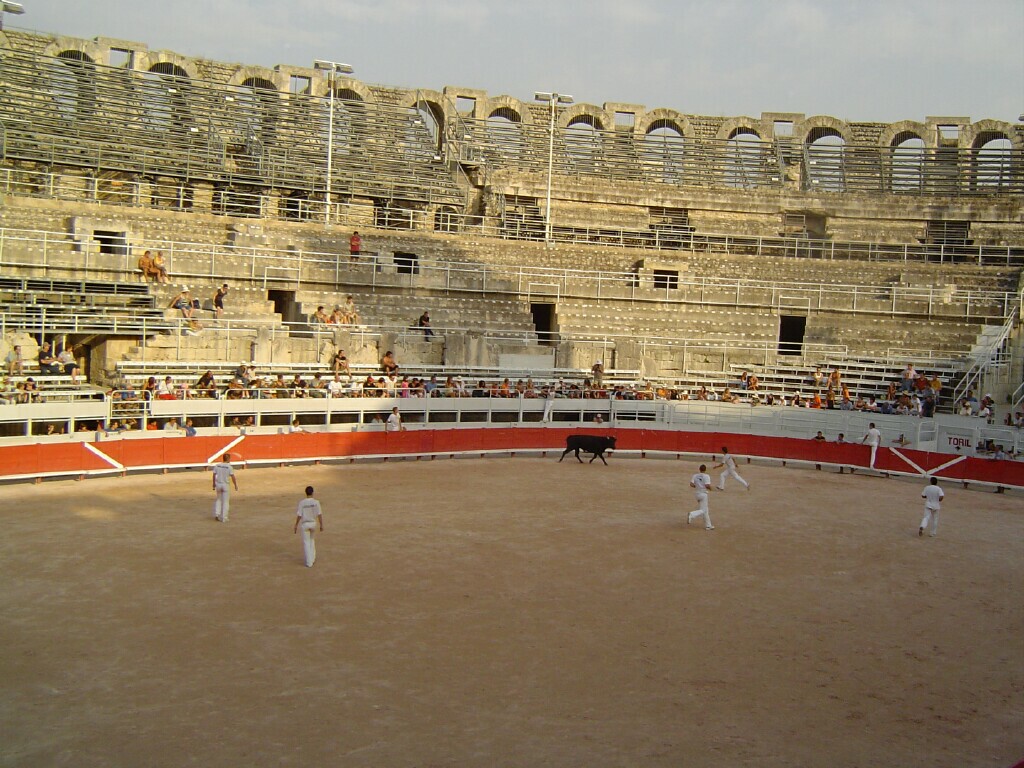
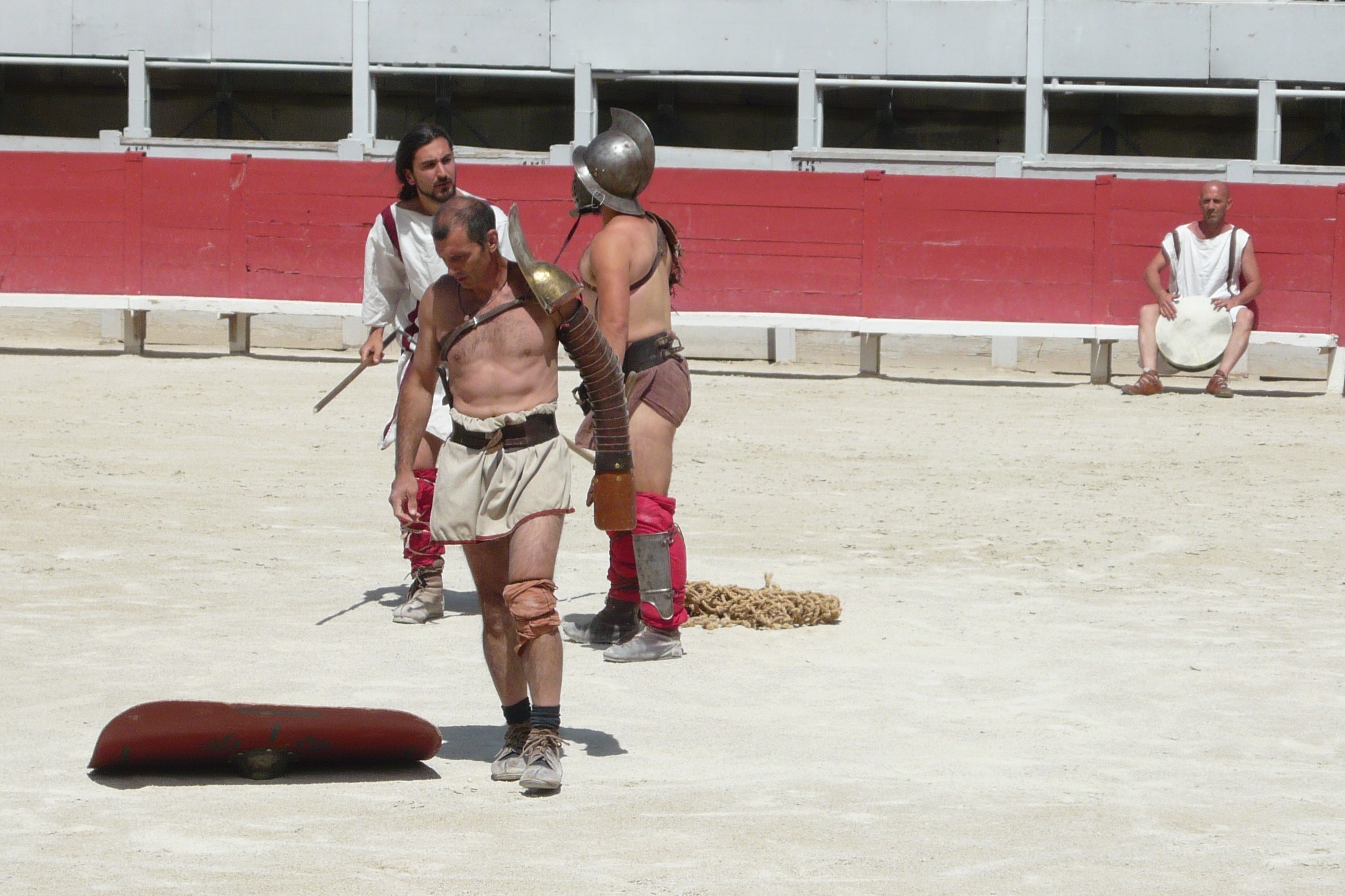
Built in 90 AD, the amphitheatre held over 20,000 spectators of chariot races and bloody hand-to-hand battles. Nowadays, it draws smaller crowds for bullfighting during the Feria d'Arles, as well as plays and concerts in summer.
In 1981, Arles Amphitheatre was listed as a UNESCO World Heritage Site, together with other Roman and medieval buildings of the city, as part of the Arles, Roman and Romanesque Monuments group.

43 m
Arles, Roman and Romanesque Monuments is an area containing a collection of monuments in the city centre of Arles, France, that has been listed as a UNESCO World Heritage Site since 1981.
The official brief description for this as a World Heritage Site is:
Arles is a good example of the adaptation of an ancient city to medieval European civilization. It has some impressive Roman monuments, of which the earliest—the arena, the Roman theatre and the cryptoporticus—date back to the 1st century B.C. During the 4th century Arles experienced a second golden age, as attested by the baths of Constantine and the necropolis of Alyscamps. In the 11th and 12th centuries, Arles once again became one of the most attractive cities in the Mediterranean. Within the city walls, Saint-Trophime, with its cloister, is one of Provence's major Romanesque monuments.
The protected area covers 65 hectares. The following buildings are located within this area:
Arles Amphitheatre
The Roman theater
Cryptoporticus and Roman forum: Located underneath the Chapel of the Jesuit College and the City Hall, this cryptoporticus was likely built by the Greeks in the 1st century BCE. It may have been used as a slave barracks.
The Thermes of Constantine: A public bath, which was built during the 4th century CE.
Ramparts of the Roman castrum
The Alyscamps
The Church of St. Trophime and its cloister
Roman exedra

178 m
The Abbey of St Caesarius, at first called the abbey or monastery of St John, was a nunnery in the city of Arles in the south-eastern corner of the rampart. It was founded in 512 AD by Saint Caesarius of Arles, after whom it is now named. The abbey was suppressed in the French Revolution. Those that remained of the buildings were later used as a hospice; they are now abandoned.

191 m
The Roman Theatre of Arles is a 1st-century Roman theatre, built during the reign of Caesar Augustus. It is located next to the Arles Amphitheatre in the city of Arles, Provence, France. Along with the other Roman and medieval buildings in Arles, the theatre was listed on the UNESCO World Heritage List as part of the Arles, Roman and Romanesque Monuments site for their testimony to the ancient history of the city.
In Roman times, the theatre had 33 rows of steps and could seat 8000 people. It is as large as the Roman Theatre of Orange, although much less well-preserved.
During the Middle Ages, the theatre was used as a quarry, with the stone pillaged to build the city wall and other buildings. Today, only the stage area, orchestra section, seating rows, and two columns survive.
The Venus of Arles, a famous Roman statue made of marble, was found in pieces at the Roman theatre in 1651.
271 m
The Battle of Arles was fought between the Visigoths and the Western Roman Empire in 471. Prior to the battle, the Visigoths had advanced past the Bretons at the Battle of Déols in 469, and were expanding into Aquitaine. Alarmed with this development, Emperor Anthemius sent an expedition under Anthemiolus across the Alps against the Visigothic king Euric, who was besieging Arles. Euric crushed the Roman army and killed Anthemiolus and three Roman counts. Euric subsequently captured Arles and much of southern Gaul. The defeat in Gaul was a direct cause of the subsequent overthrow of Anthemius as emperor by Ricimer.
Book your tour near
Arènes d'Arles
→