


The Pontifical Catholic University of Chile (UC Chile; Spanish: Pontificia Universidad Católica de Chile) is a traditional private university based in Santiago, Chile. It is one of the thirteen Catholic universities existing in the Chilean university system and one of the two pontifical universities in the country, along with the Pontifical Catholic University of Valparaíso.


Location
1 explorer visited this place


Founded in 1888, it is one of Chile's oldest universities. It is ranked among the top universities in Latin America (2nd in the region and 93rd in the world as per QS Ranking 2025). Pontifical Catholic University of Chile has a strong and long-standing rivalry with the University of Chile, as they are both widely recognized as the most traditional and prestigious in the country, and one is Catholic and the other, secular. This rivalry also translates to sports, especially football.
Campuses
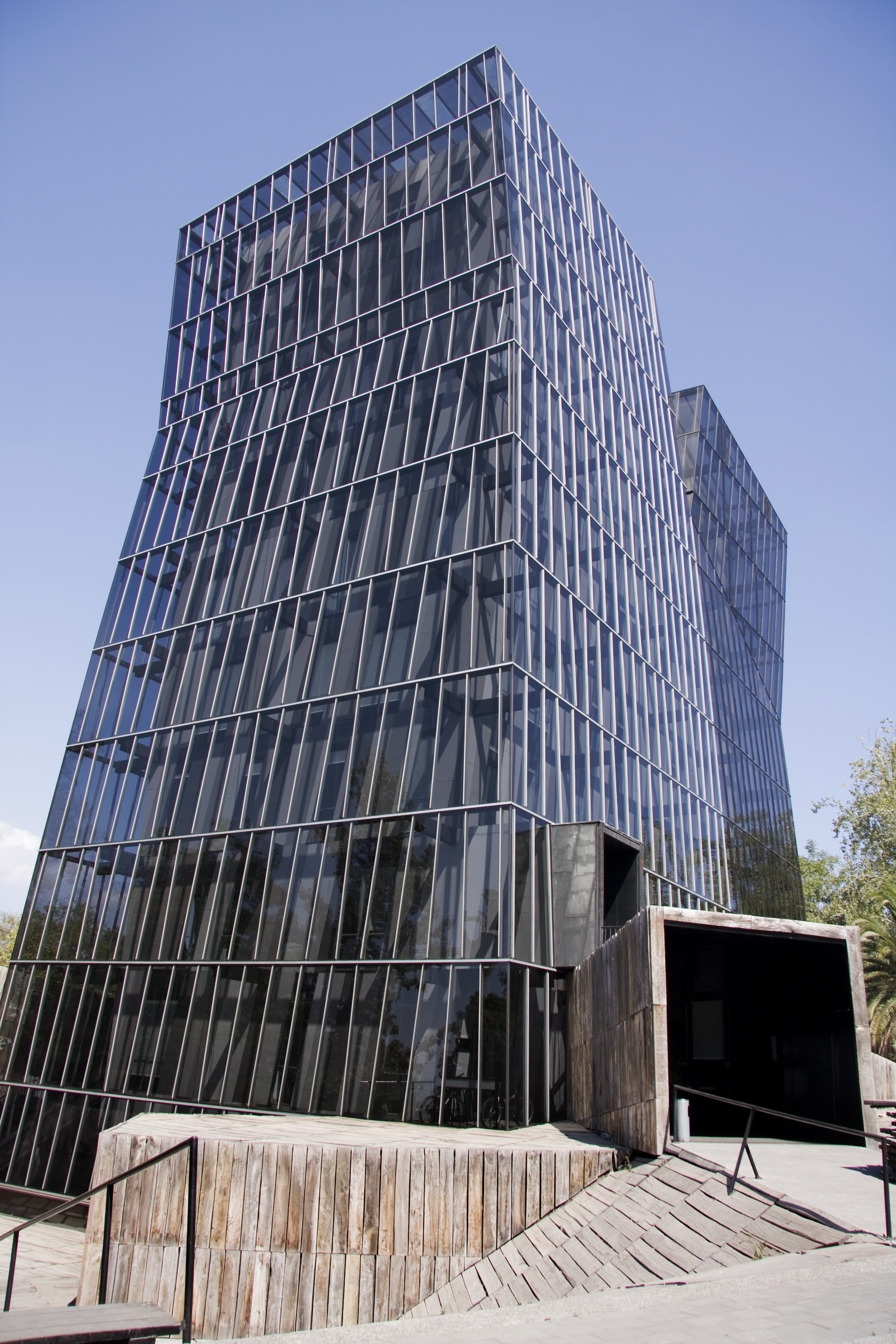
UC Chile has four campuses in Santiago and one campus in Villarrica. The campuses in Santiago are:
Casa Central (in downtown Santiago) San Joaquín (in Macul Commune of Greater Santiago) Oriente (in Providencia Commune of Greater Santiago) Lo Contador (in Providencia Commune of Greater Santiago) These four campuses have a total of 223,326.06 m2 (267,095.74 sq yd) constructed in a 614,569.92 m2 (735,019.51 sq yd) area. The Villarrica campus has 1,664 m2 1,664 m2 (1,990 sq yd) constructed in a 2,362.5 m2 (2,825.5 sq yd) area.
History
UC Chile was founded on 21 June 1888, by the Archbishop of Santiago, to offer training in traditional professions (law) and in technological and practical fields such as business, accounting, chemistry, and electricity. Its first chancellor was Monsignor Joaquín Larraín Gandarillas, and at the very beginning, the university only taught two subjects, law and mathematics. Since it is a Pontifical University, it has always had a strong and very close relationship with the Vatican. On 11 February 1930, Pope Pius XI declared it a pontifical university, and in 1931 it was granted full academic autonomy by the Chilean government. UC Chile is a private, urban, multi-campus university. It is one of the eleven Chilean Catholic universities, and one of the twenty-five institutions within the Rectors' Council (Consejo de Rectores), the Chilean state-sponsored university system. It is part of the Universities of the Rectors' Council of Chilean Universities, and although it is not state-owned, a substantial part of its budget is given by state transfers under different programs. UC Chile's 18 faculties are distributed through four campuses in Santiago and one regional campus located in southern Chile. The technical training centers affiliated with the university are: Duoc UC, the Rural Life Foundations, the Baviera Foundation, the Catechetical Home and the San Fidel Seminary. These centers carry out technical-academic extension activities in rural and agricultural areas. Other UC activities are a Sports Club, and a Clinical Hospital dependent on the Faculty of Medicine. UC Chile's Graduates of the School of Architecture (one of the most prominent in Latin America) have also made important contributions to the country with such work as the Central Building ("Casa Central") of UC, and the National Library. Two of its most important alumni are the Jesuit Saint Alberto Hurtado and Eduardo Frei Montalva, a Chilean president. Both of them studied in the School of Laws. Sebastián Piñera, former Chilean president, graduated from the university's School of Economics. In 2017 the university faced what has been called a "wave of suicide" among its students. During 2017 a total of four students have taken their lives up to October, the previous year two students committed suicide. Critics, including alumni, have written about the university's "lack of concern" for the suicide of students, an attitude they contrast to the university's staunch opposition to abortion. The student union of the university issued a communique expressing feelings of guilt over the issue and the need to take charge.
Collaborations
The Department of Industry and System Engineering is engaging Stanford Technology Venture Program of Stanford University on a collaboration on innovation and technology ventures. In December 2011, the schools of engineering of PUC and the University of Notre Dame signed an agreement to establish a dual graduate degree in civil engineering and the geological sciences, which now extends to other departments in both schools. In April 2013, UC Chile and the University of Notre Dame also signed a memorandum of understanding to strengthen scholarly engagement and expand their long-standing relationships. The agreement establishes an exchange program in which faculty, doctoral students and university representatives from each institution will visit, work, study and collaborate with the other institution.
World rankings
UC ranks among the first 10 Latin-American Universities according to the Shanghai ranking, UC appears top in two subject rankings: it ranks around 101–150 in Economics and Management and around 151–200 in Mathematics Pontificia Universidad Católica de Chile has been ranked as the best university in Latin America by two of the world's most prestigious University rankings, the QS World University Rankings (in 2018, 2019, 2020, 2021, 2022 and 2023) and the Times Higher Education University Rankings (2019 and 2020).
Notable institutes and centers
Center of Studies of Social Undertakings Instituto Milenio para la Investigación en Depresión y Personalidad – MIDAP Núcleo Milenio Research Center in Entrepreneurial Strategy Under Uncertainty
Architecture
Alejandro Aravena (2016 Pritzker Architecture Prize winner) Smiljan Radić Clarke (2026 Pritzker Architecture Prize winner) Emilio Duhart Fernando Castillo Velasco Juan Grimm, Landscape architect
Art and literature
Egon Wolff (playwright) Roberto Matta (Surrealist painter) Jorge Díaz (playwright) Diamela Eltit (author) Paula Escobar (journalist and academic) Laila Havilio (sculptor) Paloma Valdivia (author and illustrator)
Economics
Miguel Kast (former governor of the Central Bank of Chile. Member of the Chicago Boys group) José Piñera Joaquín Lavín Sebastián Edwards (professor, UCLA Anderson School of Management) Sebastián Piñera Felipe Larraín Ricardo J. Caballero (Ford International Professor of Economics - MIT)
Politics
Eduardo Frei Montalva, Former President of Chile Sebastián Piñera, Former President of Chile Adolfo Zaldívar Arturo Frei Bolívar Ena von Baer, Former Minister Fernando Castillo Velasco Hernán Larraín Fernando Flores Jaime Guzmán Joaquín Lavín Osvaldo Andrade Radomiro Tomic Tomás Jocelyn-Holt José Antonio Kast Giorgio Jackson Manuel José Irarrázaval Larraín
Religion
Alberto Hurtado, Jesuit and Chile's second saint Raúl Silva Henríquez, Archbishop of Santiago de Chile Both studied law at the university.
Science
Francisco Claro Huneeus Héctor Croxatto Rezzio (member of the Pontifical Academy of Sciences) Joaquín Luco Valenzuela (first Chilean to specialize in neuroscience) Juan de Dios Vial Correa (former Pontifical Academy for Life president) Juan Carlos Castilla (marine life expert) Leopoldo Soto Norambuena (former President of the Chilean Physics Society and Fellow of the Institute of Physics, UK) Nibaldo Inestrosa Cantin (neurobiologist) Neva Milicic Müller (psychologist) Rafael Vicuña Errázuriz
Knowledge transfer, service and consultancy
DICTUC SA (a group of 40+ consultancies leading in engineering, management and innovation) [1] Salud Clinica UC [2] Hospital of the Pontificia Universidad Catolica de Chile Mega UC Health Centres (maternity)