

 English
 Français

Milngavie water treatment works
Milngavie water treatment works (commonly known as The Waterworks) is a Scottish Water-operated water treatment facility located in Milngavie, Scotland. It is the primary source of water for the city of Glasgow (and the Greater Glasgow area) in western Scotland. Part of the Victorian Loch Katrine water project, construction was started in 1855 and the works was opened by Queen Victoria in 1859, replacing the previous water supply sourced from the River Clyde at Cuningar Loop in Dalmarnock. Its completion led to the virtual eradication of typhoid and cholera from the city; diseases which were widespread at the time. The success of the project was marked by the erection of the Stewart Memorial Fountain in Kelvingrove Park. The works were described by James Morris Gale as worthy to "bear comparison with the most extensive aqueducts in the world, not excluding those of ancient Rome". The first aqueduct project was built under the guidance of John Frederick Bateman (an example of his engineering prowess that can still be seen working today). A second aqueduct was completed in 1901. The works are currently operated by Scottish Water and at average demand, it can supply enough potable water to those it serves for up to seven days. Its primary supply is via two aqueducts from Loch Katrine in the north, that are 56 km (32 miles) in length, and can deliver up to 50,000,000 imperial gallons (230,000,000 L; 60,000,000 US gal) a day. Milngavie itself is situated at almost 120 m (400 ft) above sea level – sufficient to provide adequate water pressure to the majority of Glasgow without the need for pumping. The Milngavie reservoirs distribute water to secondary reservoirs, such as Cockmuir Reservoir in Springburn Park, and various water towers throughout the city. The reservoirs are a common attraction for walkers, cyclists and photographers, who take advantage of the peripheral walkways that verge on Mugdock Country Park, and offer views over the Glasgow area.
Nearby Places View Menu
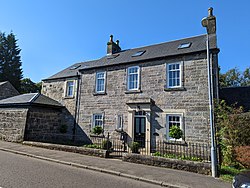
Heatherbank House

St Paul's Church (Milngavie)

Milngavie
