

 English
 Français

Pickletillum
Pickletillem or Pickletillum is a hamlet situated in Fife, Scotland. It is 9 miles (14 km) from the town of St. Andrews and 5.9 miles (9.5 km) from the city of Dundee. The hamlet is a collection of only 12 households and is located on the west side of the A914, south of the junction with the A92.
Nearby Places View Menu
1.1 km
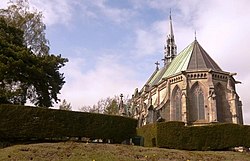
Lady Leng Memorial Chapel
Lady Leng Memorial Chapel (also known as Vicarsford Cemetery Chapel) is a church building in Leuchars, Fife, Scotland. Built between 1895 and 1897, to a design by Thomas Martin Cappon, it is now a Category A listed building. Historic Environment Scotland describes it as "a fine and rare example of a small ecclesiastical building type".
The building is also one of the few non-denominational chapels in Scotland. It was built by politician John Leng as a memorial to his wife, Lady Emily Leng, with the Saint-Chapelle, Paris, being the inspiration.
The adjacent Vicarsford Cemetery is Category B listed.
1.8 km
Forgan (Fife)
Forgan is a civil parish in the Scottish county of Fife. It extends 4 miles in length along the north coast of Fife and is at the southern mouth of the River Tay. It is bounded by the other Fife civil parishes of Ferry-Port on Craig, Leuchars and Balmerino. It contains the towns of Newport-on-Tay and Wormit. The roads and railways leading to the Tay Bridges pass through the parish.
The name of the parish is from the Scottish Gaelic For Gronn meaning "above or beside the bog" or perhaps "big bog".
2.6 km
St Fort railway station
St. Fort railway station served the civil parish of Forgan, Fife, Scotland from 1878 to 1965 on the Tay Bridge Line and Newburgh and North Fife Railway.

2.7 km
St Fort
St Fort (, , or ) is a rural area, largely in Forgan parish, Fife. The current form of the name is late eighteenth century, the origin being a sandy ford on the Motray Water, in all likelihood the ford earlier known as Adnectan or Nechtan's ford. St Fort Hill lies immediately to the south of Newport-on-Tay and William Burn’s St Fort House, a large baronial mansion, demolished in 1953, lay on its southern slopes. The Home Farm, to its west, survives.
Further south, the area was formerly served by St Fort railway station, on the Edinburgh–Aberdeen line. The triangular adjunct of the St Fort junctions, connecting the now-defunct Newburgh and North Fife Railway, lay to the station's south-east.
Baillie Scott’s Arts and Crafts style Sandford House Hotel, taking the earlier form of the area's name, lies immediately to the station's west, just into Kilmany parish. Its restoration as a residence and holiday cottages was documented in the BBC television series Restoration Home.
The area is one of the origins of the surname Sandford. It is not to be confused with St Ford, 15 miles to the southeast in the parish of Kilconquhar, similarly sharing its origin as Sandford.