


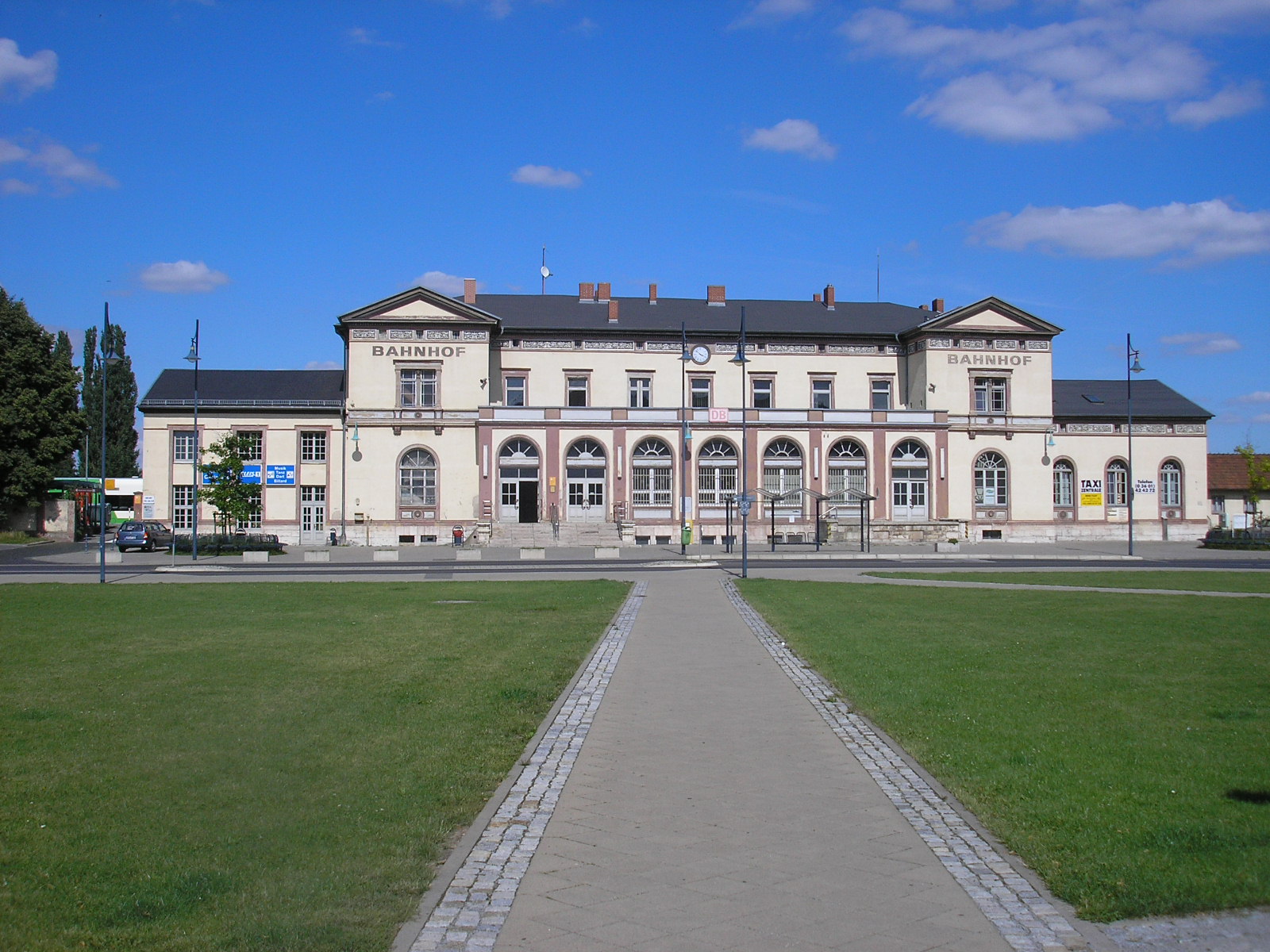
Mühlhausen (Thür) station is a passenger station in the Unstrut-Hainich district and the only station in Mühlhausen in the German state of Thuringia. It is located east of the centre of Mühlhausen in the valley of the Unstrut.
Gallery

Sponsored
Location
1 explorer visited this place

373 m
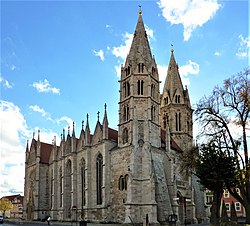
St Joseph's Church in the town of Mühlhausen in Thuringia, Germany, is a Roman Catholic church building. The cruciform three-nave hall church was built from 1903 to 1905 according to plans by the Paderborn diocesan architect Arnold Güldenpfennig.
1.1 km
Divi Blasii is a Gothic church in the Thuringian town of Mühlhausen, central Germany. Besides St Mary's, it is one of Mühlhausen's two principal churches.
Divi Blasii is a three-aisle, cruciform hall church, situated on the Untermarkt in the historical centre of the town. The elaborately designed display façade with tracery, pinnacles and a wheel window on the north side is located on an old trade route. Today, Divi Blasii is the central parish church of the Lutheran parish of Mühlhausen within the Protestant Church in Central Germany.

1.2 km
Görmar is a village and a quarter of the town of Mühlhausen in Thuringia, central Germany.
1.3 km
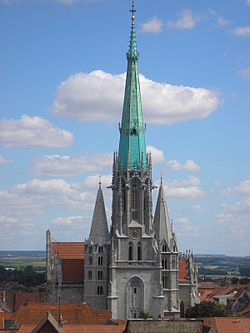
St. Mary's Church in the town of Mühlhausen, central Germany, is the second-largest church building in Thuringia after Erfurt Cathedral. It was constructed mainly during the 14th century in the Gothic style. The church's 86.7-metre-high central spire, built in 1898 to 1903, is the highest in the state and forms a significant feature of the town's skyline. St. Mary's was a site of events relating to the German Peasants' War around 1525, as the revolutionary leader Thomas Müntzer was active as a pastor at the church. The Sauer organ, built in 1891, is considered the largest surviving 19th-century organ in Thuringia.

1.9 km
Mühlhausen is a town in the northwest of Thuringia, Germany, 5 km north of Niederdorla, the country's geographical centre, 50 km north-west of Erfurt, 65 km east of Kassel and 50 km south-east of Göttingen.
Mühlhausen was first mentioned in 967 and became one of the most important cities in central Germany in the late Middle Ages. In the mid-13th century, it became a Freie Reichsstadt, an independent and republican self-ruled member of the Holy Roman Empire, controlling an area of approximately 220 square kilometres and 19 regional villages. Due to its long-distance trade, Mühlhausen was prosperous and influential with a population of 10,000 around 1500. Because it was spared from later destruction, Mühlhausen today has a great variety of historical buildings with one of the largest medieval city centres remaining in Germany, covering a surface of more than 50 hectares within the inner city wall and approximately 200 hectares overall. There are eleven Gothic churches, several patricians’ houses and a nearly completely preserved fortification.
Johann Sebastian Bach worked as the city's organist in 1707–08. The theologian Thomas Müntzer, a leading person in the German Peasants' War, gave sermons here and was executed outside the city walls. John A. Roebling, the constructor of the Brooklyn Bridge, and Friedrich August Stüler, an influential architect in mid-19th-century Prussia, were born in Mühlhausen.
Mühlhausen is within the Thuringian Basin, a flat and fertile area, on the Unstrut river on the eastern edge of the Hainich hills.