


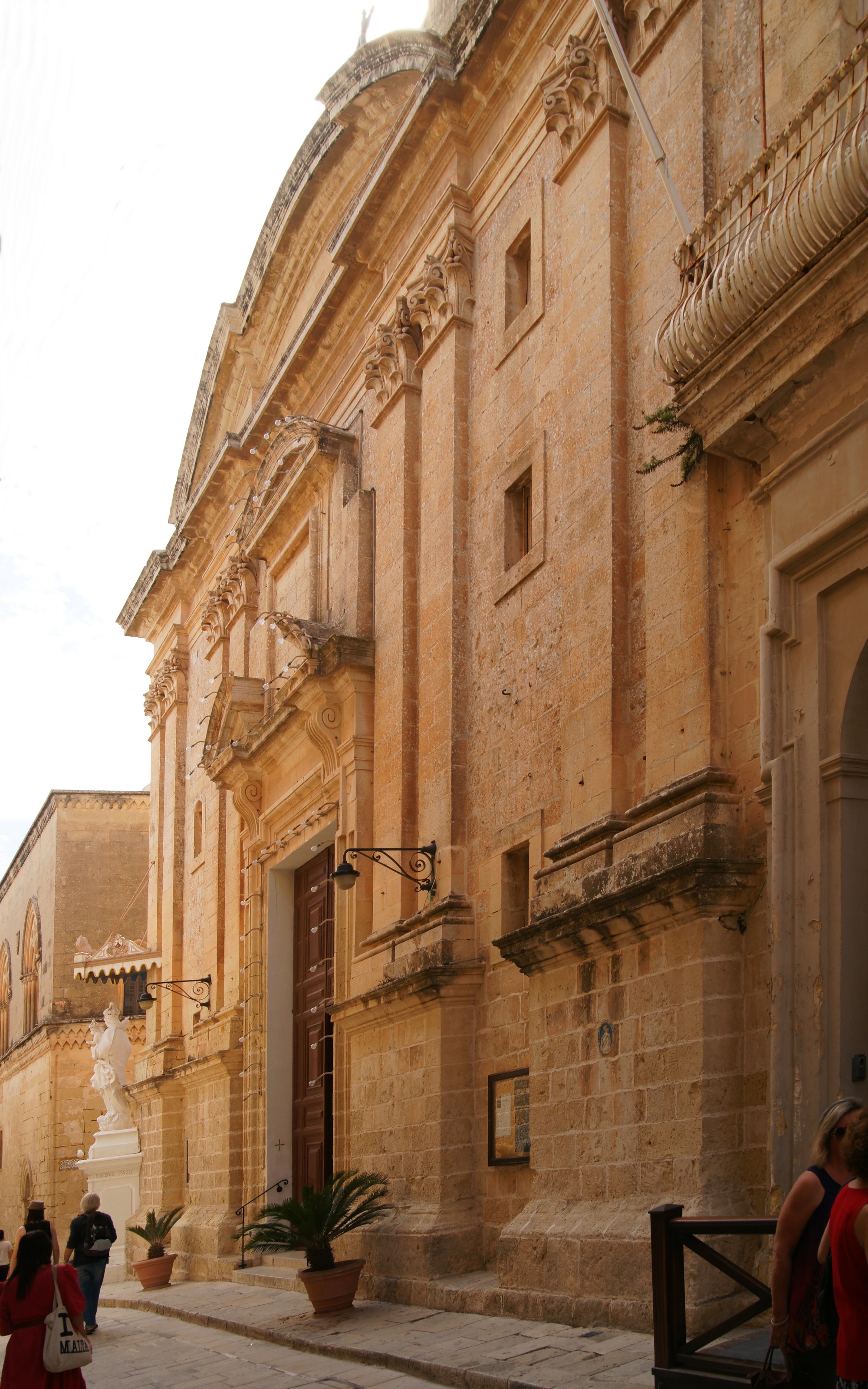
L'église et le prieuré carmélites de Mdina, à Malte, furent édifiés entre 1660 et 1675, à la suite de l'arrivée de la première communauté carmélite à Rabat au XVe siècle. C'est dans cette église que commença l'insurrection contre les Français en 1798.
Gallery


Sponsored
Location
1 explorer visited this place

0 m
The Church of the Annunciation also known as The Carmelite Church is a rich Baroque priory church of the Priory of Our Lady of Mount Carmel located in Mdina, Malta.

18 m
Palazzo Costanzo is a palace in Mdina, Malta, situated on Villegaignon Street. It was formerly the residence of a noble Sicilian family, having been constructed in 1666 by Tomaso Costanzo. The building, which is intact and well maintained, was later converted into a restaurant. It also hosts the Medieval Times Show, which provides an insight into local life in the 14th and 15th centuries.
The building has two floors along with underground cellars. Its façade is symmetrical, and it includes a rectangular doorway, above which is a small oval window and an open balcony. Two windows flank the door and balcony on either side. The corbels and surrounds of the doors and windows are decorated with simple designs.
It is scheduled as a Grade 1 monument and listed on the National Inventory of the Cultural Property of the Maltese Islands.

22 m
The Chapel of St. Roque, also known as the Chapel of Our Lady of Light, is a Roman Catholic chapel located in Mdina, Malta.

80 m
The siege of Melite was the capture of the Byzantine city of Melite by an invading Aghlabid army in 870 AD. The siege was initially led by Halaf al-Hādim, a renowned engineer, but he was killed and replaced by Sawāda Ibn Muḥammad. The city withstood the siege for some weeks or months, but it ultimately fell to the invaders, and its inhabitants were massacred and the city was sacked.

80 m
The siege of Malta, also known as the siege of Mdina, was a Hafsid invasion of the island of Malta, then part of the Kingdom of Sicily, in September and October 1429. After capturing Mazara on nearby Sicily, a Hafsid force landed on Malta, besieged the island's main city of Mdina and skirmished with the defenders. The invaders did not manage to capture the city but they plundered the island – including Mdina's suburb of Rabat – and captured thousands of people as slaves.
Both sides appear to have claimed victory, with Christian sources tending to emphasize the successful defence of Mdina and Muslim sources considering the event to have been a successful raid. In any case, the attack had a significant demographic impact on the island's small population and it remained imprinted in the Maltese collective memory through Christian legends and traditions referencing the event.