


La gare de Naussac est une gare ferroviaire française, de la ligne de Brive-la-Gaillarde à Toulouse-Matabiau via Capdenac, située sur le territoire de la commune de Naussac, dans le département de l'Aveyron, en région Occitanie. Elle est mise en service en 1858 par la Compagnie du chemin de fer de Paris à Orléans (PO).
Location
1 explorer visited this place
911 m
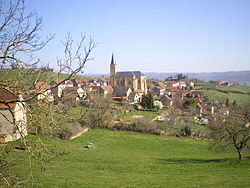
Naussac is a commune in the Aveyron department in southern France.

3.5 km
The Château Inférieur is a ruined castle in the commune of Peyrusse-le-Roc in the Aveyron département of France.
Peyrusse-le-Roc was known during Roman times for the richness of its silver, lead and antimony mines. The fortress here was besieged in 761. It was taken by the English in 1163 and later occupied by Simon de Montfort. The town began to lose its importance from the end of the 16th century. In 1668, the castle was already in ruins. All that remains are two towers; the northern one serving as a watch tower is described by the Ministry of Culture as the finest example in the Rouergue.
The castle is the property of the commune. It has been listed since 1995 as a monument historique by the French Ministry of Culture.
3.7 km
Sonnac is a commune in the Aveyron department in southern France.

3.7 km
Peyrusse-le-Roc is a commune in the Aveyron department in southern France.
The Château Inférieur is a ruined castle which was taken by the English in 1163 and occupied by Simon de Montfort.
The architectural heritage of the commune includes seven buildings protected under the historical monument act: the hospital of the English, registered in 1992, the covered market, registered in 1992, the Synagogue of Peyrusse-le-Roc, registered in 1992, the porte de la Barbacane, listed in 1993, the Notre-Dame-de-Laval church, listed in 1995, the Château Inférieur, listed in 1995, and the château de La Caze, registered in 2018.
4.3 km
Causse-et-Diège is a commune in the Aveyron department in southern France.
C'est une halte voyageurs fermée, depuis 2006, de la Société nationale des chemins de fer français (SNCF), qui est remplacée par un service de Transport à la demande (TAD) pour rejoindre la gare ouverte la plus proche.
