


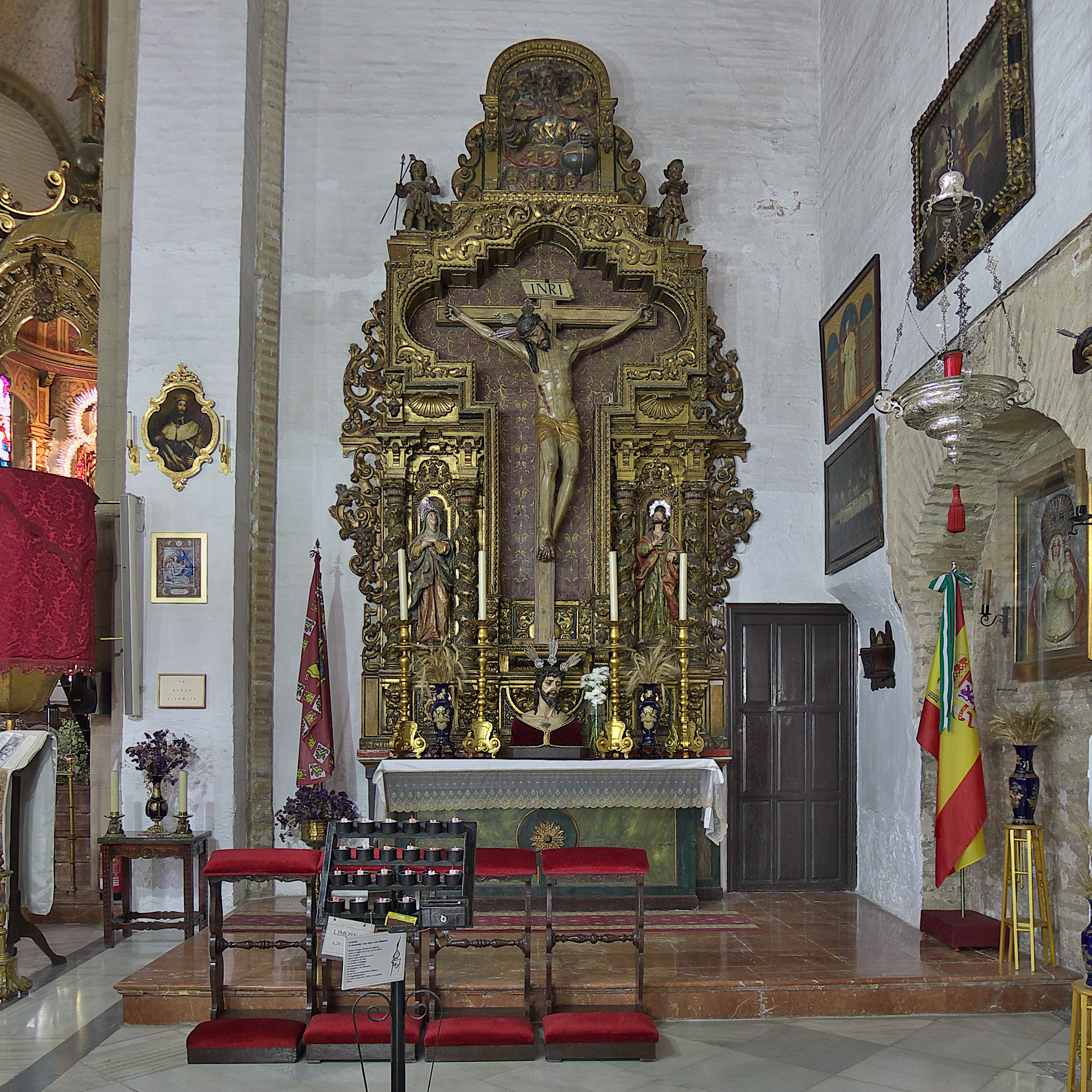
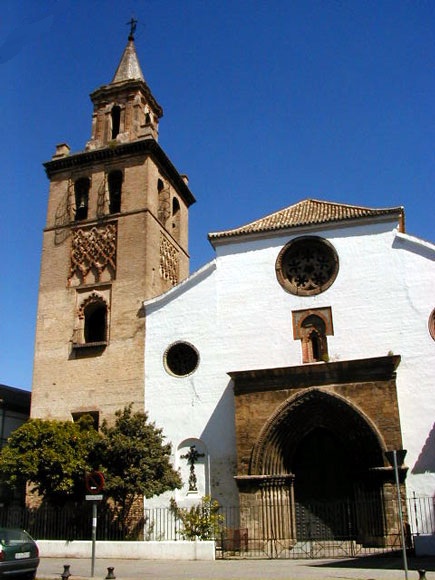
L'église Omnium Sanctorum ou église de Tous-les-Saints à Séville est une église paroissiale de culte catholique. Elle fait partie du groupe des églises gothico-mudéjares de Séville, construites après la Reconquête de la ville en 1248, qui combinent la tradition constructive islamique avec l'art gothique apporté par les conquérants chrétiens arrivés depuis la Castille.
Gallery




Sponsored
Location
1 explorer visited this place

256 m
The Alameda de Hércules, or simply La Alameda, is a garden square or mall in Seville, southern Spain. Built in 1574, it was originally a promenaded public garden, named after the eight rows of white poplar trees that fill its central part. Located in the northern half of the city's casco antiguo, between the Guadalquivir River and the Macarena neighbourhood, it was the oldest public garden in Spain and Europe.

278 m
The Casa de las Sirenas is a 19th-century palace located on the Alameda de Hércules in Seville, Andalusia, Spain.

441 m
The Puerta de la Macarena, also known as Arco de la Macarena, is one of the only three city gates that remain today of the original walls of Seville, alongside the Postigo del Aceite and the Puerta de Córdoba. It is located in the calle Resolana, within the barrio de San Gil, which belongs to the district of Casco Antiguo of the city of Seville, in Andalusia, Spain. The gate faces the Basílica de La Macarena, which houses the image of the Our Lady of la Esperanza Macarena, one of the most characteristic images of the Holy Week in Seville.
This is the northernmost entrance to the city's walls and the largest of the set. It is one of the few remaining remnants of the original city walls, along with the section of wall that connects it to the Cordoba Gate, in which seven towers are preserved.
Although the city's walled enclosure was originally built during the time of Julius Caesar, the gate itself dates to the 12th-century expansion ordered by the sultan Ali ibn Yusuf. Its current appearance results from extensive remodeling between 1723 and 1795, during which the original Islamic architectural elements were replaced with a classicist style.
This gate was traditionally used by kings entering the city for the first time. Before its walls stood an altar where visiting kings would perform a symbolic act of homage, after which they were presented with the keys to the city. This ceremony was performed by: Alfonso XI of Castile, Isabella I of Castile, Ferdinand II of Aragon, Charles V, Holy Roman Emperor and his fiancée Isabella of Portugal, and finally Philip IV.
The Macarena Gate crowns the ceramic altarpiece created by painter Manuel Rodríguez, which depicts the Virgin of Hope of Macarena and was inaugurated in 1923 by Infanta Maria de la Esperanza of Bourbon–Two Sicilies.
The remains of the walled city, which includes this gate, were declared Bien de Interés Cultural in 1985.
519 m
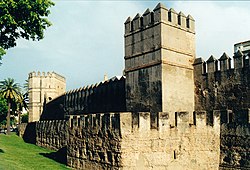
The Walls of Seville are a series of defensive walls surrounding the Old Town of Seville. The city has been surrounded by walls since the Roman period, and they were maintained and modified throughout the subsequent Visigoth, Islamic and finally Castilian periods. The walls remained intact until the 19th century, when they were partially demolished after the revolution of 1868. Some parts of the walls still exist, especially around the Alcázar of Seville and some curtain walls in the barrio de la Macarena.
The walls originally had eighteen gates or points of access, four of which survive today: Puerta de la Macarena, Puerta de Córdoba, Postigo del Aceite and Postigo del Alcázar. The extant parts of the walls maintain an Almohad appearance, mixed with Classicist air resulting from restorations carried out in the 18th century.

525 m
Monastery of San Clemente is a Cistercian monastery with the Bien de Interés Cultural designation in the Spanish city of Seville. Architecturally, it is a heterogeneous set of buildings, built in different times and styles, from the 16th to the 17th century.
Book your tour near
Église de Tous-les-Saints de Séville
Book Now
4.2
in partnership with
GetYourGuide.com