


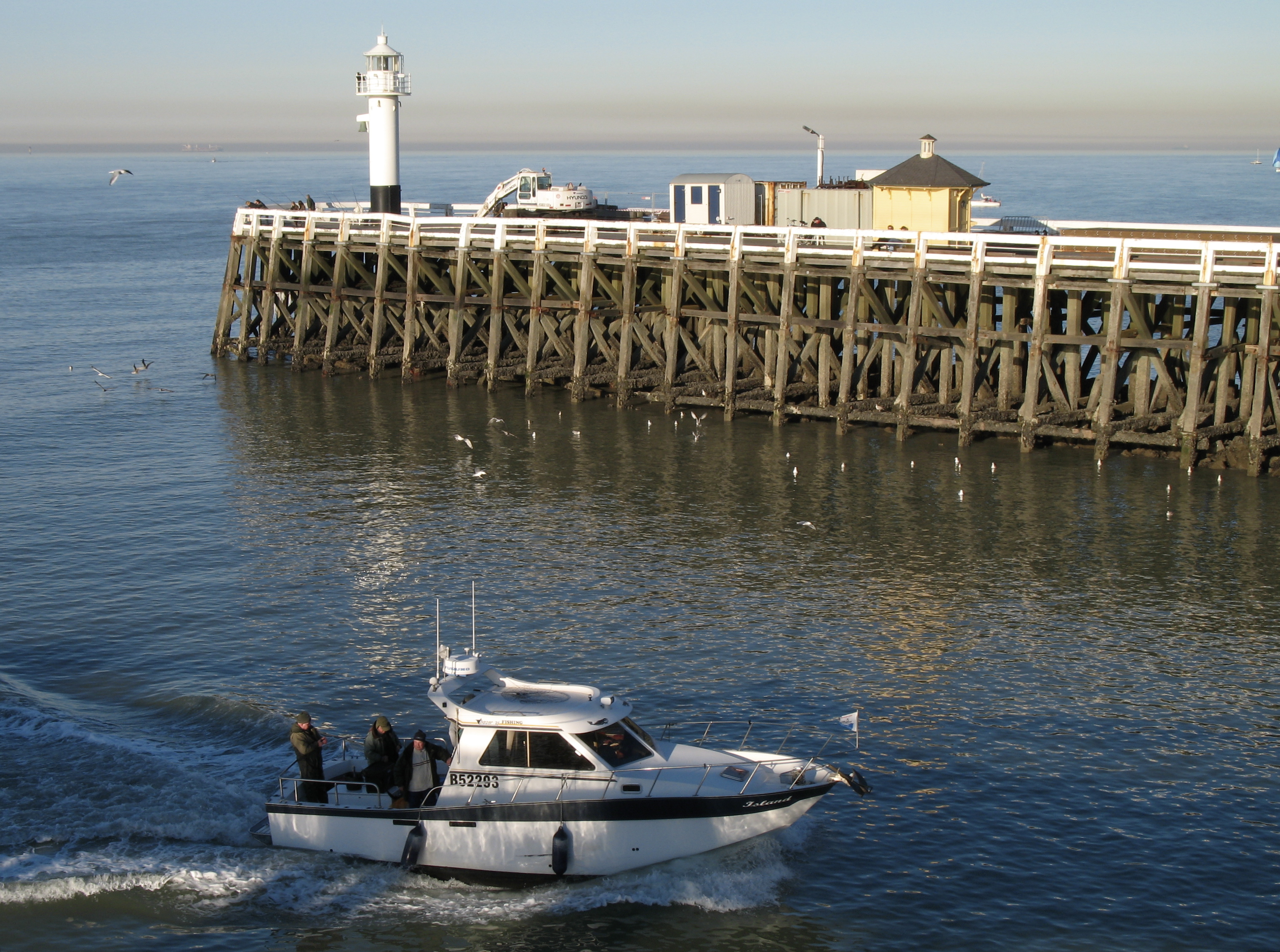
Le port de Blankenberge, (en néerlandais : Haven van Blankenberge) est un port maritime belge, situé sur la Côte belge et desservant la ville de Blankenberge, située dans la province de Flandre-Occidentale. C'est un port de pêche et de plaisance.
Gallery

Sponsored
Location
1 explorer visited this place
0 m
Blankenbergebɛrɣə] ; French: [blɑ̃kønbɛʁg] ; West Flemish: Blanknberge [ˈblɑŋʔŋ̍bærɦə]) is a seaside municipality and city in the Belgian province of West Flanders. The municipality comprises the town of Blankenberge proper and the settlement of Uitkerke.
On 1 December 2014, Blankenberge had a total population of 19,897. The total area of the municipality is 17.41 km2, giving a population density of 1,142 inhabitants per km2. The towns inhabitants are called Blankenbergenaars.
Blankenberge is one of the most important seaside resorts on the Belgian coast in terms of tourist numbers and hotel reservations. It is a national and to a certain extent international seaside resort, attracting visitors from across northern Europe. It possesses a long sandy beach, and a 350-metre-long Art Deco pier, the Belgium Pier, constructed in 1933.

1.8 km
Blankenberge railway station is a railway station in Blankenberge, West Flanders, Belgium. The station opened on 16 August 1863 on railway line 51. It is run by the National Railway Company of Belgium as a terminal station located on the railway line from Brugge and has services to Brussels-South and beyond to Leuven.
4.9 km
The Schooneveld, also spelled Schoneveld, is a former island turned shoal and namesake adjacent basin at the mouth of the Scheldt river, near the island of Walcheren, off the coast of the Netherlands. The shoal is also referred to as the Droogte van Schooneveld. The basin runs parallel to the continental coast, narrowing from the southwest to the northeast, bounded by the irregular, shifting and very dangerous Raan shoal in the south and the elongated Thorntonbank in the north.
During the Third Anglo-Dutch War two Battles of Schooneveld were fought in June 1673, though only the first of these really took place in the Schooneveld itself. The name means "clear field" in Dutch.