


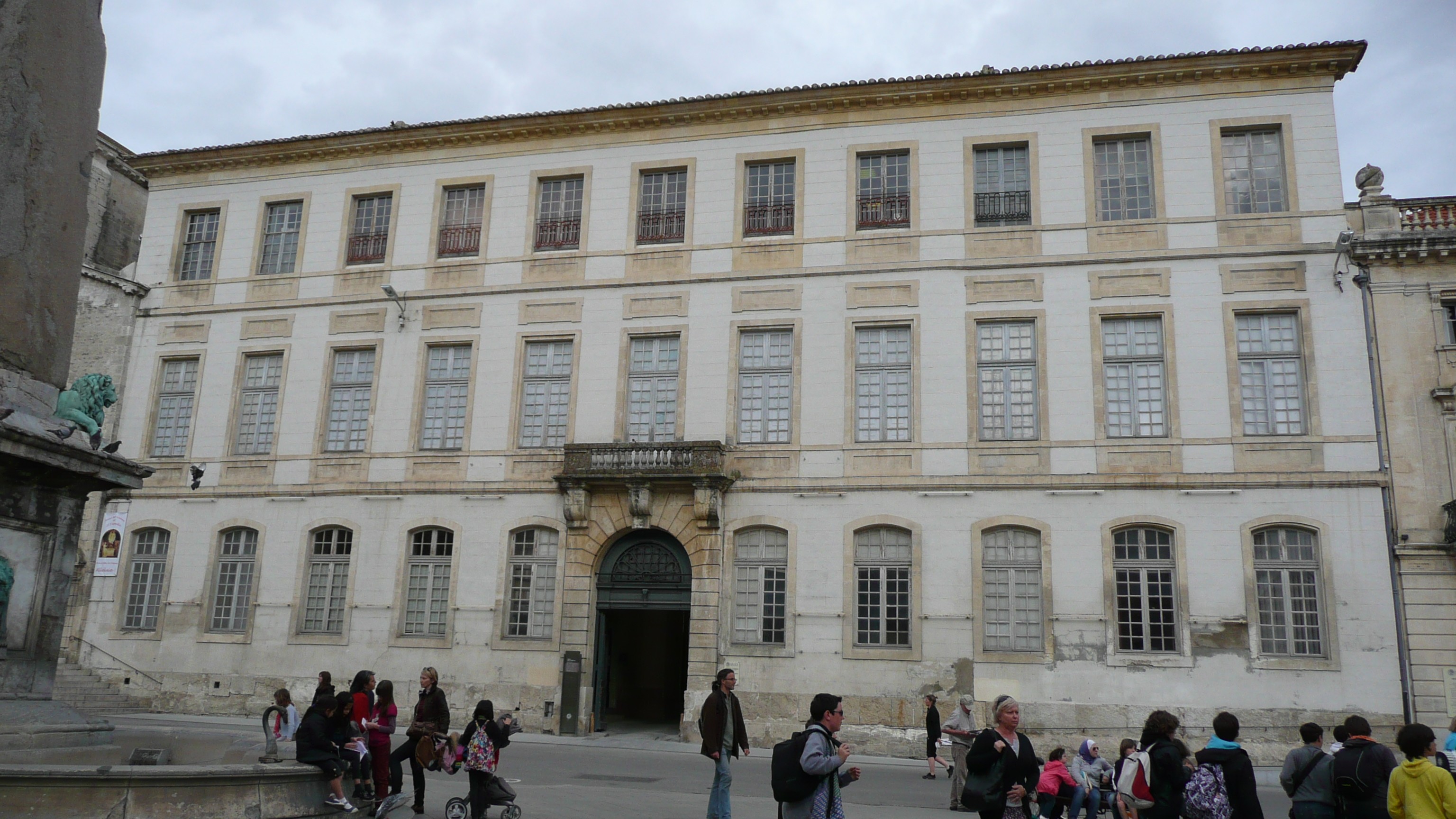
Le palais archiépiscopal d'Arles est un ancien édifice religieux, située à Arles, dans les Bouches-du-Rhône.
Gallery

Sponsored
Location
23 m
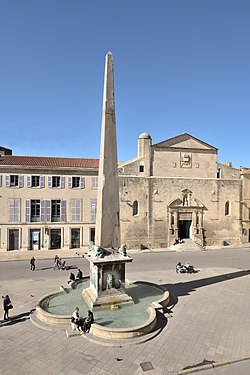
The Obélisque d'Arles is a 4th-century Roman obelisk, erected in the center of the Place de la République, in front of the Hôtel de Ville in Arles, France.

29 m
The Archdiocese of Sorrento-Castellammare di Stabia is a Latin archdiocese of the Catholic Church in Campania, has existed in its current form since 1986. It is a suffragan of the Archdiocese of Naples, having lost its status as a metropolitan in 1979. The Diocese of Castellammare di Stabia was suppressed, and its territory united with the Archdiocese of Sorrento, in 1986. In 2014, in the diocese of Sorrento there was one priest for every 1,503 Catholics.

29 m
The former French Catholic Archbishopric of Arles had its episcopal seat in the city of Arles, in southern France. At the apex of the delta of the Rhone River, some 40 miles from the sea, Arles grew under Liburnian, Celtic, and Punic influences, until, in 46 B.C., a Roman military veteran colony was founded there by Tiberius Claudius Nero, under instructions from Julius Caesar. For centuries, the archbishops of Arles were regional leaders in creating and codifying canon law, through councils and synods.
The diocese was suppressed in 1822, fulfilling a condition in the Concordat of 1817 with King Louis XVIII.

29 m
Arles is a coastal city and commune in southern France, a subprefecture in the Bouches-du-Rhône department of the Provence-Alpes-Côte d'Azur region, in the former province of Provence.
A large part of the Camargue, the largest wetlands in France, is located within the territory of the commune, which is the largest in Metropolitan France in terms of geographic territory. In non-metropolitan France, Maripasoula in French Guiana is the largest French commune in general.
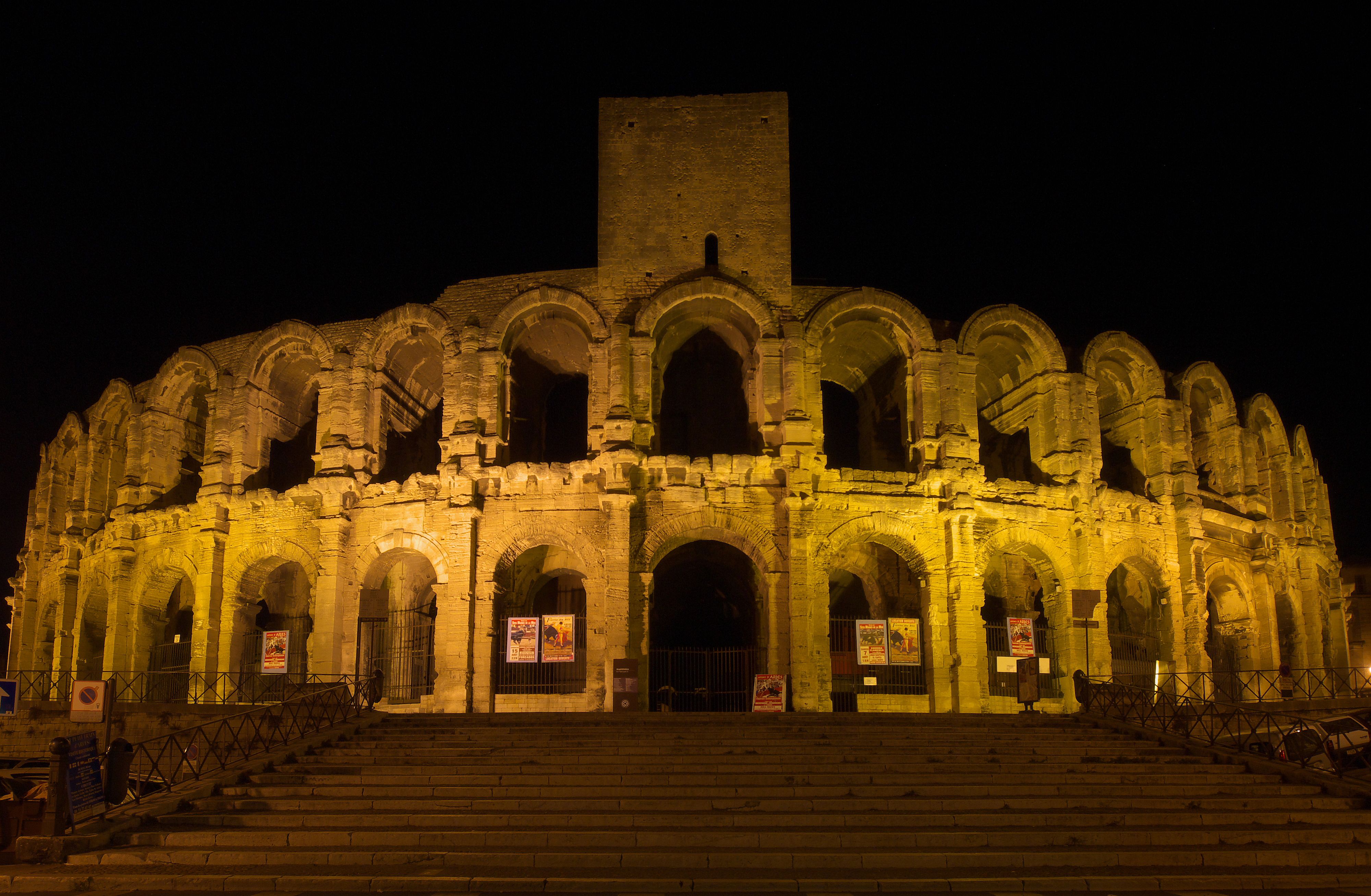
The city has a long history, and was of considerable importance in the Roman province of Gallia Narbonensis. The Roman and Romanesque Monuments of Arles were listed as UNESCO World Heritage Sites in 1981 for their testimony to the history of the region.
The city is famous for being the archdiocese of Caesarius of Arles and Hilary of Arles. Additionally, many artists have lived and worked in this area, including Pablo Picasso, Paul Gauguin and Jacques Réattu. The Dutch post-Impressionist painter Vincent van Gogh lived in Arles from 1888 to 1889, and produced over 300 paintings and drawings during his time there. These are held in internationally known museums and private collections around the world. An international photography festival has been held annually in the city since 1970.
30 m
The Church of St. Trophime is a Roman Catholic church and former cathedral located in the city of Arles, in the Bouches-du-Rhône Department of southern France. It was built between the 12th century and the 15th century, and is in the Romanesque architectural tradition. The sculptures over the church's portal, particularly the Last Judgement, and the columns in the adjacent cloister, are considered some of the finest examples of Romanesque sculpture.
The church was built upon the site of the 5th-century basilica of Arles, named for St. Stephen. In the 15th century a Gothic choir was added to the Romanesque nave.
Along with other medieval and Roman buildings in Arles, in 1981 the church was designated a UNESCO World Heritage Site as part of the Arles, Roman and Romanesque Monuments group.