


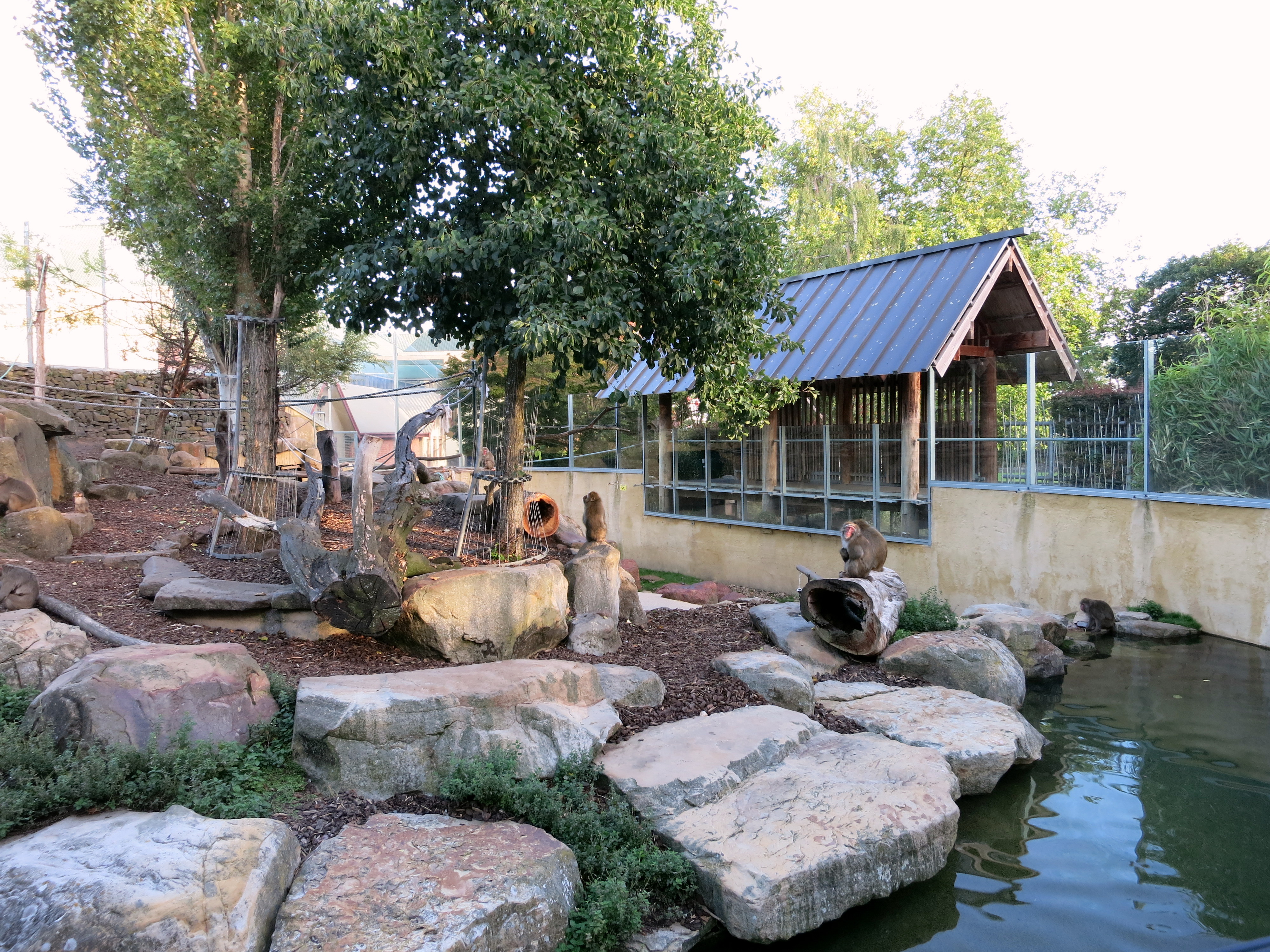
Launceston City Park is a park in Launceston, Tasmania, Australia. Established in the 1820s by the Launceston Horticultural Society and handed over to the Launceston City Council in 1863. It is now an important part of cultural life in Launceston and also a heritage park.
Gallery


Sponsored
Location
145 m
City Park Radio is a community radio station in Launceston, Tasmania, Australia, broadcasting on the frequencies 103.7 FM and 96.5 FM. The station is a member of the Community Broadcasting Association of Australia.
City Park Radio started broadcasting on 7 April 1986, from facilities in Newnham as 7LTN-fm. In 1988, the station moved to the 100-year-old City Park Cottage in Launceston's City Park and started using the name City Park Radio. In 1993, work was started on a new studio complex behind the cottage.
As well as playing a significant cross-section of genres across the board, City Park Radio also has non-music programming, including the daily reading of articles from The Examiner, Launceston's local newspaper. The programming is heavily diversified to include programs in over ten languages. Current shows include general morning, afternoon and drivetime programs, and specialist shows such as Strangeways, Addicted, Definitely No Relation, The Night Train and Reelin' In The Years. City Park Radio also airs some pre-recorded segments, such as the award-winning Health Speak show, an interview-based program called Hot Seat, and occasional radio serials such as White Coolies, which was aired in 2021.
Inside City Park Radio's Cottage, the main building of the site that was once the park caretaker's residence, is a radio museum that holds a collection of over fifty radios dating from the early 1930s.
In September 1996, presenter Tim Moon broke the world record for "The Longest Single Continuous Broadcast By One Announcer". He was on air for 122 hours, 20 minutes and 3 seconds, breaking the previous record by just over 1 hour.

157 m
The Albert Hall is a convention centre in Launceston, Tasmania in the style of high Victorian architecture, first opened as the main structure for the Tasmanian Industrial exhibition which ran from 25 November 1891 to 22 March 1892. It is located on the corner of Tamar Street and Cimitiere Street. It was first listed on the Register of the National Estate on 21 March 1978.
Designed by John Duncan and built by J.T. Farmilo at a cost of 14,000 pounds, it features a large two-level brick-and-stucco hall, containing a historically significant water-powered organ manufactured by the English firm of Charles Brindley c. 1859. The organ was made from blackwood and pine, and its bellows are uniquely lined with kangaroo skin.

207 m
The Launceston Gasworks is a former industrial site located in the CBD of Launceston, Tasmania. The site was the principal supplier of gas to the City of Launceston before the importation of LPG in the 1970s. The gasworks produced gas by heating coal and siphoning off the gas that it released before refining and storing it on site in a set of 3, steel frame gasometers. The first buildings on site were the horizontal retort buildings built in 1860 from sandstone and local brick. The site was later used by Origin Energy as their Launceston LPG outlet. The site is instantly recognizable by its 1930s, steel braced, vertical retort building with the words "COOK WITH GAS" in the brickwork.

325 m
The Hotel Grand Chancellor in Launceston, Tasmania, Australia formerly known as the Novotel, is a seven-storey building located in the city's central business district. Completed in August 1989, the building was constructed at a cost of $44 million, with up to 130 men working on-site. Before the official opening of the hotel, 20,000 locals visited the Chancellor on its open day. Before the late 20th century development, Launceston's hotels and structures were predominantly constructed in the nineteenth century. Robert Hosken proposed the new international hotel in the early 1980s, which he described to be "the biggest commercial development in Launceston's history." He described the facade as "classic Georgian design in the grand European style, with rustic brickwork and rendering." However, many residents thought the architecture was foreign to the rest of the city and sought a more modern and innovative design.
351 m
Launceston Leisure and Aquatic Centre is a double storey structure built at the old Windmill Hill Swimming Pool site in Launceston, Tasmania. The centre was opened on 25 May 2009, at a cost of A$26.3 million. The Launceston City Council estimates that 400,000 people would visit each year after the establishment period.
The Aquatic Centre includes an indoor aquatic pool area, which contains a 50-metre competition pool, spectator seating, leisure and learn to swim pools, children's play and splash park with a tipping bucket, hot water program pool, and a spa. An outdoor 25-metre pool contains a diving tank, beach entry and Water Slide. The outdoor pools are open from the first weekend in November to the last weekend in March. Upstairs is where LAfit is located. Lafit is a health and fitness club.
Other facilities included are indoor program and meeting Spaces, a cafe called Cube Aqua with wet lounge areas, swim shop, outdoor terraces and social areas, associated plant rooms and storage areas and on-site and on street car parking with outdoor landscaped areas.
The new building area will span approximately 6,000 m2 and around 450 m2 of the existing Windmill Hill Swimming Pool will be renovated.
Book your tour near
City Park, Launceston
Book Now
4.3
in partnership with
GetYourGuide.com