

 English
 Français

Pennington (Cumbria)
Pennington est un village et une paroisse civile de Cumbria, situé dans le nord-ouest de l'Angleterre.
Nearby Places View Menu

4 m
Pennington, Cumbria
Pennington is a small village and civil parish in Furness, a region of Cumbria, England. Pennington lies between Ulverston, Rosside and Lindal. Pennington is located just off the nearby A590, with the nearest railway link in Ulverston.

462 m
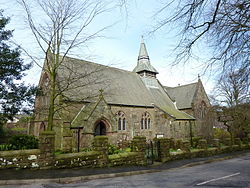
St Michael's Church, Pennington
St Michael's Church is in the village of Pennington, Cumbria, England. It is an active Anglican parish church in the deanery of Furness, the archdeaconry of Westmorland and Furness, and the diocese of Carlisle. Its benefice is united with those of Holy Trinity, Bardsea, and St Peter, Lindal and Marton. The church is recorded in the National Heritage List for England as a designated Grade II listed building.
863 m
Swarthmoor
Swarthmoor is a small village near Ulverston, in Cumbria, England. Located on the Furness peninsula, it was historically part of Lancashire.

1.7 km
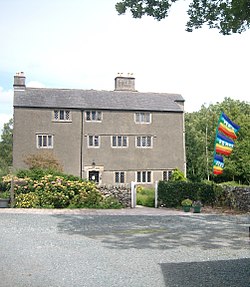
Marton, Cumbria
Marton is a village on the Furness peninsula in the county of Cumbria, England. It shares a church, a parish council and primary school with the nearby Lindal-in-Furness.
1.7 km
Lindal-in-Furness
Lindal-in-Furness is a village on the Furness peninsula, in the Westmorland and Furness district of Cumbria, England. Historically in Lancashire, it lies eight miles to the north-east of Barrow-in-Furness, on the A590 trunk road. The civil parish is Lindal and Marton which had a population of 755 at the 2011 Census, and includes the village of Marton.
The land around Lindal, a small grange belonging to Furness Abbey in the Middle Ages, had long been known for its iron ore. In the 1840s and 1850s, larger deposits were discovered in the area and Lindal became one of many mining villages supplying the iron ore for what was then one of the world's largest steelworks, in Barrow.
Lindal was originally built around a tarn, which was later filled in with spoil from the mines to create a village green. The iron mining companies built houses, chapels, reading rooms, a public hall and a school in Lindal during the period from the mid-19th century to early 20th century.
The iron ore production declined in face of increased international competition and dwindling resources. The last mine in Lindal closed in 1960. Since then, Lindal has developed as a commuter village for the nearby towns of Barrow-in-Furness, Dalton-in-Furness and Ulverston.
Lindal and the adjacent village of Marton share a common Parish Council, Residents' Association, church and village hall. Lindal and Marton Primary School (LAMPS) celebrated its 150th anniversary in 2004.