


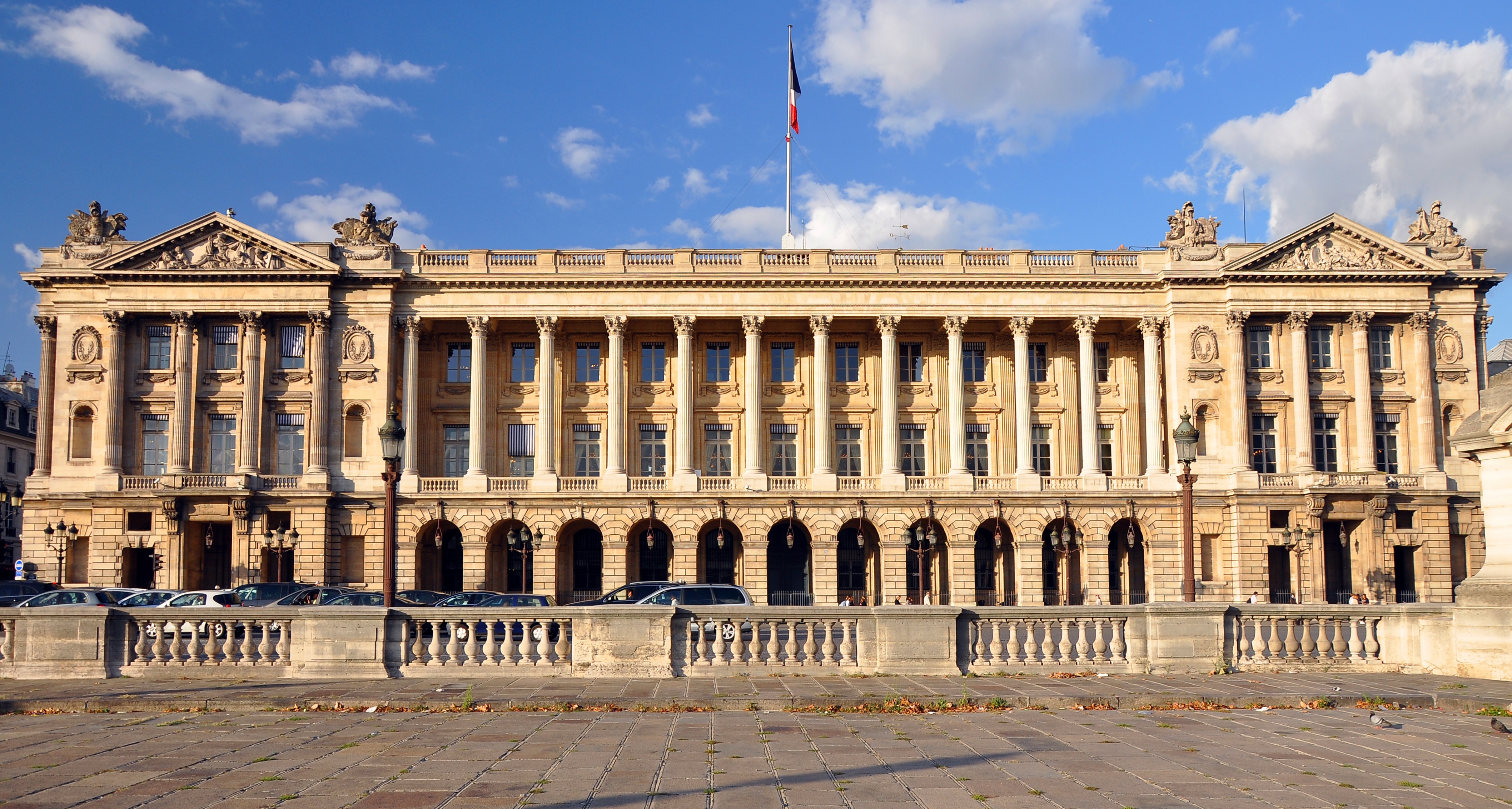
La Fondation pour la mémoire de l'esclavage (FME) est une institution française dont la vocation est de soutenir des projets ayant trait à l'histoire et la recherche sur les traites, l'esclavage et leurs abolitions, la pédagogie, la mémoire et à sa transmission et la lutte contre le racisme et au dialogue interculturel.
Gallery
Sponsored
Location

191 m
The Hôtel Grimod de La Reynière was an hôtel particulier in Paris, in the corner between Avenue Gabriel and Rue Boissy d'Anglas.

211 m
The Embassy of the United States in Paris is the diplomatic mission of the United States in the French Republic. The embassy is the oldest diplomatic mission of the United States. Benjamin Franklin and some of the other Founding Fathers were the earliest U.S. ambassadors to France. The chancery building is located at 2 Avenue Gabriel, on the northwest corner of the Place de la Concorde, in the 8th arrondissement of Paris.
251 m
Sofitel Paris Le Faubourg is a 5-star luxury hotel located in the Rue du Faubourg Saint-Honoré, 8th arrondissement of Paris, France, near the Place de la Concorde. Housed in property formerly owned by Accor hotel group, in 2013 it was sold in a leaseback to New York City-based Mount Kellett Capital for €113 million, including €13 million as renovations. It counts with 147 rooms, a restaurant named Stay seating 60, a bar and a "pastry library" run by thrice Michelin star winner Yannick Alléno, two meeting rooms and a fitness center.
Didier Gomez lead the renovations of the 18th century mansion housing the hotel, once the headquarters for Marie Claire.

257 m
Hermès International S.C.A., using the trade name Hermès Paris or simply Hermès, is a French luxury goods company that was founded in 1837 by Thierry Hermès in Paris, France. At that time, it specialized in the saddlery and harness making trade, producing equipment for horse riders and their horses. The company then branched out into many other trades, including leather goods, followed by silk, ready-to-wear, watchmaking, jewellery, fashion accessories and perfumery. In 2020, the beauty division added a sixteenth business line.
Hermès is still controlled by descendants of the founder, Thierry Hermès. The Hermès family is divided into three branches – the Dumas, Guerrand and Puech cousins – united within the H51 holding company. Except for the period from 2003 to 2013, during which Patrick Thomas was CEO, the company has always been run by a descendant of the founder. Today, it employs around 25,000 people, including 7,000 craftsmen and 15,000 employees in France, where it has 60 manufactures and production sites. In 2024, Hermès generated sales of 15.2 billion euros, with a net income of 4.6 billion euros.

332 m
The Madeleine bombing was a bomb attack carried out on 15 March 1894 by the anarchist militant Désiré Pauwels at the Madeleine church, facing the French National Assembly in Paris. The attack occurred during the latter half of the Era of Attacks and aimed to strike a symbol of the Catholic Church and one of the principal churches of the Parisian bourgeoisie.
Pauwels arrived at the church but detonated his bomb prematurely at the entrance before he could position it. He died shortly afterward from a gunshot wound to the head, possibly self-inflicted as he would have attempted suicide to avoid capture by police. No other casualties or injuries were reported, though the church sustained damage and required restoration.
This bombing, along with other attacks during the Era of Attacks, marked an early shift in terrorist strategy: instead of targeting specific individuals, it focused on symbolic locations—in this case, the Madeleine church as a stand-in for a precise human target. This shift became a hallmark of modern terrorism but was poorly understood by contemporary media, which dismissed the attack as a senseless act without grasping its ideological motivations. The French press reacted with disgust and scorn, ignoring Pauwels' courage or resolve.
The incident also highlights the growing role of forensic science in criminal investigations. Pauwels’ body was so severely disfigured and mutilated by the explosion that it became unrecognizable, necessitating identification by forensic experts—who successfully confirmed his identity.
Succédant au Comité national pour la mémoire et l'histoire de l'esclavage (2004-2020), elle apporte un soutien permanent au Mémorial ACTe à Pointe-à-Pitre (Guadeloupe).
Book your tour near
Fondation pour la mémoire de l'esclavage
Book Now
4.5
in partnership with
GetYourGuide.com
