


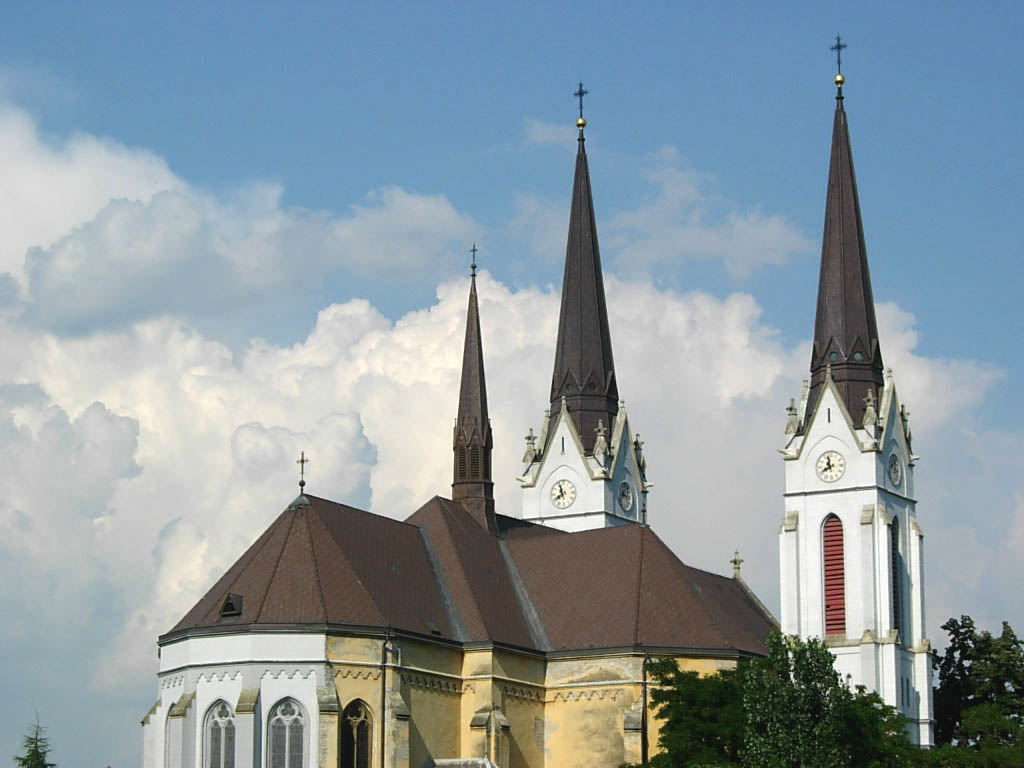
L'église du Sacré-Cœur-de-Jésus de Futog (en serbe cyrillique : Црква срца Исусовог ; en serbe latin : Crkva srca Isusovog) est une église catholique située à Futog, sur le territoire de la ville de Novi Sad, en Serbie. L'église, dont l'origine remonte au XVIIIe siècle, est inscrite sur la liste des monuments culturels de grande importance de la république de Serbie (identifiant no SK 1155).
Gallery


Sponsored
Location
1 explorer visited this place

19 m
Church of the Sacred Heart of Jesus is a Roman Catholic church located in Futog, suburb of Vojvodina's capital Novi Sad, Serbia. The building was completed in period between 1906 and 1908. Count András Hadik de Futak built the original church at the same site already in 1776. Countess Kotek asked architect Ferenc Weninger to design the new building in style of Gothic Revival while the old building was demolished. The building is listed as a part of Immovable Cultural Heritage of Great Importance.
1.6 km
Futog is a village of the city of Novi Sad, Serbia, with a population of 18,642 according to the 2011 census in Serbia. It is situated in southern Bačka, 7 km away from Novi Sad.

1.8 km
The Church of Sts. Cosmas and Damian in Futog, suburb of Novi Sad, is a Serbian Orthodox church in Vojvodina, Serbia. The church is dedicated to saint Cosmas and Damian. The church is the only one in the Eparchy of Bačka dedicated to Saints Cosmas and Damian.

3.4 km
Čerević is a village in Serbia. It is situated in the Beočin municipality, in the Vojvodina province. Although, the village is geographically located in Syrmia, it is part of the South Bačka District. The village has a Serb ethnic majority and its population numbers 2,141 people.

3.5 km
The Church of Saint Sava in Čerević is Serbian Orthodox church in Vojvodina, Serbia. The church was likely constructed in the early 18th century, but subsequent modifications in the 1770s finalized its appearance. An older stone church with a shingle roof stood on the site of the current building since 1700 until the building of the new building. The earliest major restoration of the building took place in 1819. During World War I, the church's bells were removed and repurposed by the Austro-Hungarian army for making cannons. Replacement bells were installed in 1923.
La maison paroissiale, qui date de 1776, est elle aussi classée.