


Bayvil (Welsh: Y Beifil) is a hamlet and parish in Pembrokeshire, Wales. It is situated in the north of the county, 5 kilometres (3.1 mi) east of Newport. It is in the Pembrokeshire Coast National Park. The parish includes most of the village of Felindre Farchog. Together with the parishes of Monington, Moylgrove and most of Nevern, it constitutes the community of Nevern.
Location
1 explorer visited this place

144 m
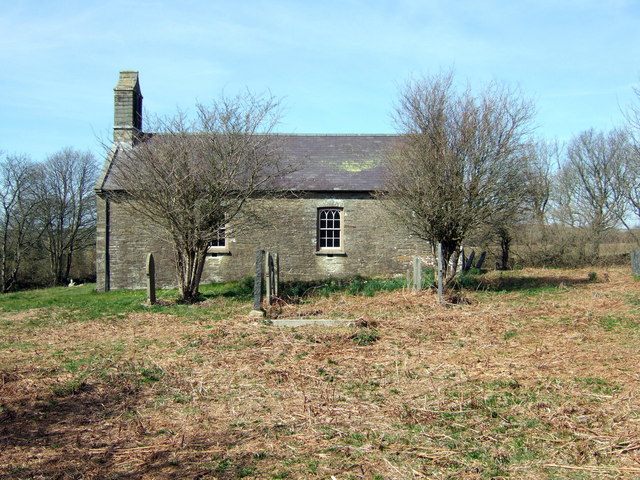
St Andrew's Church, Bayvil, is a redundant church standing in an isolated position in the hamlet of Bayvil, some 2 kilometres to the northeast of Nevern, Pembrokeshire, Wales. It has been designated by Cadw as a Grade II* listed building, and is under the care of the Friends of Friendless Churches. It is listed Grade II* because it is "a scarce rural example of an unaltered Anglican church of its date".

1.6 km
Felindre Farchog is a small village in the community of Nevern in Pembrokeshire, Wales, located around 7 miles south-west of Cardigan, and within the parish of Bayvil. The A487 road from Cardigan to Newport runs through the village.
The village, on the River Nevern, consists of a few houses and an inn.

2.0 km
Nevern Bridge spans the River Nevern in the centre of Nevern, Pembrokeshire, Wales.
This Grade II listed bridge, 220 yards south of the church, was built in the late 18th or early 19th century. Constructed of rubblestone and ashlar, this humpback bridge has two unequal arches—the south arch is larger—and is recessed with keystones.

2.4 km
Nevern is both a parish and a community in Pembrokeshire, Wales. The community includes the settlements of Felindre Farchog, Monington, Moylgrove and Bayvil. The small village lies in the Nevern valley near the Preseli Hills of the Pembrokeshire Coast National Park 2 miles east of Newport on the B4582 road.

2.4 km
Castell Henllys is an archaeological site near Nevern in north Pembrokeshire, Wales.
The Iron Age hillfort has been the subject of an ongoing excavation since the start of the 21st century, accompanied by an exercise in reconstruction archaeology whereby experiments in prehistoric farming have been practised. Four roundhouses and a granary have been reconstructed on their original Iron Age foundations – some 2,000 years old – the hillfort being the only site in Britain where this has been done. The Castell Henllys site includes significant earthworks and fortifications.
During the summer the site provides training for young archaeologists and is a popular visitor attraction. It is owned by Pembrokeshire Coast National Park.