


Oratoire de la Pureté d'Udine
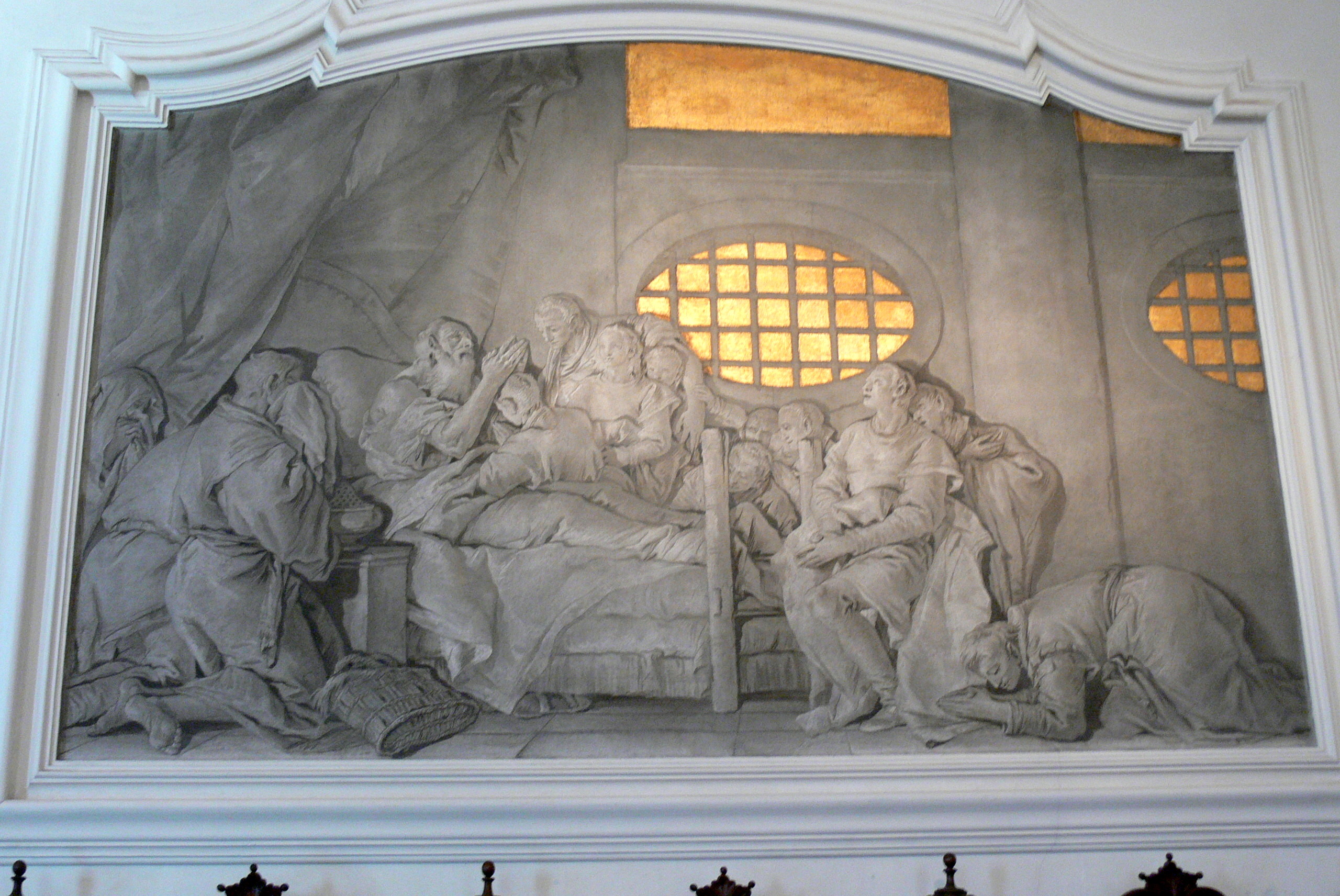
L'oratoire de la Pureté (italien : oratorio della Purità ; frioulan : oratori de Puritât) est un édifice religieux d'Udine, capitale de la région historique et géographique du Frioul en Italie, située dans la région autonome du Frioul-Vénétie Julienne.
Gallery



Sponsored
Location
1 explorer visited this place

59 m
Udine Cathedral is a Catholic cathedral located in Udine, north-eastern Italy. It is the seat of the Archbishop of Udine.

202 m
Piazza Libertà, also known as Piazza della Libertà is the oldest square in Udine, in Friuli-Venezia Giulia region, Italy. The square sits in the open space below Udine Castle.
In the square stands the town hall built in 1448–1457 in the Venetian-Gothic style opposite a clock tower resembling that of the Piazza San Marco at Venice. It was begun in 1448 on a project by Nicolò Lionello, a local goldsmith, and was rebuilt following a fire in 1876. The new design was projected by the architect Andrea Scala.
Opposite the Loggia del Lionello is the Loggia di San Giovanni, a Renaissance structure designed by Bernardino da Morcote. Other noteworthy monuments in the square are the Fountain by Giovanni Carrara, an architect from Bergamo; the Columns bearing the Venetian Lion and the Statue of Justice, the statues of Hercules and Cacus and the Statue of Peace which was donated to Udine by Emperor Francis I to commemorate the peace Treaty of Campoformido.
The square has been known by a number of names including Plàzze dal Vin, Plàzze dal Común, and Piazza Contarena.

248 m
The Udine Castle is a historical building in Udine, Northern Italy, built on a hill in the historical center of the city.

283 m
The Udine Courthouse is a building located on Largo Ospedale Vecchio in Udine, Italy.
482 m
Liceo Classico statale Jacopo Stellini is a liceo classico in Udine, Italy, for pupils aged 14 to 19. The high school was founded in 1808, making it the oldest liceo classico in Udine. During World War I, Luigi Cadorna placed the headquarters of the Italian Army in the part of the school that had just been built in 1915, and after the war the liceo moved to its present location.