


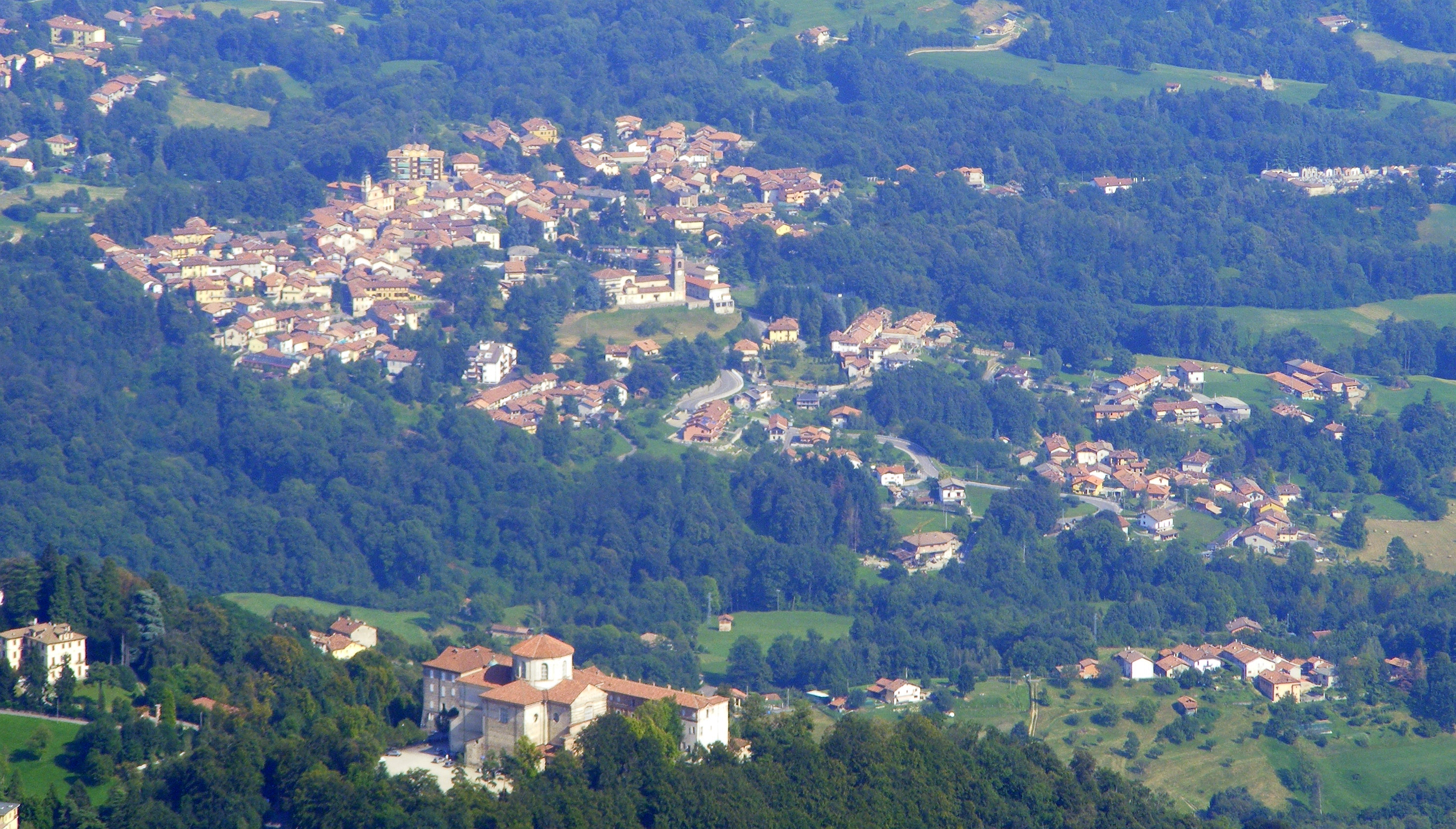
Graglia (Piedmontese: Graja) is a comune (municipality) in the Province of Biella in the Italian region Piedmont, located about 60 kilometres (37 mi) northeast of Turin and about 7 kilometres (4 mi) southwest of Biella. The communal territory includes the Mombarone peak and Lake Ingagna. It is home to the Sacro Monte di Graglia sanctuary.
Book your tour near
Graglia
Book Now
4.3
in partnership with
GetYourGuide.com
Location
1 explorer visited this place

0 m
Camburzano is a comune in the Province of Biella in the Italian region Piedmont, located about 60 kilometres northeast of Turin and about 7 kilometres southwest of Biella.
Camburzano borders the following municipalities: Graglia, Mongrando, Muzzano, Occhieppo Inferiore, Occhieppo Superiore.
0 m
Muzzano is a comune in the Province of Biella in the Italian region Piedmont, located about 60 kilometres northeast of Turin and about 7 kilometres southwest of Biella. 31 December 2004, it had a population of 673 and an area of 5.9 square kilometres.
Muzzano borders the following municipalities: Camburzano, Graglia, Occhieppo Superiore, Sordevolo.

2.5 km
The Sacro Monte di Graglia is one of the numerous devotional places around the Italian Alps and it houses the Santuario di Nostra Signora di Loreto, one of the four major sanctuaries of the Biellese territory.
Set in the Valle Elvo at 690 m on the sea level, the sanctuary is built near the Lauretana water industry.
The complex is a stage of many devotional paths, which include the CoEur - In the heart of European paths and the Path of Saint Charles.

4.1 km
The Burcina Park “Felice Piacenza” Nature Reserve is a protected, wooded, about 57 hectares wide area. It was established in 1980 with a law of the Piedmont Region Government. It is located within the municipalities of Pollone and Biella. The Municipality of Biella owns almost three quarters of the whole surface.
The difference in altitude varies from 570 to 829 meters above sea level.
The reserve is situated on the Burcina hill, or bric. It protects the natural, environmental and landscape characteristics of the area. More specifically, it supports and promotes scientific, cultural and educational activities, also involving schools.