Foulby is a village in the City of Wakefield district of West Yorkshire, England. It is situated near Nostell, between Crofton and Ackworth Moor Top, on the A638 east-south east of the city of Wakefield. The village is in the Ackworth, North Elmsall and Upton ward of Wakefield Council. The boundary between the civil parishes of Huntwick with Foulby and Nostell (to the south-east) and Sharlston (to the north-west) passes through the village. John Harrison (24 March 1693 – 24 March 1776) an English carpenter and clock designer, who solved the problem of calculating longitude through the carrying of precise time on board ship, was born in the village. A blue plaque is displayed on the house where he was born beside the main Wakefield to Doncaster road. Windmill Inn, the site of a former windmill designed by John Smeaton in 1786, is now an Indian restaurant called Arkaan's.

Nearby Places View Menu
Location Image
885 m

Nostell Miners Welfare F.C.

Nostell Miners Welfare Football Club is an English football club based in New Crofton, West Yorkshire. The club are currently members of the Northern Counties East League Division One, Yorkshire Amateur League (YAL) and Wakefield District Sunday League, with the Junior Section being members of Huddersfield and District Junior League.
915 m

Wakefield City Academies Trust

Wakefield City Academies Trust (WCAT) was a multi-academy trust (MAT) that managed 21 schools (14 primary and 7 secondary) across West Yorkshire, South Yorkshire, and the East Riding of Yorkshire. As an academy trust, it was an exempt charity regulated by the Department for Education (DfE). In September 2017, WCAT announced it would cease operations and dissolve once new sponsor organisations were found for its schools.
Location Image
1.0 km

Nostell

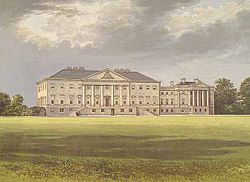
Nostell is an estate about 4 miles ESE of Wakefield the City of Wakefield in West Yorkshire, England. It is in the civil parish of Huntwick with Foulby and Nostell which had a population of 90 in 2001, and 164 at the 2011 census (including Wintersett). The Nostell Estate was centred on Nostell Priory, an 18th-century Palladian historic house, on the site of an Augustinian priory which received its charter in 1121. The house has interiors by Robert Adam and furniture by Thomas Chippendale. The house was owned by the Winn family and is now in the care of the National Trust. Wragby Church is at the entrance to the grounds of Nostell Priory. Coal mining on the Nostell Estate began in the 9th century and continued until 1987. Nostell Colliery was known locally as 'the family pit' due to the welfare schemes introduced by the Winn family far in advance of similar schemes before nationalisation. In 1880, terraced houses nicknamed "Cribbin's Lump" were built close to the colliery. They were renamed "New Crofton" by Lord St Oswald but the nickname remained until the houses were demolished in the 1980s. Nostell Colliery closed in 1987. Nostell Cricket Club was established pre-1897 opposite the priory entrance. In the 1870–1872 Imperial Gazetteer of England and Wales, "Foulby, Nostell and Huntwick" was described as an extra-parochial tract within Pontefract parish, with a population of 145 people in 27 houses.
Location Image
1.3 km

Nostell railway station

Nostell railway station served the village of Nostell, West Yorkshire, England from 1866 to 1951 on the West Riding and Grimsby Railway.