


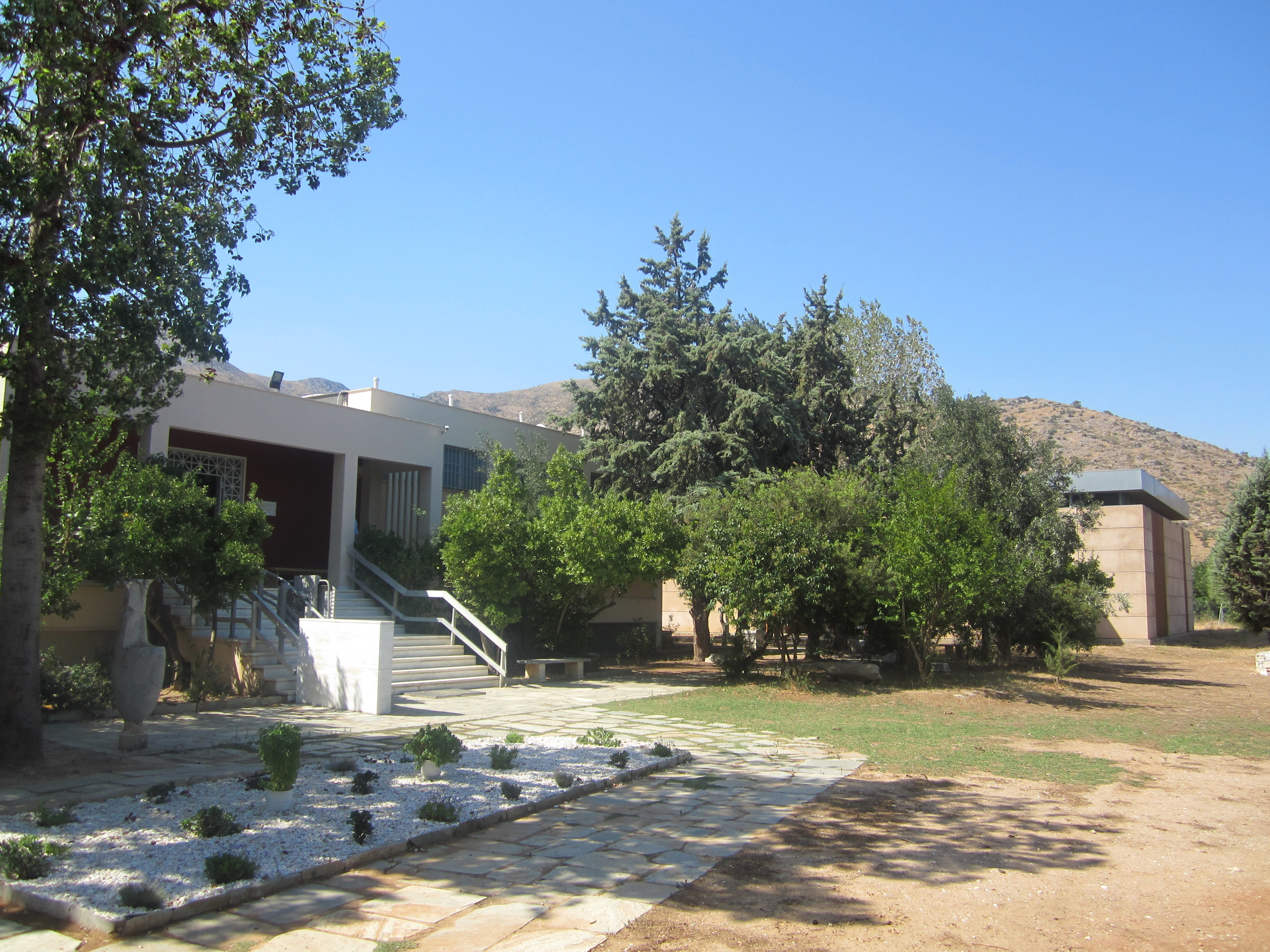
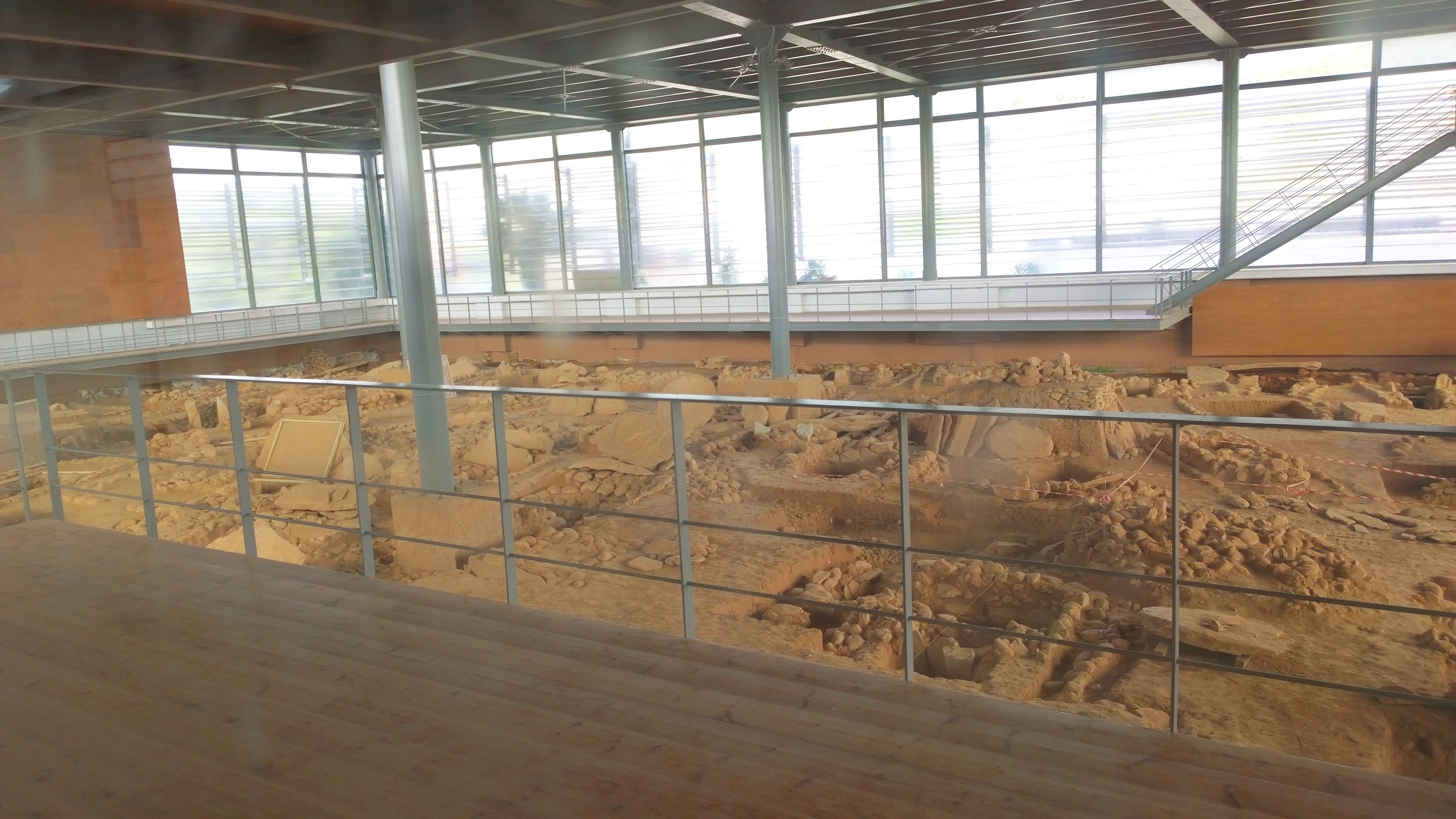
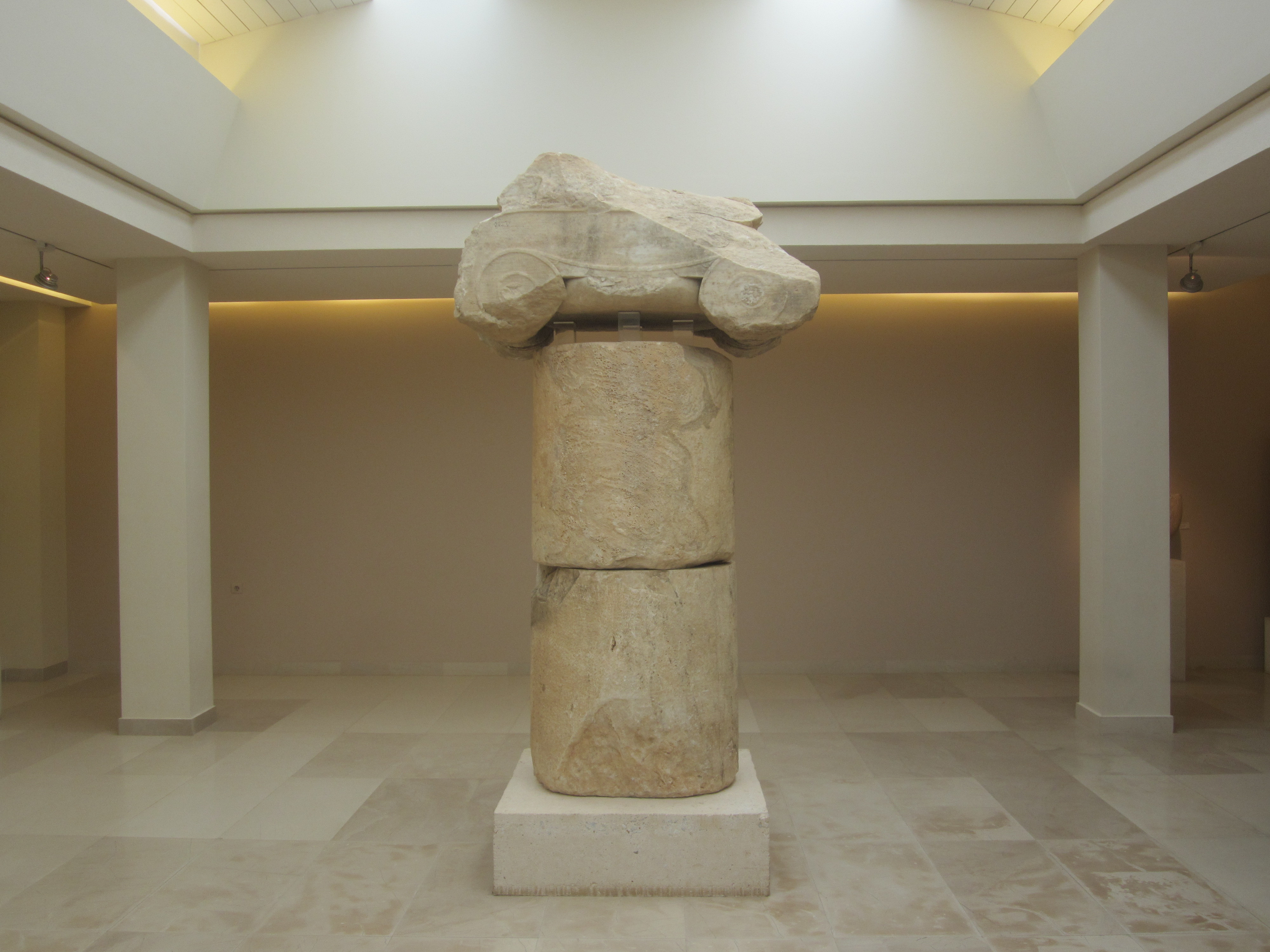
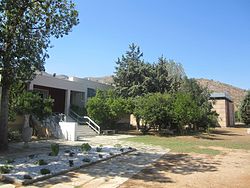
Le Musée archéologique de Marathon (en grec moderne : Αρχαιολογικό Μουσείο Μαραθώνα) est un musée de Grèce situé dans la région de Vranás, au sein de la municipalité de Marathon, en Attique. Il a été construit en 1975 et restructuré en 2004.
Gallery





Sponsored
Location
1 explorer visited this place
6 m
The Archeological Museum of Marathon is a museum in Marathon, Attica, Greece. The museum mainly houses findings originating from the Battle of Marathon and from the Egyptian temple built nearby.
207 m
Probalinthus or Probalinthos was a deme of ancient Attica, one of the Attic Tetrapolis located in the plain of Marathon. Probalinthus belonged to the phyle Pandionis.
The site of Probalinthus is located southeast of modern Vrana.
1.8 km
Kotroni Airport is a small airport situated west of Marathonas, Greece. It has one of the smallest runways in the world. Both runways are mostly used by helicopters because Kotroni is normally a base for the Hellenic Navy Helicopter Command. To indicate that helicopters land at the site, the airport has helipad signs on the surface of the runways. It also contains 4 helipads, which are on the runway and 16 helicopters' parking positions.
The terrain around Kotroni Airport is hilly to the north west, but to the southeast it is flat. A bay of the sea is near Kotroni Airport to the southeast. The highest point nearby is Mount Pentelicus, 1,109 meters above sea level, 8.7 km southwest of Kotroni Airport. Closest major community is Acharnes, 19.9 km west of Kotroni Airport. In the area around Kotroni Airport there are unusually many named peninsulas, islands and bays.
The climate in the area is temperate. Average annual temperature in the neighborhood is 18 °C . The warmest month is August, when the average temperature is 28 °C, and the coldest is January, at 8 °C. Average annual average is 812 millimeters. The rainy month is December, with an average of 154 mm rainfall, and the driest is July, with 13 mm rainfall.

2.8 km
The Battle of Marathon took place in 490 BC during the first Persian invasion of Greece. It was fought between the citizens of Athens, aided by Plataea, and a Persian force commanded by Datis and Artaphernes. The battle was the culmination of the first attempt by Persia under King Darius I to subjugate Greece. The Greek army inflicted a crushing defeat on the more numerous Persians, marking a turning point in the Greco-Persian Wars.
The first Persian invasion was a response to Athenian involvement in the Ionian Revolt, when the city-states of Athens and Eretria each sent a force to support the cities of Ionia in their attempt to overthrow Persian rule. The Athenians and Eretrians had succeeded in capturing and burning Sardis, but they were then forced to retreat with heavy losses. In response to this raid, Darius swore to burn down the two cities that had aided the failed revolt. According to Herodotus, Darius had his bow brought to him and then shot an arrow "upwards towards heaven", saying as he did so: "Zeus, that it may be granted me to take vengeance upon the Athenians!" Herodotus further writes that Darius charged one of his servants to say "Master, remember the Athenians" three times before dinner each day.
At the time of the battle, Sparta and Athens were the two largest city-states in Greece. Once the Ionian revolt was finally crushed by the Persian victory at the Battle of Lade in 494 BC, Darius began making plans to subjugate Greece. In 490 BC, he sent a naval task force under Datis and Artaphernes across the Aegean Sea, to subjugate the Cyclades islands and then to make punitive attacks on Athens and Eretria. Reaching the island of Euboea in mid-summer after a successful campaign in the Aegean, the Persians proceeded to besiege and capture Eretria. The Persian force then sailed for Attica, landing in the bay near the town of Marathon. The Athenians, joined by a small force from Plataea, marched to Marathon, and succeeded in blocking the two exits from the plain of Marathon. The Athenians also sent a message to the Spartans asking for support. When the messenger arrived in Sparta, the Spartans were already involved in a religious festival and gave this as a reason for not coming to help the Athenians.
The Athenians and their allies chose a location for the battle, with marshes and mountainous terrain, that prevented the Persian cavalry from joining the Persian infantry. Miltiades, the Athenian general, ordered a general attack against the Persian forces, composed primarily of missile troops. He reinforced his flanks, luring the Persians' best fighters into his center. The inward wheeling flanks enveloped the Persians, routing them. The Persian army broke in panic towards their ships, and large numbers were slaughtered. The defeat at Marathon marked the end of the first Persian invasion of Greece, and the Persian force retreated to Asia. Darius then began raising a huge new army with which he meant to completely subjugate Greece; however, in 486 BC, his Egyptian subjects revolted, indefinitely postponing any Greek expedition. After Darius died, his son Xerxes I restarted the preparations for a second invasion of Greece, which finally began in 480 BC.
The Battle of Marathon was a watershed in the Greco-Persian wars, showing the Greeks that the Persians could be beaten; the eventual Greek triumph in these wars can be seen to have begun at Marathon. The battle also showed the Greeks that they were able to win battles without the Spartans, as Sparta was seen as the major military force in Greece. This victory was overwhelmingly won by the Athenians, and Marathon raised Greek esteem of them. The following two hundred years saw the rise of the Classical Greek civilization, which has been enduringly influential in Western society, and so the Battle of Marathon is often seen as a pivotal moment in Mediterranean and European history, and is often celebrated today.
2.8 km
There are two tumuli at Marathon, Greece. One is a burial mound, or "Soros" that houses the ashes of 192 Athenians who fell during the Battle of Marathon in 490 BC. The other houses the inhumed bodies of the Plataeans who fell during that same battle. The burial mound dominates the plain of Marathon, where the eponymous battle took place, along with the tumulus of the Plataeans, and a victory column erected by the Athenians to commemorate their victory over Darius' Persian expedition. The tumulus is encompassed in a park today.