


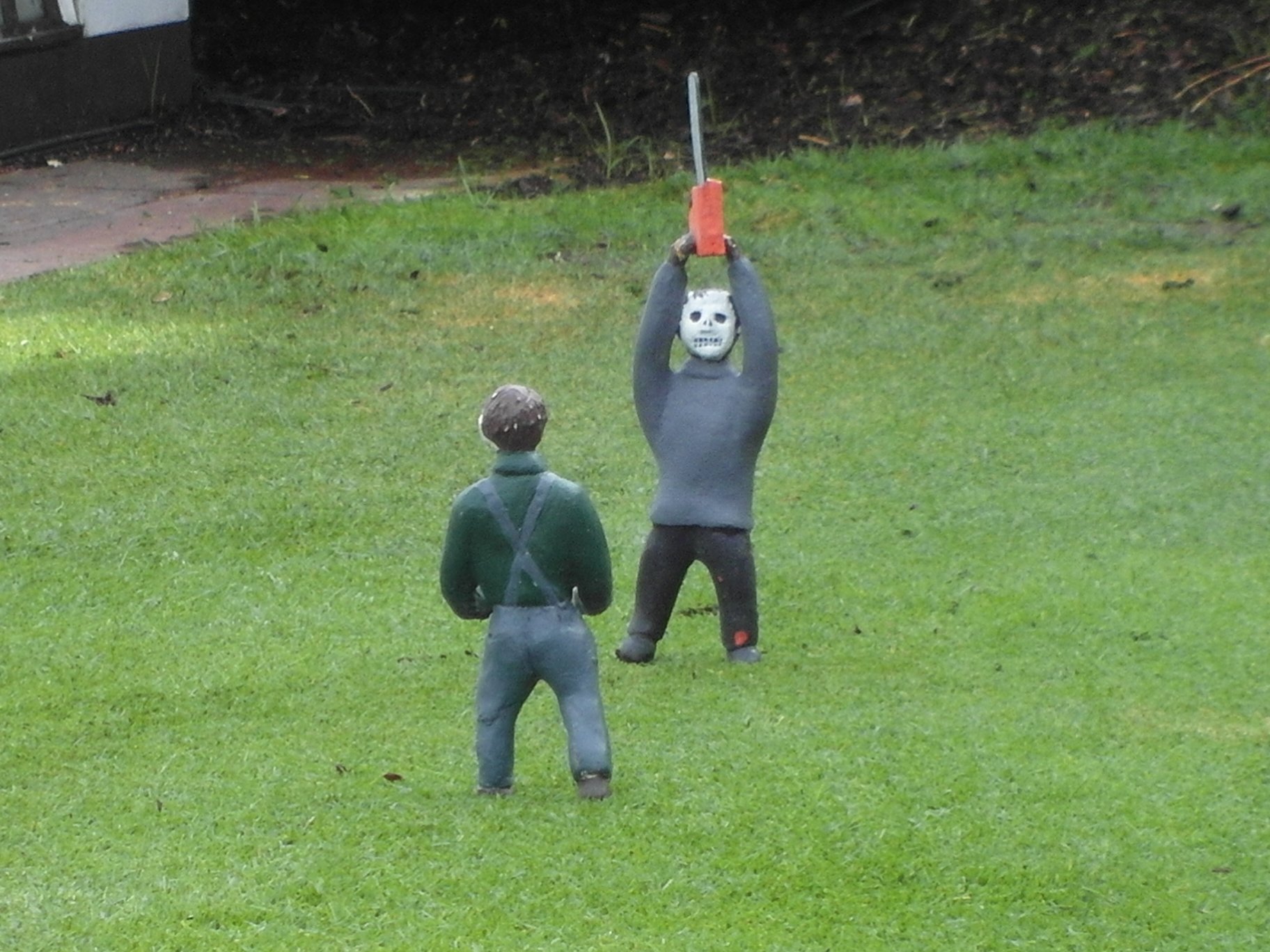
Cockington Green Gardens is a park of miniatures, situated in Nicholls, Australian Capital Territory. Doug and Brenda Sarah had the idea to create a miniature village in 1972, and Cockington Green was opened on 3 November 1979. The business is family owned and operated, incorporating over four generations. On September 28, 2023, four people were injured when a miniature train derailed due to excessive speed.
Gallery


Sponsored
Location
1 explorer visited this place

203 m
Ginninderra is the name of the former agricultural lands surrendered to urban development on the western and north-western fringes of Canberra, the capital of Australia. Ginninderra corresponds with the watershed of Ginninderra Creek, which is now in part occupied by the Canberra districts of Belconnen and Gungahlin.
The word 'Ginninderra' is one of several - Molonglo, Gold Creek and Monaro are others - that hold longstanding connections to Canberra's local history. The Ginninderra Cricket Club, Ginninderra District High School and Ginninderra Labor Club are examples. One of the local ACT electorates is called Ginninderra. The name is celebrated through the place name Ginninderra Drive, an arterial road that traverses the Canberra district of Belconnen.

295 m
National Dinosaur Museum, located in Gold Creek Village, Nicholls, Canberra, is Australia's largest permanent display of prehistoric specimens. Established in 1993, the museum has grown into one of Canberra's premier tourist attractions.
The museum's exhibition takes visitors on a journey through the evolution of life, with a particular focus on dinosaurs. It features captivating indoor and outdoor exhibits with life-size replica dinosaur models, real and replica skeletons, bones, fossils, crystals, meteorites and more.The museum is believed to house the biggest fossil display in the southern hemisphere. The museum provides an engaging and educational experience for visitors of all ages, complemented by a gift shop, Dinosaur garden, and plenty of photo opportunities.
With an annual patronage of 100,000 visitors, the museum is one of the most popular attractions in the Australian Capital Territory. The museum is based around the school curriculum and caters for guided tours for school groups, focusing on an interactive "touch and feel" experience. National Dinosaur Museum additionally host birthday parties, dances with dinosaurs, events for young children, private parties, corporate functions and dinosaur sleep overs during school holiday periods. Events are regularly posted to the Museum Facebook page.
The National Dinosaur Museum offers an engaging and educational onsite experience for children, with additional online resources like the Kids Dino News Blog to keep young paleontologists informed and excited about dinosaurs.
In addition to being an educational tourist attraction, National Dinosaur Museum is a research institution with numerous scientific papers published.

425 m
Deasland was a historic homestead at Ginninderra in Canberra’s north on the Barton Highway. It was demolished in early 2022 due to 'Mr Fluffy' asbestos contamination.

795 m
Nicholls is a suburb in the Canberra, Australia district of Gungahlin. It was named after Sir Douglas Nicholls who was born at Cummeragunja Aboriginal mission, New South Wales. Nicholls was a footballer, pastor, activist, and Governor of South Australia, 1976–1977. In line with the philosophy of naming Canberra's streets, those of Nicholls are named after sportspeople. The suburb incorporates a large shallow body of water, designated Gungahlin Pond, with The Lakes golf course and the greatest number of residential streets on one side and a small cluster of residential streets, the "pondside promenade", named after birds, on the other. There is no direct connecting road between the two.
Nicholls adjoins the suburbs of Kinlyside, Casey, Ngunnawal, Crace and Palmerston. The suburb is located approximately 2 km from the Gungahlin Town Centre and about 13 km from the centre of Canberra.
1.9 km
Kinlyside is a rural locality in the Australian Capital Territory. It was gazetted in 1991 as a planned outer suburb of Gungahlin. It was never released for development, and the governing Labor Party campaigned at the 2004 election and 2008 election on the policy of making Kinlyside a nature reserve instead. In 2013, it was set aside as a protected area that would remain undeveloped under an environmental offsets plan associated with increased development in Gungahlin. As of 2019, it remains a gazetted locality in the Territory Plan.
According to the ACT's Planning and Land Authority, the locality is named after George Kendall Kinlyside.
From a well known pioneer family in the Ginninderra-Hall area; followed in his father's footsteps as wheelwright, coachbuilder and blacksmith at Hall; in 1907 he built a hall which served the Hall community for many years; active in local affairs and joint secretary of the Hall Progress Association when established in 1906.
Kinlyside is bounded by the village of Hall to the west, Nicholls to the south east, by Casey to the east and Clarrie Hermes Drive to the south. The suburb's other boundaries have been surveyed but not yet established.