


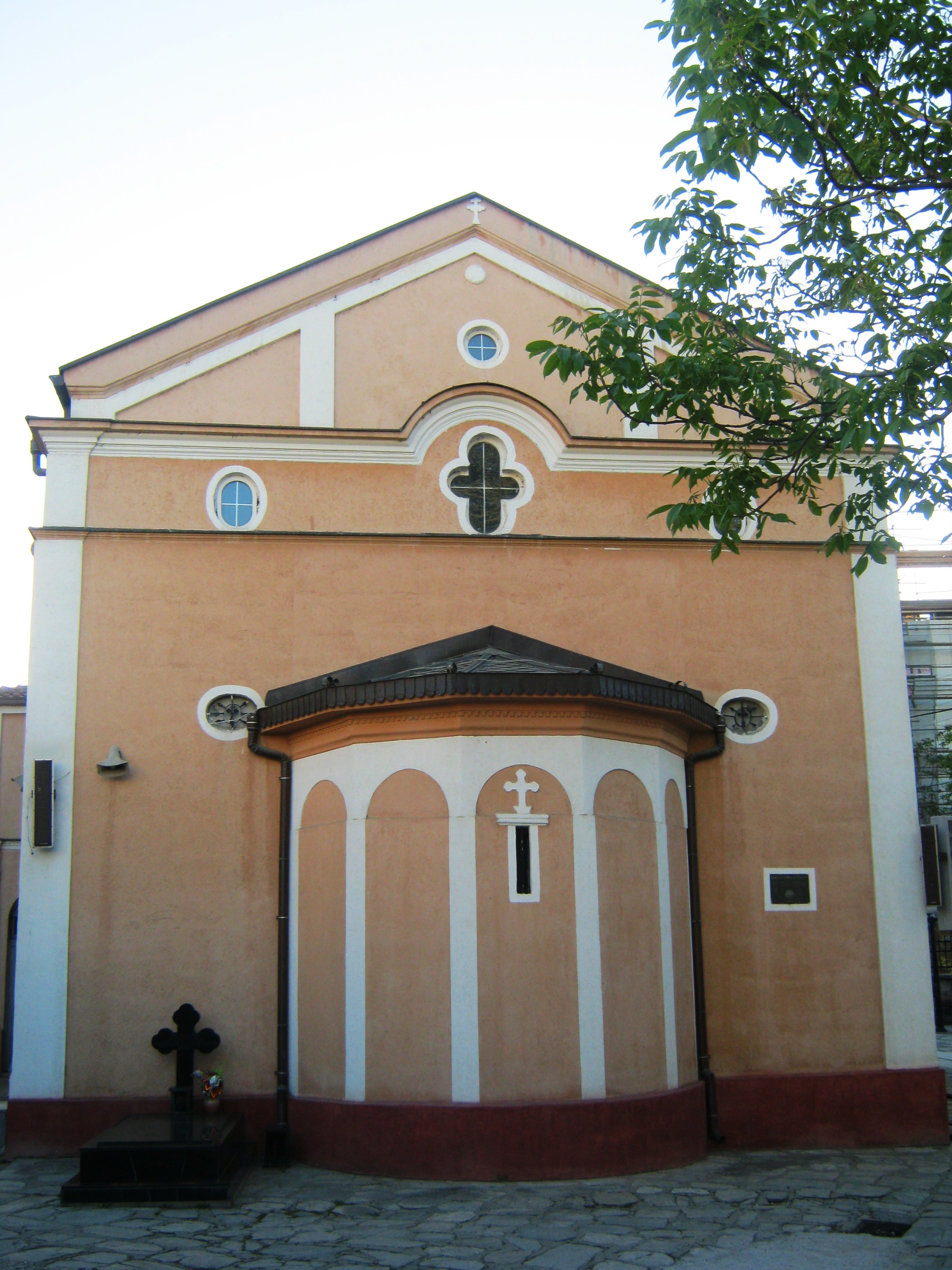
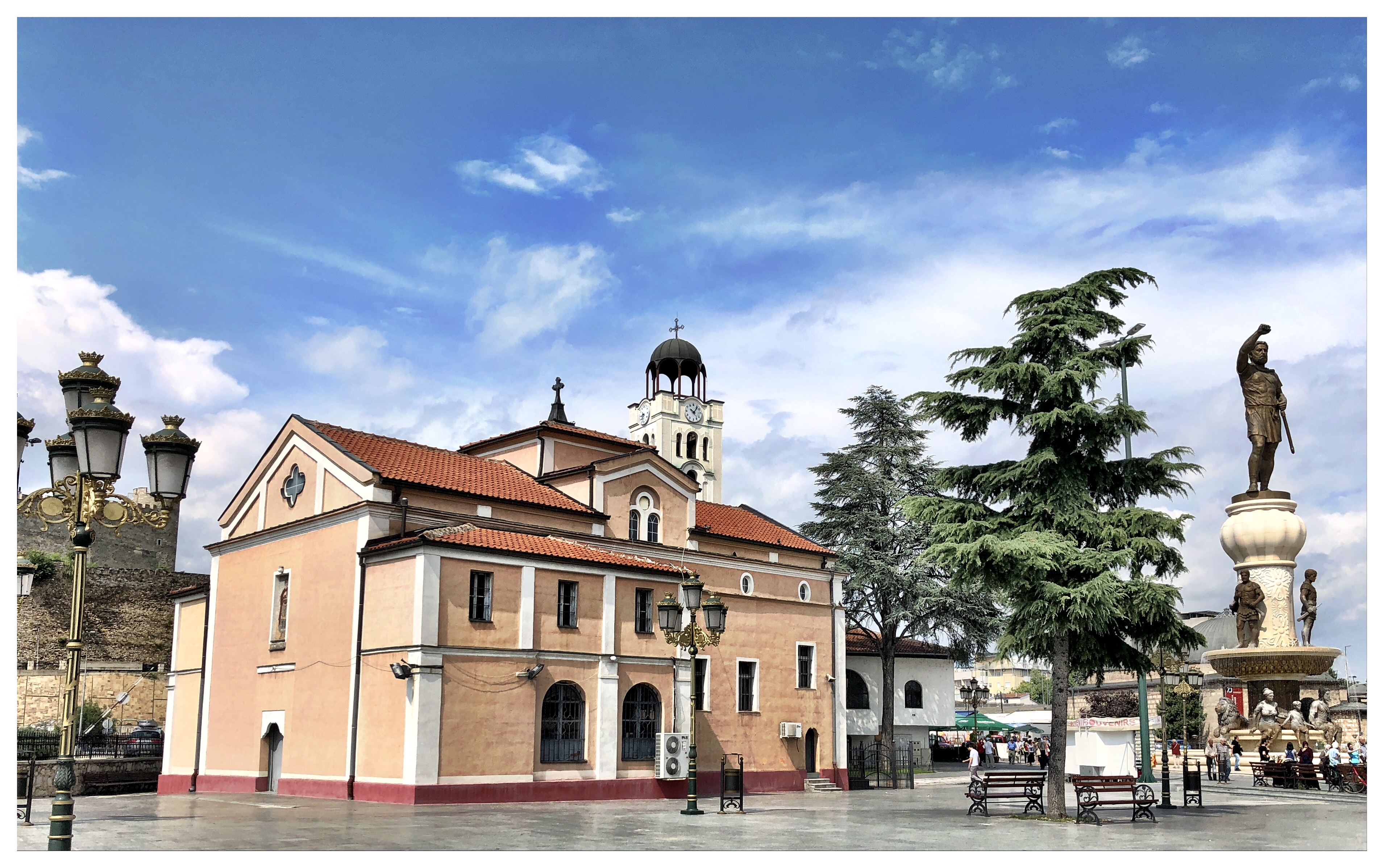
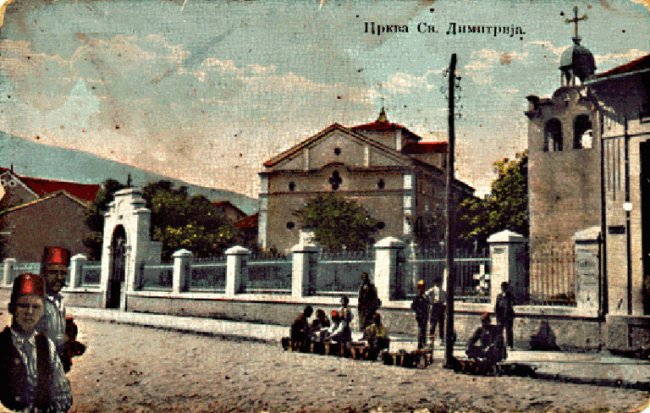
L'église Saint-Dimitri (Црква Св. Димитрија en macédonien) est une église orthodoxe située à Skopje, en Macédoine du Nord et dédiée à saint Dimitri de Thessalonique. Elle se trouve dans le centre de la ville, à l'entrée du vieux bazar.
Gallery




Sponsored
Location
1 explorer visited this place
64 m
The Holocaust Memorial Center for the Jews of Macedonia is a memorial to the Holocaust of the 7,148 Jews from North Macedonia and the history of the Jews in the Balkans, located in Skopje, the capital city of North Macedonia.

104 m
The National Gallery is a national art museum of North Macedonia in the Old Bazaar, located in the capital city of Skopje. Its permanent collection is housed in the 15th century Turkish Bath building known as the Daut Pasha Baths, but the museum also features a smaller exhibition at the nearby Čifte Hammam. Founded in 1948, the museum's collection dates from the 14th century. In addition to Daut Pasha Baths, it also includes three other facilities: the Mala Stanica Multimedia Center, the Čifte Hammam, and the Lazar Lichenoski Memorial House.

117 m
The Museum of the Macedonian Struggle is a national museum of North Macedonia located in the capital city of Skopje. Construction of the museum began on 11 June 2008 and it was opened to the public on the 20th anniversary of the declaration of independence on 8 September 2011. The building lies on the former location of the Skopje branch of the National Bank of Yugoslavia, between the Archaeological Museum of North Macedonia, the Holocaust Museum of Macedonia, the Stone Bridge and the Vardar River.
The exhibit covers the period from the beginning of the resistance movement against the Ottoman rule, until the declaration of independence from Yugoslavia on 8 September 1991. The guided tours take visitors through 13 exhibits ending in front of the original copy of the 1991 Declaration of Independence.

191 m
The Socialist Republic of Macedonia, or SR Macedonia, commonly referred to as Socialist Macedonia, Yugoslav Macedonia or simply Macedonia, was one of the six constituent republics of the post-World War II Socialist Federal Republic of Yugoslavia, and a nation state of the Macedonians. After the transition of the political system to parliamentary democracy in 1990, the Republic changed its official name to Republic of Macedonia in 1991, and with the beginning of the breakup of Yugoslavia, it declared itself an independent country and held a referendum on 8 September 1991 on which a sovereign and independent state of Macedonia, with a right to enter into any alliance with sovereign states of Yugoslavia was approved.
Geographically, SR Macedonia bordered Albania to the west, Greece to the south and Bulgaria to the east. Within Yugoslavia, it bordered SR Serbia to the north. It was one of the two landlocked federal republics, along with SR Serbia.
191 m
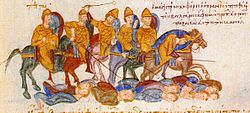
The Battle of Skopje was a battle in 1004 during the Byzantine reconquest of Bulgaria. The campaign was carried out in a slow and systematic manner, with campaigns sometimes continuing year-round rather than following the traditional seasonal pattern. The primary reason for mounting a long campaign was the realization by Basil II that Bulgarian could not be conquered in a single campaign. Instead the emperor chose to employ systematic and constant pressure, resulting in gaining control over crucial fortresses. He first secured Sardika and then advanced north to sever Samuil's access to the former Bulgarian heartlands around Preslav. Once this area was under control, Byzantine forces moved south from Sardika into Macedonia, capturing Berrhoia and reopening the route to Greece. Byzantine authority was soon restored in Thessaly and in parts of eastern Macedonia, including Voden. Basil then launched a major offensive northward toward the Danube, culminating in the capture of Vidin after an eight-month siege. During this time, Samuil personally led a raid through the reconquered territories and briefly seized Adrianople, which he plundered but was unable to hold.