


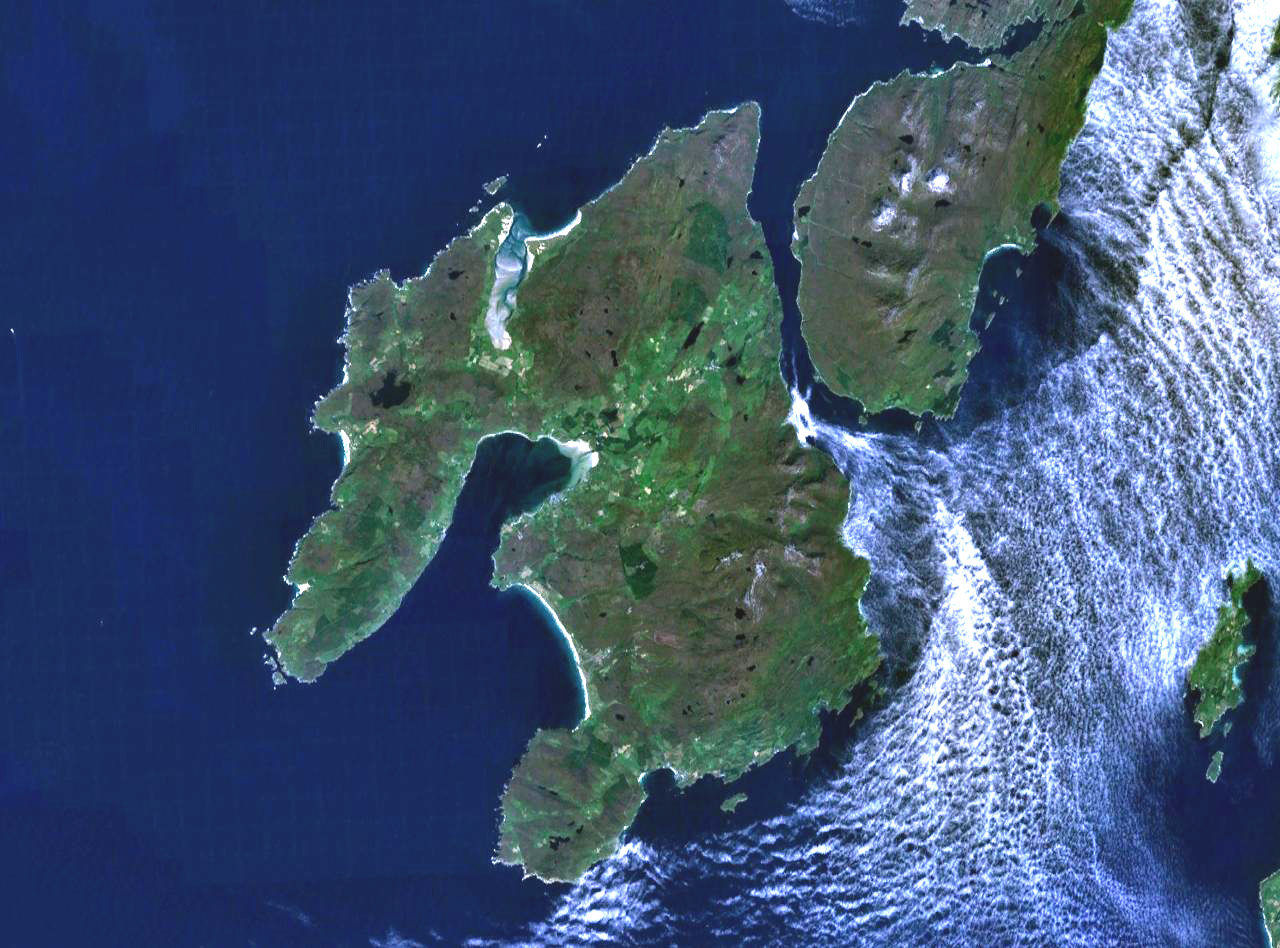
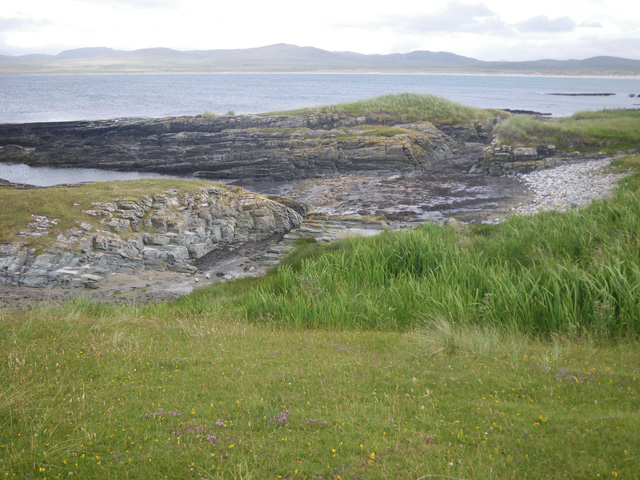
Ardnave Point (Scottish Gaelic, Àird an Naoimh) is a coastal promontory on the northwest of Islay, a Scottish island. This landform has a rocky northern shore and extensive dunes on the upland areas of the point.
Gallery
Sponsored
Location
2 explorers visited this place

1.1 km
Nave Island lies to the north of Islay in the Inner Hebrides near the mouth of Loch Gruinart. It is uninhabited.

2.7 km
Loch Gruinart is a sea loch on the northern coast of isle of Islay in Scotland. Land at the head of the loch, Gruinart Flats, is a designated nature reserve owned by the RSPB. It is an important winter roosting site for barnacle geese. Ardnave Point is a coastal promontory near the mouth of the loch on the northwest of Islay.
The Battle of Traigh Ghruinneart was fought on the sands at the south end of the loch on 5 August 1598 between a force from Mull led by Sir Lachlan Mor MacLean of Duart and the Islay men led by Sir James MacDonald, 9th of Dunnyveg, son of Angus MacDonald of Dunyvaig and the Glens, in which Macleans were defeated and all killed, including Sir Lachlan, save one who survived by swimming to Nave Island.
The pìobaireachd Lament for Sir Lachlan Mor harks back to this battle which was also remembered in Islay folklore.

7.7 km
The Battle of Traigh Ghruinneart or in Scottish Gaelic Blàr Tràigh Ghruineart or sometimes called the Battle of Gruinart Strand was a Scottish clan battle fought on 5 August 1598, on the Isle of Islay, in the Hebrides. It was fought between the Clan Donald and Clan Maclean. A tràigh or stand is the flat area of land bordering a body of water, a beach, or shoreline.

8.0 km
The Gruinart Flats is a low-lying landform on the western part of the isle of Islay in Scotland. The locale is an important conservation area, having been designated as an SSSI. Much of the Gruinart Flats is a marshy area operated by the Royal Society for the Protection of Birds. This vicinity is known to be an early habitation site by Mesolithic peoples.

11.0 km
Loch Gorm Castle is a ruined castle located on Eilean Mòr on Loch Gorm, Islay, Scotland. It was built in the early 15th century and served as a stronghold for Clan Donald.
The castle was square, with a round bastion at each corner. The ruins, however, are heavily overgrown, and reduced to a low level, such that from the shoreline the island looks featureless.
In 1578, the castle was occupied temporarily by Sir Lachlan Mor Maclean of Duart, as part of his campaign to recover/seize the Rinns of Islay. He was ejected by the MacDonalds of Dunnyveg, with the assistance of the Colin Campbell, 6th Earl of Argyll. Ruinous from 1586, royal forces led by Andrew Stuart, 3rd Lord Ochiltree demolished the castle in 1608. Repaired afterwards, Ranald MacDonald of Smerby was in charge of the garrison of troops within Loch Gorm Castle and surrendered the castle to Sir John Campbell of Cawdor on 28 January 1615. Sir James MacDonald, 9th of Dunnyveg retook the island in April 1615 and left a garrison upon Eilean Mór. A private garrison was maintained upon Eilean Mór between 1639 and 1640.
See also
Loch Gruinart
References
Martin Li. 2005. Adventure Guide to Scotland, 592 pages