


Le musée royal d'Art moderne (en néerlandais : Koninklijk Museum voor Moderne Kunst) de Bruxelles, rebaptisé musée Modern (en néerlandais : Modern Museum), a conservé des œuvres de la fin du XVIIIe siècle jusqu'à la période contemporaine : peintures, sculptures et dessins. Il s'est situé dans la continuation logique de l'évolution artistique qui débute au musée royal d'Art ancien voisin.
Gallery


Sponsored
Location
1 explorer visited this place

20 m
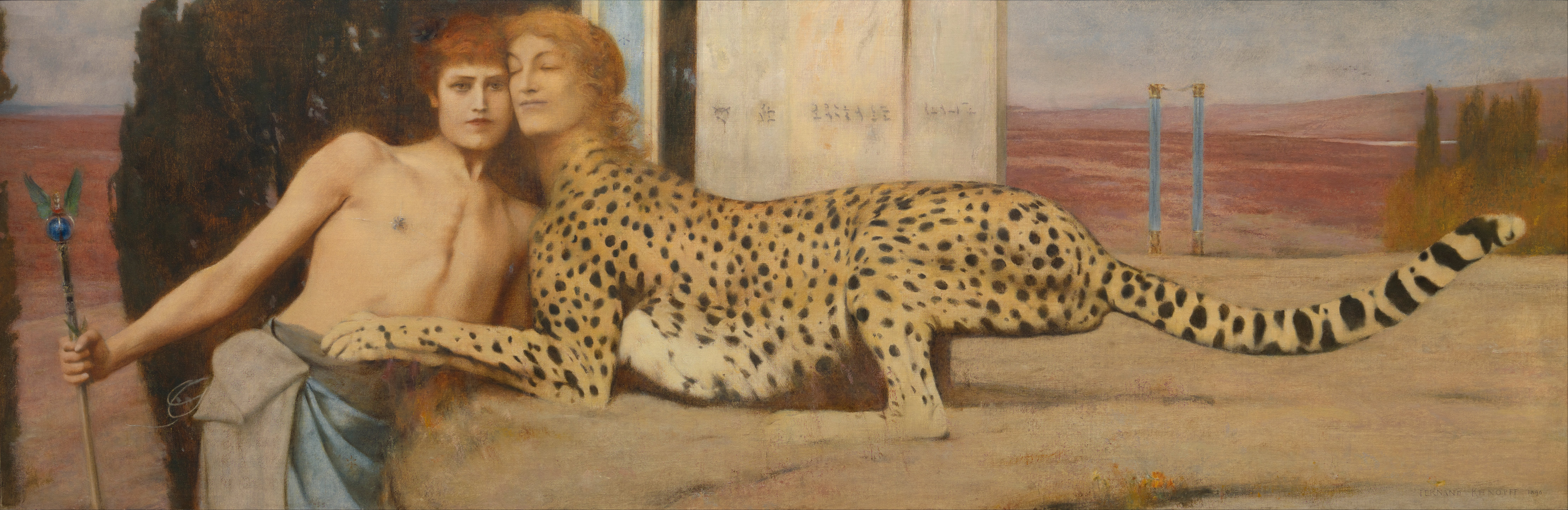
The Fin-de-Siècle Museum is a museum in the Royal Quarter of Brussels, Belgium. It is dedicated to the full spectrum of the arts of the period between 1884, when the Société Libre des Beaux-Arts was founded Brussels, and 1914, the year of the outbreak of World War I. It is one of the constituent museums of the Royal Museums of Fine Arts of Belgium.
The museum, inaugurated on 6 December 2013, partly replaces the Royal Museum of Modern Art, closed on 1 February 2011, and is partially housed in its former halls. Located at 1, place Royale/Koningsplein, it is served by the tram stop Royale/Koning.

28 m
The Oldmasters Museum is an art museum in the Royal Quarter of Brussels, Belgium, dedicated to Old Master European painters of the 15th to the 18th centuries, with some later works. It is one of the constituent museums of the Royal Museums of Fine Arts of Belgium.
The museum has a large and internationally important collection of Netherlandish art, mostly from the Southern Netherlands that mostly equate to modern Belgium. For example, there are valuable panels by the Flemish Primitives. There are also significant paintings and sculptures from other parts of Europe.
The museum was founded in 1801 by Napoleon. It was formerly called the Royal Museum of Ancient Art. It is housed in the main building of the Royal Museums of Fine Arts located at 3, rue de la Régence/Regentschapsstraat. This site is served by the tram stop Royale/Koning.

37 m
The Magritte Museum is an art museum in the Royal Quarter of Brussels, Belgium, dedicated to the work of the surrealist artist René Magritte. It is one of the constituent museums of the Royal Museums of Fine Arts of Belgium.
The museum is housed in the Hôtel du Lotto, an 18th-century neoclassical building on the Place Royale/Koningsplein, across the street from the Musical Instruments Museum and not far from the Royal Palace of Brussels. This site is served by Brussels-Central railway station, as well as by the metro stations Parc/Park and Trône/Troon.

43 m
The Royal Museums of Fine Arts of Belgium, pronounced [myze ʁwajo de boz‿aʁ də bɛlʒik]; Dutch: Koninklijke Musea voor Schone Kunsten van België, pronounced [ˈkoːnɪŋkləkə myːˈzeːjaː voːr ˈsxoːnə ˈkʏnstə vɑm ˈbɛlɣijə]) are a group of art museums in Brussels, Belgium. They are part of the institutions of the Belgian Federal Science Policy Office and consist of six museums: the Oldmasters Museum, the Magritte Museum, the Fin-de-Siècle Museum, the Modern Museum, the Wiertz Museum and the Meunier Museum.
The Royal Museums contain over 20,000 drawings, sculptures, and paintings, covering a period extending from the early 15th century to the present, such as those of Flemish old masters like Bruegel, Rogier van der Weyden, Robert Campin, Anthony van Dyck, Jacob Jordaens, and Peter Paul Rubens, making them the most popular art institution and most visited museum complex in Belgium. The Magritte Museum houses the world's largest collection of works by the surrealist artist René Magritte.

69 m
The Palace of the Count of Flanders is a neoclassical palace in Brussels, Belgium. It was originally built between 1776 and 1781 for Countess Brigitte of Tirimont-Templeuve, though it was heavily expanded in the 19th century. Nowadays, it houses the Court of Audit of Belgium.
The palace is situated on the Rue de la Régence/Regentschapsstraat in the Royal Quarter, opposite the Royal Museums of Fine Arts of Belgium, and not far from the Place Royale/Koningsplein and the Mont des Arts/Kunstberg. This area is served by Brussels-Central railway station, as well as by the metro stations Parc/Park and Trône/Troon.
Il a fait partie des musées royaux des Beaux-Arts de Belgique (MRBAB). Il est fermé depuis le 1er février 2011.