Location Image

Fartown Ground

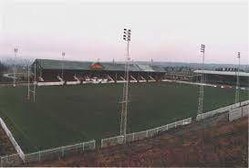
The Fartown Ground or just simply Fartown is a sports ground located in the Huddersfield suburb of Fartown in West Yorkshire, England and is predominantly famous for being the home ground of Huddersfield Rugby League Club from 1878 to 1992. The grounds consisted of a rugby ground, a cricket ground used by Yorkshire County Cricket Club, Bowling greens and a running track as well as a pavilion. It was the scene of many great games, including the Challenge Cup finals of 1908 and 1910, several Challenge Cup semi finals, John Player Cup finals and international matches. Although the stands were all demolished, the pitch, floodlights and bankings where the terraces once stood are still there, Huddersfield RLFC played their last game there on 23 August 1992, up until the mid 2000s the club's junior and reserves sides still played on the pitch at Fartown but the stands were already demolished by then. The ground had fallen into serious decline in the 1980s, The Main stand was closed in 1986 due to safety issues after the Bradford City stadium fire in 1985 and partly reopened in 1989, a large chunk of the terrace side was condemned and never reopened, the supporters club building was demolished in 2009 after a fire. It also hosted an FA Cup semi final game between Blackburn Rovers and Sheffield Wednesday in 1882. Huddersfield are still known as "Fartown" or "the Fartowners" by many of their older supporters. The highest attendance at the stadium to watch a Huddersfield game was 32,912 against Wigan on 4 March 1950, although a Challenge Cup semi-final played 19 April 1947 attracted a crowd of 35,136.

Nearby Places View Menu
Location Image
243 m

Fartown, Huddersfield

Fartown is a suburb of Huddersfield, West Yorkshire, England that starts 0.6 miles (1 km) north of the town centre. Fartown runs for approximately 1 mile (1.6 km) either side of the A641 main Huddersfield to Bradford Road. The district area stretches from the top of Woodhouse Hill to the Halifax Old Road with a population of 4,735 according to the 2001 Census. Fartown currently has a multi-ethnic population with a significant percentage of people hailing from South Asian and West Indian backgrounds. Two major hills are also situated in Fartown, Woodhouse Hill towards Sheepridge and York Avenue towards Cowcliffe. North Huddersfield Trust School is situated just off Woodhouse Hill. Huddersfield's Rugby League club Huddersfield RLFC played at the Fartown Ground on Spaines Road from 1878 until 1992 and are still referred to as ‘Fartown’ by the club’s supporters. Yorkshire County Cricket Club also played there at the cricket part of the ground between 1873–1955 and was also used for one day matches until 1982. The ground hosted an FA Cup semi final in 1882. The ground there now is little used for sporting events.
Location Image
686 m

Cowcliffe

Cowcliffe is an area of Huddersfield, West Yorkshire, England. It is situated between Fixby and Birkby based around Cowcliffe Hill Road. Cowcliffe is a discernible village, though the boundaries are not clear and is somewhat isolated from the rest of Huddersfield – only two buses an hour go through the area, destined for either Halifax and Huddersfield (First Halifax services 549). The area is home to a pub, St. Hilda's Parish Church, Cowcliffe Methodist Church, a shop, a park and a club with bowling green.. At the west border of the area is Huddersfield Golf Club, to the north is Fixby (the golf course is known locally as Fixby Golf Course), to the south and east are Birkby and Fartown. The ITV drama series Where The Heart Is shot a small number scenes in Cowcliffe's park in 2002, not long after the park had had a facelift from Kirklees Metropolitan Council, who installed goalposts and a designated play area. At the top of North Cross Rd, a large house known locally as the Castle was renovated from a derelict state in the mid 1980s by a local developer and an 3 home estate built on the former gardens and the properties named after Castle features. Cowcliffe Hill Road was once the main coach road from London to Gretna Green. Notable former residents of Cowcliffe include the retired footballers Marcus Stewart and Chris Marsden.
Location Image
808 m

Kirklees EfW

The Kirklees EfW is a major moving grate incineration plant in Huddersfield, Kirklees, England. The incinerator is owned and operated by Suez Recycling and Recovery UK who signed a 25-year contract with Kirklees Council in 1998 with an option to increase the time period to 2028. The plant is integral to the waste strategy and Unitary Development plan of Kirklees Council, treating 150,000 tonnes (170,000 tons) of locally generated municipal waste, which when incinerated, will produce enough electricity to power 15,000 homes. Only 136,000 tonnes (150,000 tons) of waste is actually incinerated, the other tonnages permitted are recovered materials such as metals (for recycling) and Incinerator bottom ash (IBA) and Fly ash. The incinerator has been operational since 2002 and was one of the first waste projects financed by PFI in the United Kingdom. The plant, which employs 29 staff and operates 24 hours a day, cost £35 million.
855 m

Huddersfield workhouse scandal

The Huddersfield workhouse scandal concerned the conditions in the workhouse at Huddersfield, England in 1848. The problems included overcrowding, disease, food, and sanitation, among others. A report, for instance, described the workhouse as "wholly unfitted for residence for the many scores that are continually crowded into it, unless it be that desire to engender endemic and fatal disease. And this Huddersfield workhouse is by far the best in the whole union." On investigation, the conditions at Huddersfield were considered to be worse than those in Andover which had hit the headlines in Britain two years earlier. This previous scandal gained notoriety due to extreme abuses with accounts citing workhouse inmates getting so hungry they had resorted to chewing on the bones that they were grinding down for fertilizer. These two incidents contributed to the growth of demands for social reform as reflected by later developments such as the intensified public discourse on the Poor Law.