


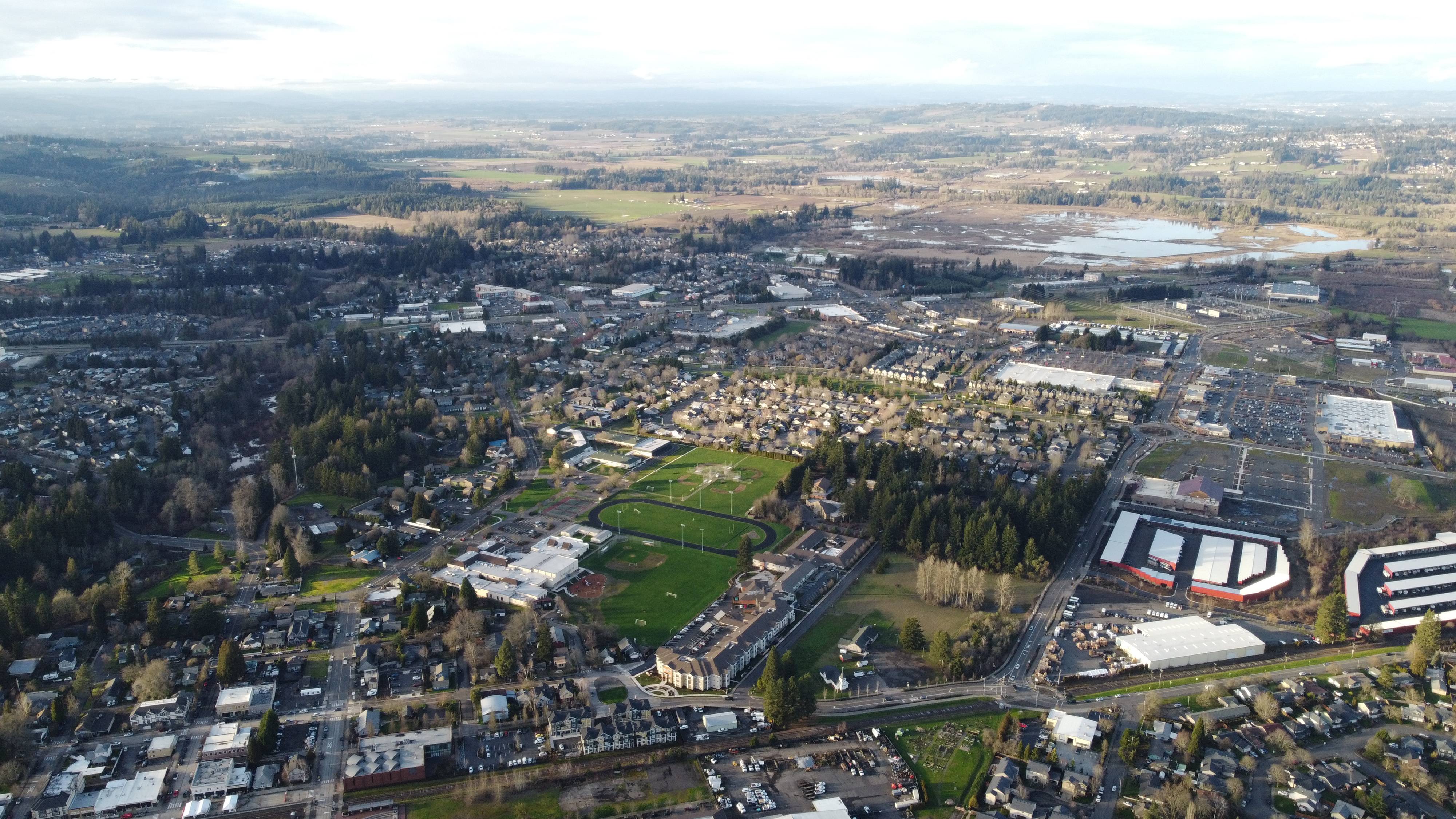
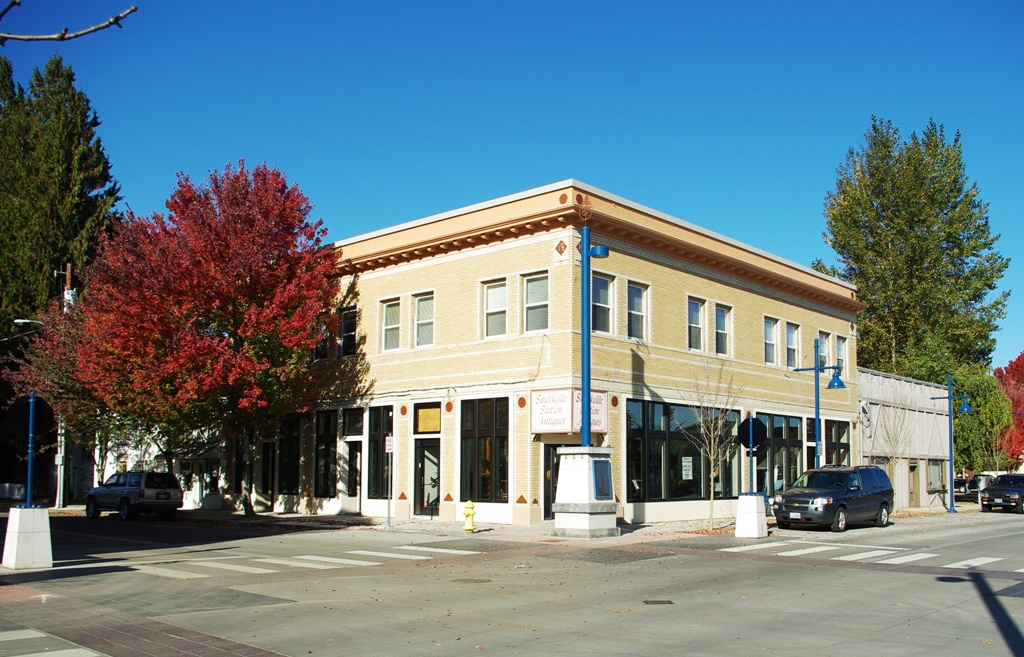
Sherwood is a city in Washington County, Oregon, United States. Located in the southeast corner of the county, it is a residential community in the Tualatin Valley, southwest of Portland. The population was 20,450 at the 2020 census. Sherwood was first incorporated in 1893 as a town. Originally named Smockville after its founder, James Christopher Smock, the town was given its current name by local businessman Robert Alexander in 1891.
Gallery




Sponsored
Location
2 explorers visited this place

348 m
Sherwood Public Library is the library serving Sherwood in the U.S. state of Oregon. Operated by the city, it is a member of the Washington County Cooperative Library Services. Established in 1935, it has an annual circulation of around 370,000 items.
424 m
Sherwood School District is a small school district that serves Sherwood, Oregon, United States. The administrative offices are at 21920 SW Sherwood Blvd in Sherwood.
The district currently has four elementary schools, one middle school, and one high school. They include Archer Glen Elementary School, Hawks' View Elementary School, Middleton Elementary School, Ridges Elementary School, Sherwood Middle School, and Sherwood High School. The Sherwood Elementary School District 88J was established in about 1891, with other elementary districts later merged into the district. The high school district and elementary districts later consolidated to form a unified school district. Dr. Aaron Downs is the current district superintendent.

2.5 km
Middleton, previously known as Stringtown, is an unincorporated community in Washington County, Oregon, United States. To improve communication between Portland and Lafayette, a post office was established at Middleton in 1869. A rail station was then established on July 1, 1892, soon before the post office closed, in 1905.
A November 2011 vote for the annexation of portions of Middleton north of Brookman Road by the neighboring incorporated community of Sherwood failed.

3.5 km
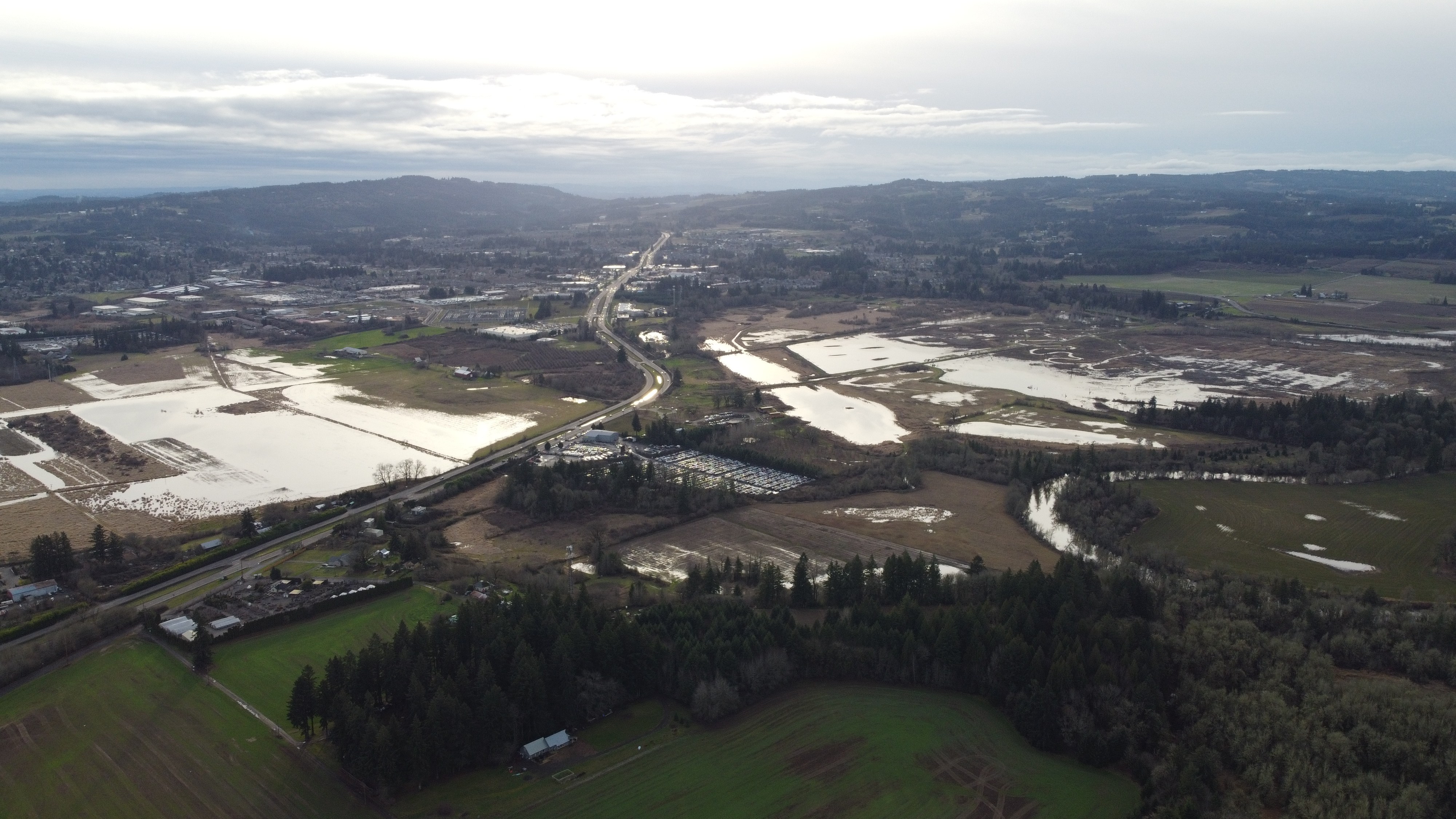
The Tualatin River National Wildlife Refuge is a 1,856 acres wetlands and lowlands sanctuary in the northwestern part of the U.S. state of Oregon. Established in 1992 and opened to the public in 2006, it is managed by the United States Fish and Wildlife Service. Located in southeastern Washington County, 15 miles southwest of Portland, the refuge is bordered by Sherwood, Tualatin and Tigard. A newer area, extending into northern Yamhill County, is located further west near the city of Gaston surrounding the former Wapato Lake.
Part of the network of National Wildlife Refuges, the Tualatin River refuge is one of only ten urban refuges in the United States. Habitats in the refuge include forested areas, wetlands, oak and pine grassland, and meadows, with mixed deciduous and coniferous forests common to Western Oregon. The refuge was established as an urban refuge to provide wetland, riparian, and upland habitats for a variety of migratory birds, threatened and endangered species, fish and other resident wildlife. The refuge is home to nearly 200 bird species and more than 70 other animal species.
A visitor center with exhibits and information about the refuge was opened in 2008 off of Oregon Route 99W near Sherwood in the Portland metropolitan area. Next to the center is the refuge's headquarters and an observation deck overlooking seasonal ponds. The refuge has nearly five miles of wildlife interpretive trails open to the public. Up to 50,000 waterfowl can be seen at the refuge during the winter months when officials flood portions of the refuge.

3.9 km
Tonquin is an unincorporated locale in Washington County, Oregon, United States.
Tonquin was a station on the Oregon Electric Railway, named for the Pacific Fur Company ship Tonquin, because of the company's policy of naming stations for topics of historic interest to Oregonians. The station was built in 1907–08. Tonquin post office was established in 1909, and closed in 1924.
The station was 12 miles from Multnomah and 12 miles from Donald, on what is now the main line of the Portland and Western Railroad. Tonquin is on the portion of the line used by the Westside Express Service passenger train. The abandoned Oregon Electric substation/depot still exists at the site today.
The name "Sherwood" may have come from Sherwood, Michigan or the Sherwood Forest in England.