Location Image

Crazy Daisy Nightclub

The Crazy Daisy Nightclub was a discothèque and dance club in Sheffield, South Yorkshire, England in the mid-1970s to late 1980s, located originally on the corner of York Street and High Street, Sheffield. It was known as The Beer Keller in the early to mid-1970s. It was renamed the Crazy Daizy in 1973 and run by Mecca. Lunch-time discos and Bryan Ferry nights were popular in the mid-1970s. In 1978 it was taken over by the Tetley company. Situated in the basement of an art deco building, it featured numerous supporting pillars and a steep, sweeping staircase down from the entrance. The Crazy Daiz(s)y club was in business from 1973 to the late 1980s. At the time it became synonymous with the avant-garde early 1980s music scene. During its tenure it was a central social focal point in Sheffield city centre and claims a key role in 1980s Sheffield culture and British pop music history. It later became the Geisha Bar (in the 1980s), then Legends Nightclub, and subsequently closed in the mid-1990s when the Sheffield social scene shifted to the redeveloped West Street area. The building is now used as a bank and shops, next to a Sheffield Supertram stop.

Nearby Places View Menu
Location Image
43 m

Commercial Street, Sheffield

Commercial Street is one of the main thoroughfares and shopping areas in the city centre of Sheffield in South Yorkshire, England. Commercial Street connects Park Square to the High Street. Fitzalan Square and the Haymarket junction are located on the western end of the street as it meets the High Street near Arundel Gate. A number of notable buildings are located on the street, including Canada House, The Ponds Forge International Sports Centre is located on Commercial Street.
Location Image
50 m

High Street, Sheffield

High Street is one of the main thoroughfares and shopping areas in the city centre of Sheffield in South Yorkshire, England, located at the approximate grid reference of SK356874. High Street starts at the Commercial Street, Fitzalan Square and Haymarket junction and runs for approximately 400 metres west to conclude near the Sheffield Cathedral where it forms a Y-junction with Fargate and Church Street. High Street has the traditional wide variety of shops, financial institutions and eating places which are associated with any British town centre.
Location Image
64 m

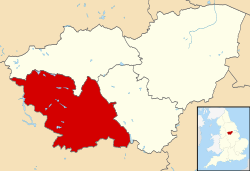
City of Sheffield

The City of Sheffield is a metropolitan borough with city status in South Yorkshire, England. The metropolitan borough includes the administrative centre of Sheffield, the town of Stocksbridge and the larger village of Chapeltown and part of the Peak District. It has a population of 582,493 (2024), making it technically the fourth largest city in England by population behind Birmingham, Leeds and Manchester, since London is not considered a single entity. It is governed by Sheffield City Council. The current city boundaries were set on 1 April 1974 by the provisions of the Local Government Act 1972, as part of a reform of local government in England. The city is a merger of two former local government districts; the unitary City and County Borough of Sheffield combined with the urban district of Stocksbridge and parts of the rural district of Wortley from the West Riding of Yorkshire. For its first 12 years, the city had a two-tier system of local government; Sheffield City Council shared power with South Yorkshire County Council. Since the Local Government Act 1985 Sheffield City Council has effectively been a unitary authority, serving as the sole executive, deliberative and legislative body responsible for local policy, setting council tax, and allocating budget in the city, and is a member of the Sheffield City Region Partnership. The City of Sheffield is divided into three civil parishes and a single unparished area.
Location Image
73 m

Coles Corner

Coles Corner is the name given to the corner of Fargate and Church Street in Sheffield, England, in sight of the cathedral. It was the site of the old Cole Brothers department store until it moved to Barker's Pool in 1963. The modern building was built on the site of Coles Corner and has been occupied by Midland Bank and various retailers over the years, including HSBC, Starbucks Coffee, Vodafone, The Carphone Warehouse, Pret, and most recently Burger King. The top floor has also been occupied by an Armed Forces Careers Office (AFCO), staffed by personnel from all three services of the British Armed Forces. The corner is famous in Sheffield as a place to meet for a first date. A plaque put up by the Rotary Club now marks the spot and ensures its local history is not forgotten. A song and album by Sheffield singer Richard Hawley were named after the place.