


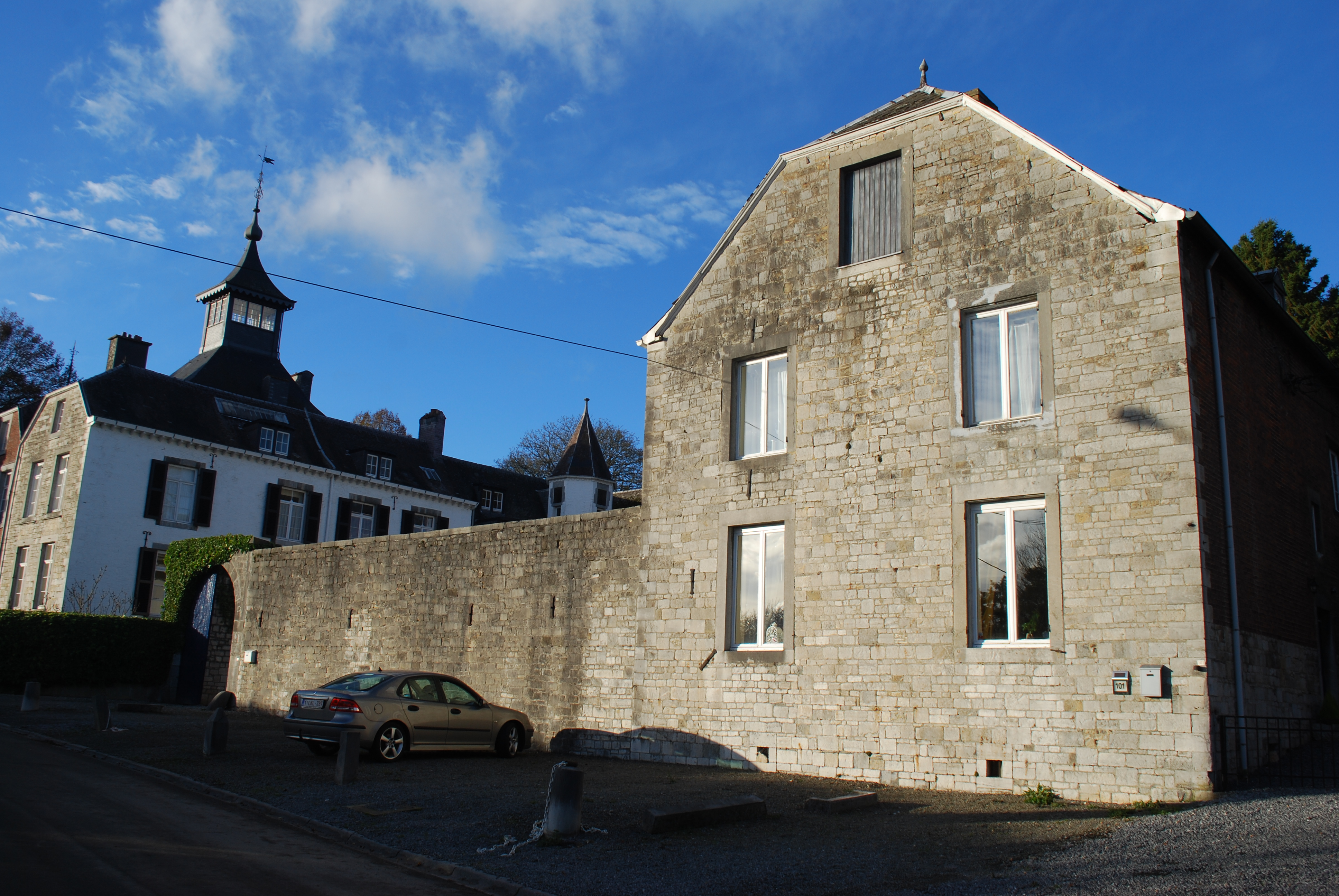
Le château-ferme de Strivay est un bâtiment classé situé à Strivay dans la commune de Neupré en province de Liège (Belgique).
Gallery


Sponsored
Location
1 explorer visited this place
1.8 km
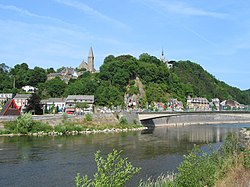
Esneux is a municipality of Wallonia located in the province of Liège, Belgium.
On 1 January 2006 Esneux had a total population of 13,072. The total area is 34.05 km2 which gives a population density of 384 inhabitants per km2.
The municipality consists of the following districts: Esneux and Tilff. Other villages are Méry and Hony. They are all to be found in the valley of the Ourthe river south of Liège. A railway line links the 4 villages.
Although not popular with large numbers of international tourists, Esneux and Tilff do attract people from the local region, due to the local restaurants, the Esneux and Tilff castle, the bee-museum, and several parks.
In Esneux, the largest giant sequoia of Belgium can be found.

4.1 km
Neupré is a municipality of Wallonia located in the province of Liège, Belgium.
On January 1, 2006, Neupré had a total population of 9,798. The total area is 31.69 km2 which gives a population density of 309 inhabitants per km2.
The municipality consists of the following districts: Éhein, Neuville-en-Condroz, Plainevaux, and Rotheux-Rimière. The name of Neupré is coined on the first letters of the districts : NEUville, Plainevaux, Rotheux and Éhein.
On the southeast edge of Neupré lies the Ardennes American Cemetery and Memorial, the resting place of over 5,000 American soldiers who died in Northern Europe during World War II.
4.5 km
Boncelles is a town of Wallonia and a district of the municipality of Seraing, located in the province of Liège, Belgium.
The Fort de Boncelles is situated in Boncelles.

4.7 km
Country Hall Liège is a multi-purpose arena in Liège, Belgium. The arena has 5,600 seats in its sport configuration and 7,200 in the concert configuration. It hosts indoor sporting events as well as concerts.

4.8 km
The Fort de Boncelles is one of twelve forts built around Liège, Belgium, in the late 19th century. The overall Fortified Position of Liège was a constituent part of the country's National Redoubt. Fort de Boncelles was built between 1881 and 1884 according to the plans of General Henri Alexis Brialmont. Contrasting with the French forts built in the same era by Raymond Adolphe Séré de Rivières, the fort was built exclusively of unreinforced concrete, a new material, rather than masonry.
The fort was heavily bombarded by German artillery in the Battle of Liège. Boncelles was upgraded in the 1930s in an attempt to forestall or slow an attack from Germany. It saw action in 1940 during the Battle of Belgium, and was captured by German forces. It is abandoned and partly buried, surrounded by housing.
Book your tour near
Château-ferme de Strivay
→